News dated
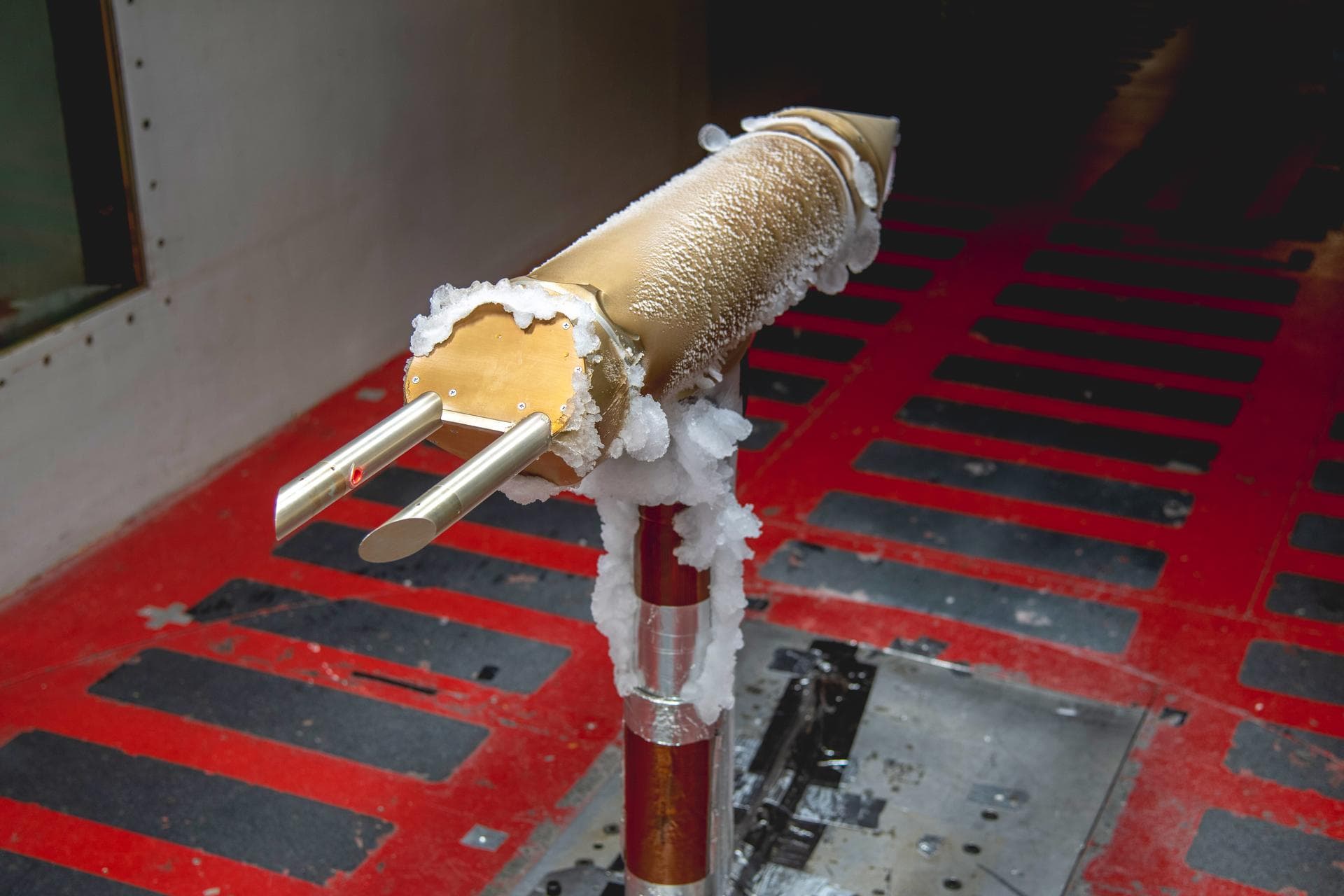
On 5 October, NASA reported on tests held from 8 to 11 June 2026 in the Glenn Research Center’s icing tunnel in Cleveland. Researchers tested probes that observe supercooled large droplets: water that remains liquid below its freezing point and can freeze on aircraft surfaces. [1]
The new measurements are being compared with images processed after the tests; detailed analysis is still underway. This work concerns understanding and measuring the risk, not protection already available on every flight. A 2023 NASA technical study had already documented the difficulty of measuring these droplets’ speed in the tunnel. [1][2]
The bright side
Better droplet measurements help researchers investigate icing conditions that are difficult to reproduce. [1][2]
One idea, in simple words
Water can stay liquid even when it is very cold, below the point where it normally freezes. This is called supercooled water. Some cloud droplets behave this way and can freeze when they hit an aircraft. NASA studies this problem in a special tunnel that creates icing conditions. On 5 October 2026, it reported tests held from 8 to 11 June. Probes are instruments that help researchers observe the droplets. Scientists compare measurements and images to understand what happens. The analysis is not finished yet. An editorial example: before designing a better umbrella, you need to understand the rain it will face. That example explains the approach; NASA’s tests concern ice on aircraft, not umbrellas. [1][2]
A little discovery to keep
What did you discover?
Straight from the source.
- NASA Testing Aims at Supercooled Large Droplet Aviation Safety NASA · 5 Oct 2026
- Analysis of Supercooled Large Drop Velocity Measurement in the NASA Icing Research Tunnel NASA Technical Reports Server · No publication date provided
Original reporting summaries prepared with AI assistance and accessible sources. Our editorial method.