News dated
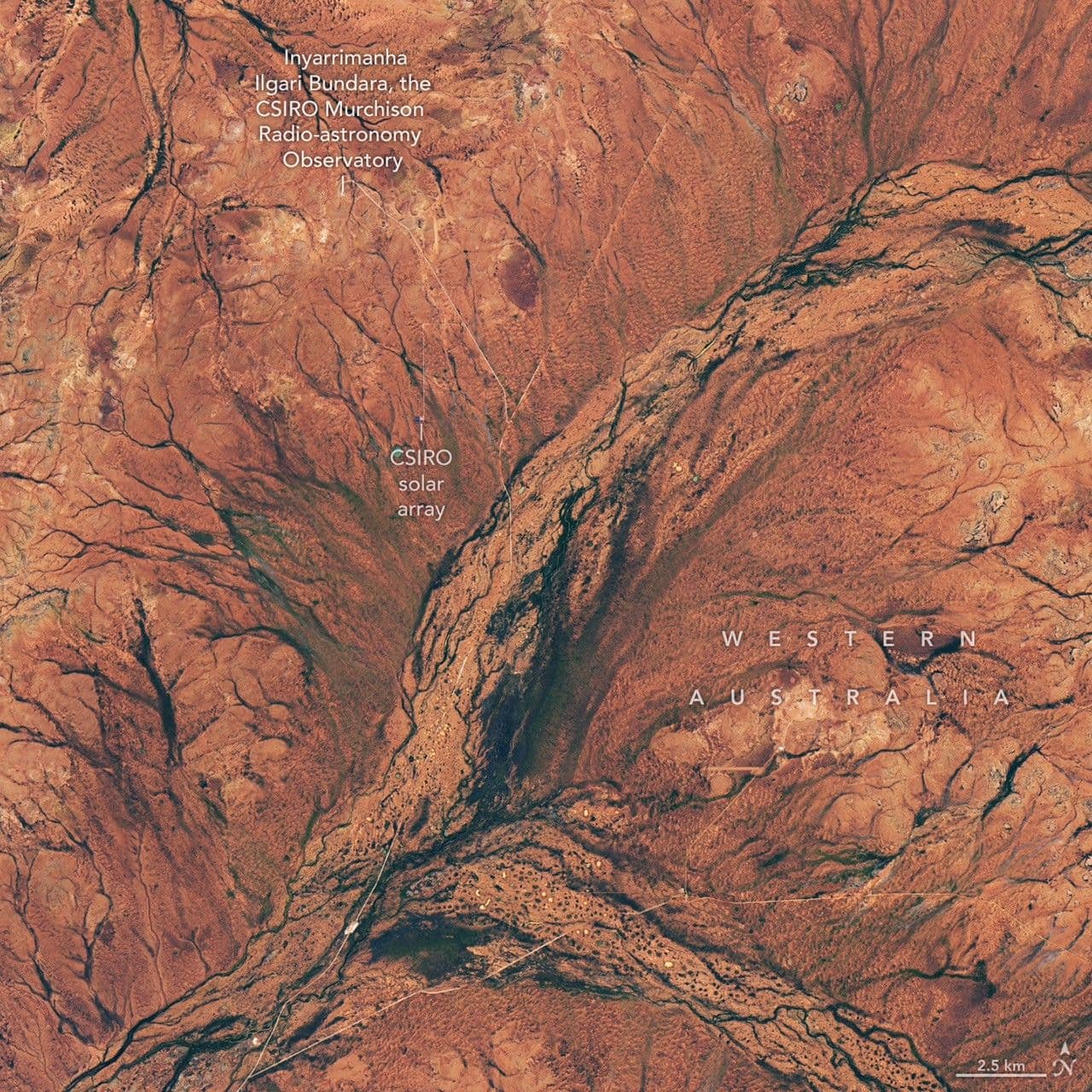
On 23 September, NASA Earth Observatory published a satellite comparison of the Murchison region in Western Australia: the landscape on 30 August 2026 looks greener than on 19 August 2025. Winter rain helped bring widespread wildflower displays to the region. [1]
On 16 September, Australia’s national science agency CSIRO had already documented flowers beside its observatory’s antennas. Land manager Andrew Whitmarsh describes seeds that had lain dormant for years, responding to early rain. This is a local observation, not evidence that every dry region is improving. [2]
At the site, on Wajarri Yamaji Country, staff work with biodiversity specialists to record plants. CSIRO reports that newly documented populations of Calandrinia mirabilis contributed to its move from Priority 1 to Priority 3 in 2025: an update to knowledge, not the disappearance of every risk. [2]
The bright side
Research can look skyward while caring about what grows underfoot: observations by the observatory’s land team help build knowledge of local plants. [2]
One idea, in simple words
A seed can stay in the ground for a long time without growing. When enough water arrives, it may begin to sprout: a new plant starts growing. In the Murchison region of Australia, winter rain helped many flowers grow in 2026. CSIRO photographed them beside the huge antennas used to study space. [2]
Pictures from Landsat, a satellite that watches Earth, show greener land on 30 August 2026 than in the previous August. They do not show every separate flower. [1]
Here is an example: imagine looking at a garden from a very high window. You can see green patches, but must go downstairs to identify the plants. Observatory staff make observations on the ground. This helps experts learn more about local nature. [2]
A little discovery to keep
What did you discover?
Straight from the source.
- Boom Year for Desert Blooms NASA Earth Observatory · 23 Sept 2026
- World-leading radio telescopes give space for stunning wildflowers CSIRO · 16 Sept 2026
Original reporting summaries prepared with AI assistance and accessible sources. Our editorial method.