News dated
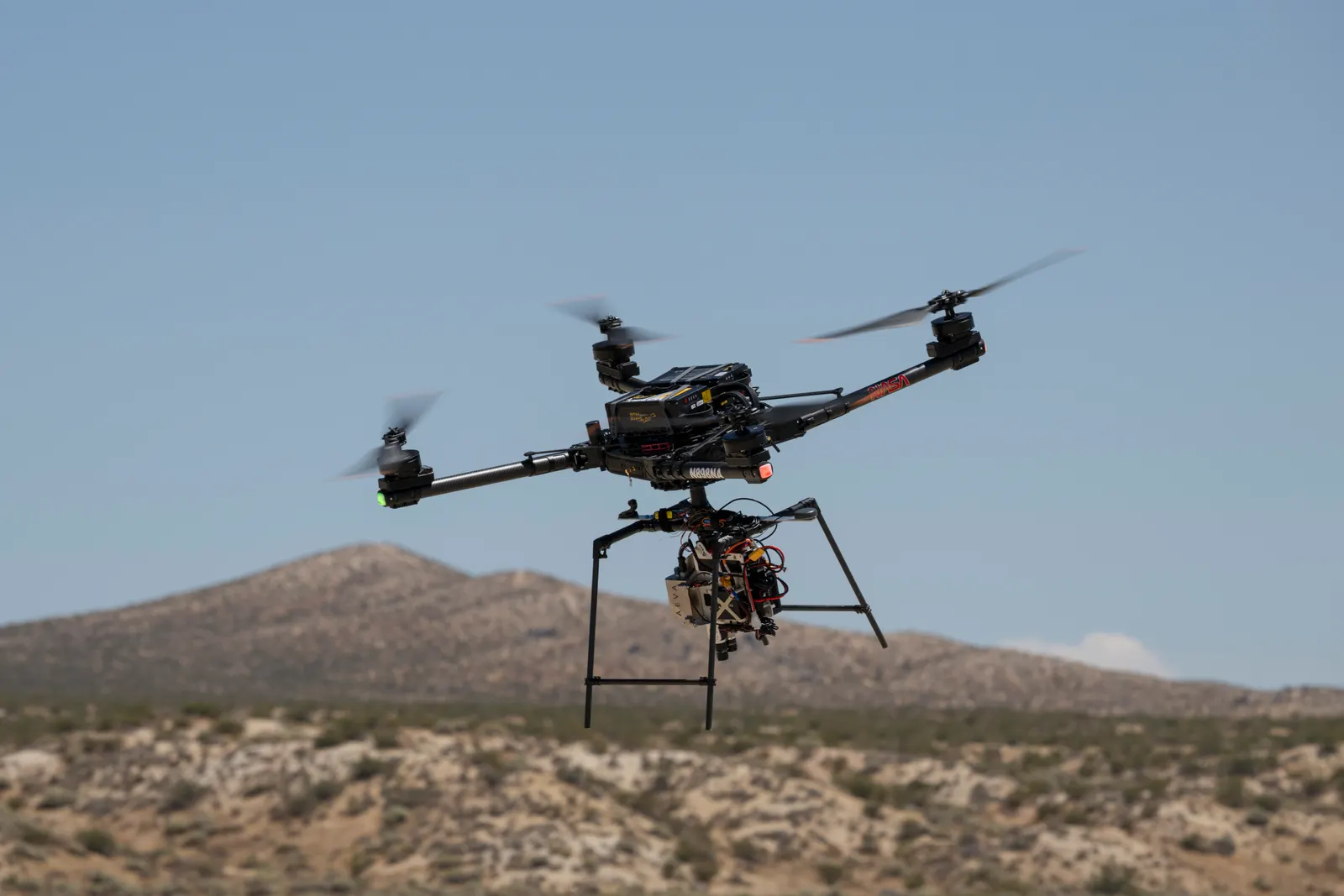
In a 4 November update, NASA reports that an Alta-X drone carrying SPLICE completed simulated lunar descent and landing manoeuvres on 27 August 2026 at Rogers Dry Lake, California. This was a test on Earth, not a landing already performed on the Moon. [1]
The experimental payload combines guidance, navigation and control. It uses sensor data to build digital elevation maps and assess potential landing areas; if the selected area is judged unsafe, it can redirect the drone. NASA describes the result as a step towards integration into future missions, which will require further testing. [1]
The bright side
The test examines a practical capability: spotting a terrain hazard before touchdown. [1]
One idea, in simple words
A drone is a small aircraft without a pilot on board. NASA used one to test SPLICE, a system that helps choose where to land. The test took place in California on 27 August 2026 and was reported on 4 November. The drone stayed on Earth, although it copied a descent towards the Moon. [1]
Sensors collect information about the ground. The system uses it to make a map and check possible landing areas. If an area looks dangerous, it can choose a different direction. Think of someone checking where to put a foot before stepping down: that is only an example to explain the idea. More tests will be needed before future missions. [1]
A little discovery to keep
What did you discover?
Straight from the source.
- NASA Navigation Experiment Shows Promise for Planetary Landings NASA · 4 Nov 2026
Original reporting summaries prepared with AI assistance and accessible sources. Our editorial method.