News dated
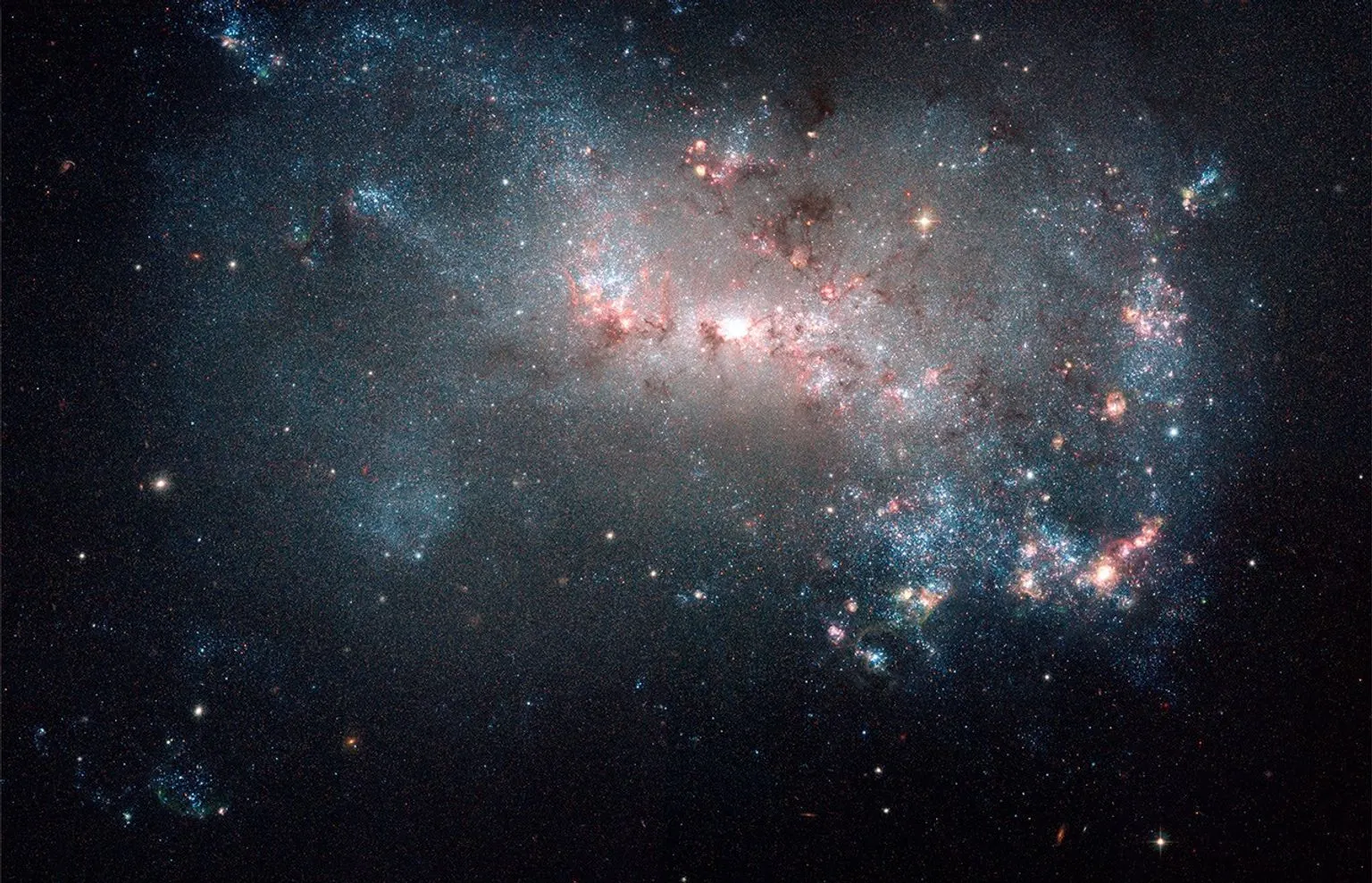
Research highlighted by NASA on 2 November reconstructed the oxygen budgets of 37 nearby small galaxies. GLOW combines archival Hubble observations with measurements of gas and chemical composition: galaxies in the sample retain roughly 4–25% of the oxygen their stars produced. [1][2]
Star-formation histories help estimate how much oxygen was made; observations indicate how much remains in gas, stars and dust. The findings test simulations that retain more heavy elements than these measurements suggest. [2]
Winds powered by stars and stellar explosions offer an explanation for the losses. How much oxygen remains around the galaxies, and how much escaped farther away, is still uncertain. This is a result for a defined sample, rather than a measurement of every galaxy. [1][2]
The bright side
Existing observations from several telescopes help test how galaxies exchange matter with their surroundings. [2]
One idea, in simple words
Stars make elements such as oxygen, which can later spread through space. Astronomers working on GLOW studied 37 nearby small galaxies. A galaxy is a huge collection of stars, gas and dust. Using Hubble images and other measurements, the researchers compared the oxygen produced with the amount still present. Galaxies in the sample retain about 4–25%, so a large share is no longer inside them. [1][2]
Imagine an inventory: you compare everything produced with what remains in the storeroom. This is just an example to explain the method. Stars and stellar explosions can drive material outwards. Scientists still need to establish how much stayed nearby and how much travelled much farther away. [2]
A little discovery to keep
What did you discover?
Straight from the source.
- NASA’s Hubble Uncovers Case of Missing Oxygen in Nearby Dwarf Galaxies NASA · 2 Nov 2026
- GLOW II: A Census of Oxygen in Low-Mass Galaxies McQuinn et al. · arXiv, versione degli autori · 13 Aug 2026
Original reporting summaries prepared with AI assistance and accessible sources. Our editorial method.