News dated
UNICEF reported on 22 October that its partnership with Airtel Africa and Nigeria’s government has connected nearly 2,000 schools, reaching around one million students and more than 20,000 teachers. Over 19,000 teachers have received digital training. These are figures reported by the partners following visits to Lagos and Abuja. [1]
The programme combines connectivity, content and teacher preparation. Selected learning platforms have zero-rated data access: this does not make the whole internet free. The update describes access and training; it does not, by itself, measure improved learning outcomes for students. [1]
The bright side
Connecting schools and training teachers addresses two barriers to using digital tools for education together. [1]
One idea, in simple words
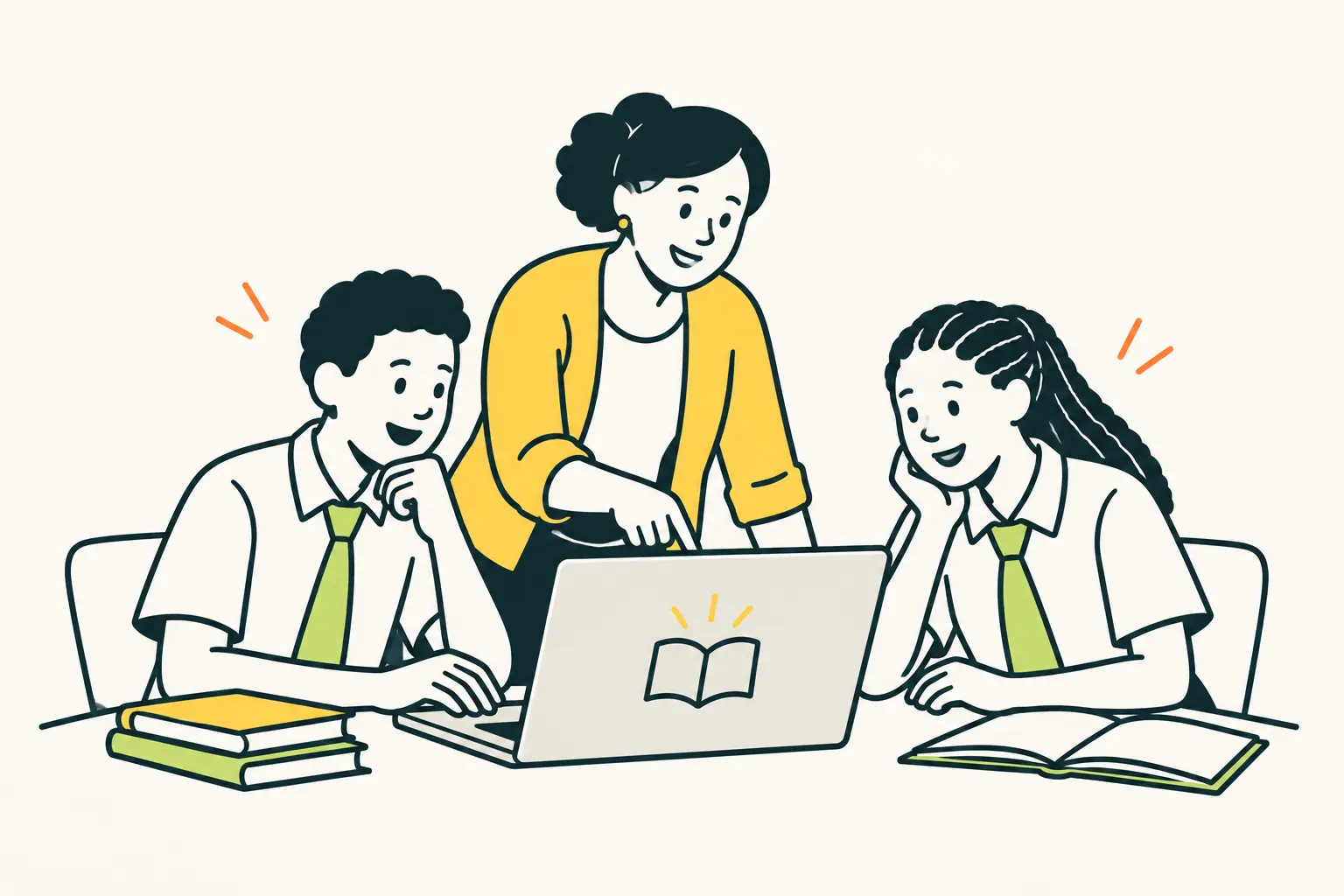
In Nigeria, UNICEF describes a project bringing digital tools into schools. Its 22 October update says nearly two thousand schools have been connected to the internet. The programme reaches around one million students and more than twenty thousand teachers, according to the partners. Over nineteen thousand teachers have received training. Training means learning to use tools and methods. For example, in an imagined situation, a teacher might prepare a lesson using digital materials. Some learning platforms do not charge for data traffic, meaning the information exchanged through the network. That does not mean every website is free. The figures describe access and training: they do not automatically prove that every student has learned more. [1]
A little discovery to keep
What did you discover?
Straight from the source.
- UNICEF, Airtel Africa and the Government of Nigeria advance digital learning following Lagos and Abuja visits UNICEF Nigeria · 22 Oct 2026
Original reporting summaries prepared with AI assistance and accessible sources. Our editorial method.