CultureThe good news
Prato prepares an open evening at Officina Giovani
The free programme on 23 October starts at 5:30 pm, bringing music, theatre and activities to the refurbished former slaughterhouse.

AI illustration · Positive Times · ImageGen
From the archive: the edition of , with the original dates and sources for every story. Read the latest edition.
Music for today ·The free programme on 23 October starts at 5:30 pm, bringing music, theatre and activities to the refurbished former slaughterhouse.
AI illustration · Positive Times · ImageGen
NASA’s gravitational-lens image helps researchers build analysis tools for the future Roman space telescope.
The 22 October account reports around one million students reached and more than 19,000 teachers trained in digital skills.
AI illustration · Positive Times · ImageGen
UNDP announces funding for work in Aden and Lahj; 1,200 participants is a target, rather than an outcome already achieved.
AI illustration · Positive Times · ImageGen
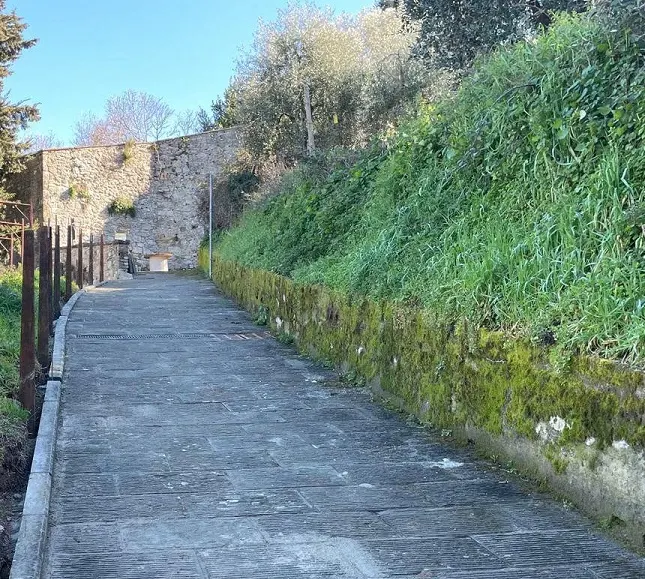
The municipality announces reopening on 24 October after stabilising the walkway damaged by a 2019 landslide.
Photo · Comune di San Gimignano · CC BY 4.0
The 21 October order lifts its temporary closure and permits public or municipally authorised activities on a non-profit basis.
AI illustration · Positive Times · ImageGen
Inaugurated on 22 October, the festival runs until 1 November, with 101 workshops and opportunities to meet researchers.
AI illustration · Positive Times · ImageGen
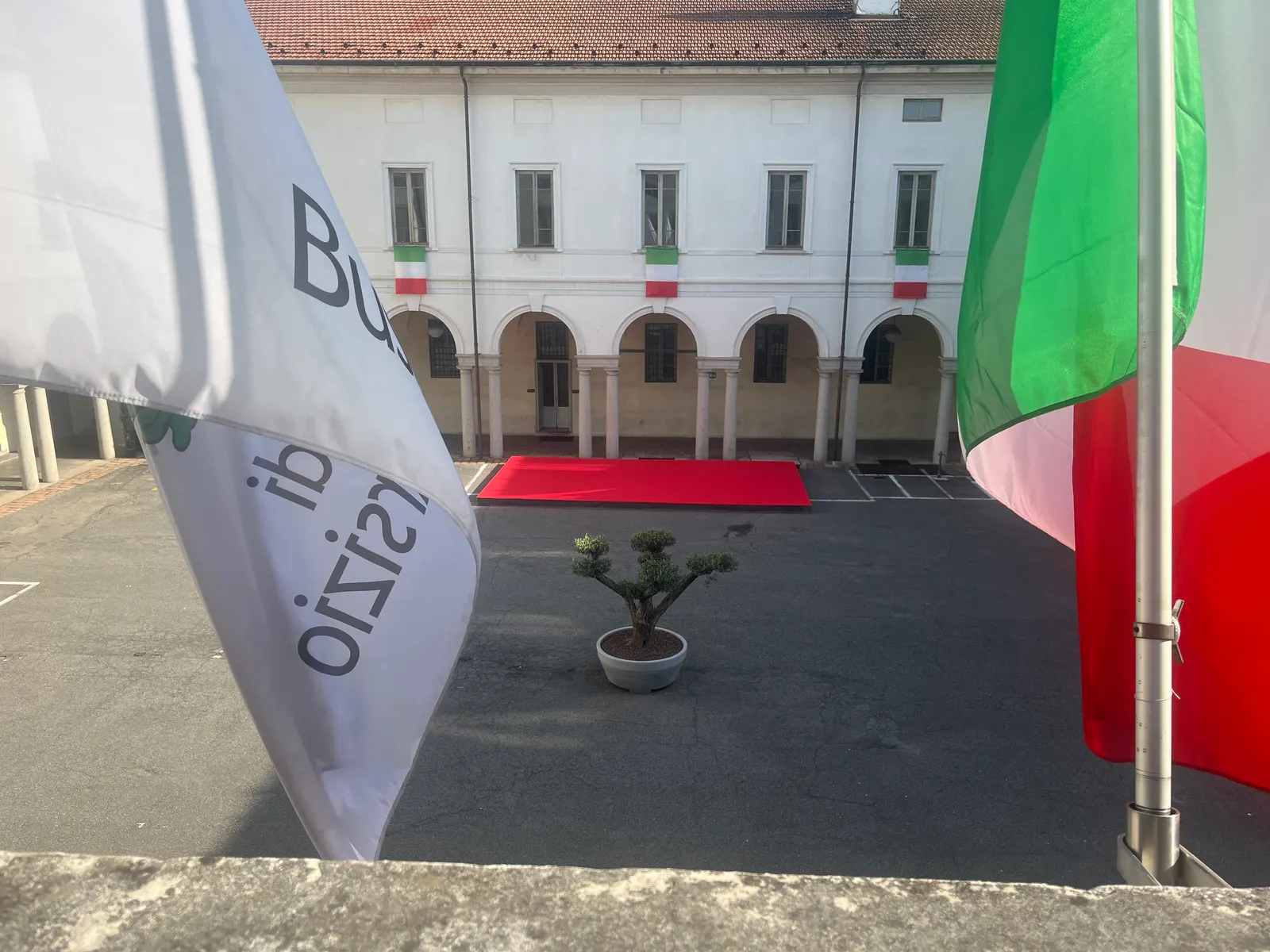
The council executive approves cooperation for a future food collection; no quantity already collected is announced.
Archive · Comune di Busto Arsizio · CC BY 4.0
Design · Philosophy · Plants · Curiosities · Words · Food · Cultures & peoples. Ideas worth a closer look.

Two counterweights and conducting arms turn Tizio into a small lesson: freedom of movement can grow from carefully designed constraints.
Read the full story
A table becomes a philosophical question: Berkeley connects perceived objects with minds, without reducing reality to a matter of personal whim.
Read the full story
A familiar indoor fern invites a second look: orderly structures beneath its fronds reveal a way of reproducing without flowers.
Read the full story
A familiar table object hides a question about sound: a tiny reed and the length of its air column can change what we hear.
Read the full story
The Italian word merenda has a Latin link to deserving; its present meaning names a small meal, without adding moral conditions.
Read the full story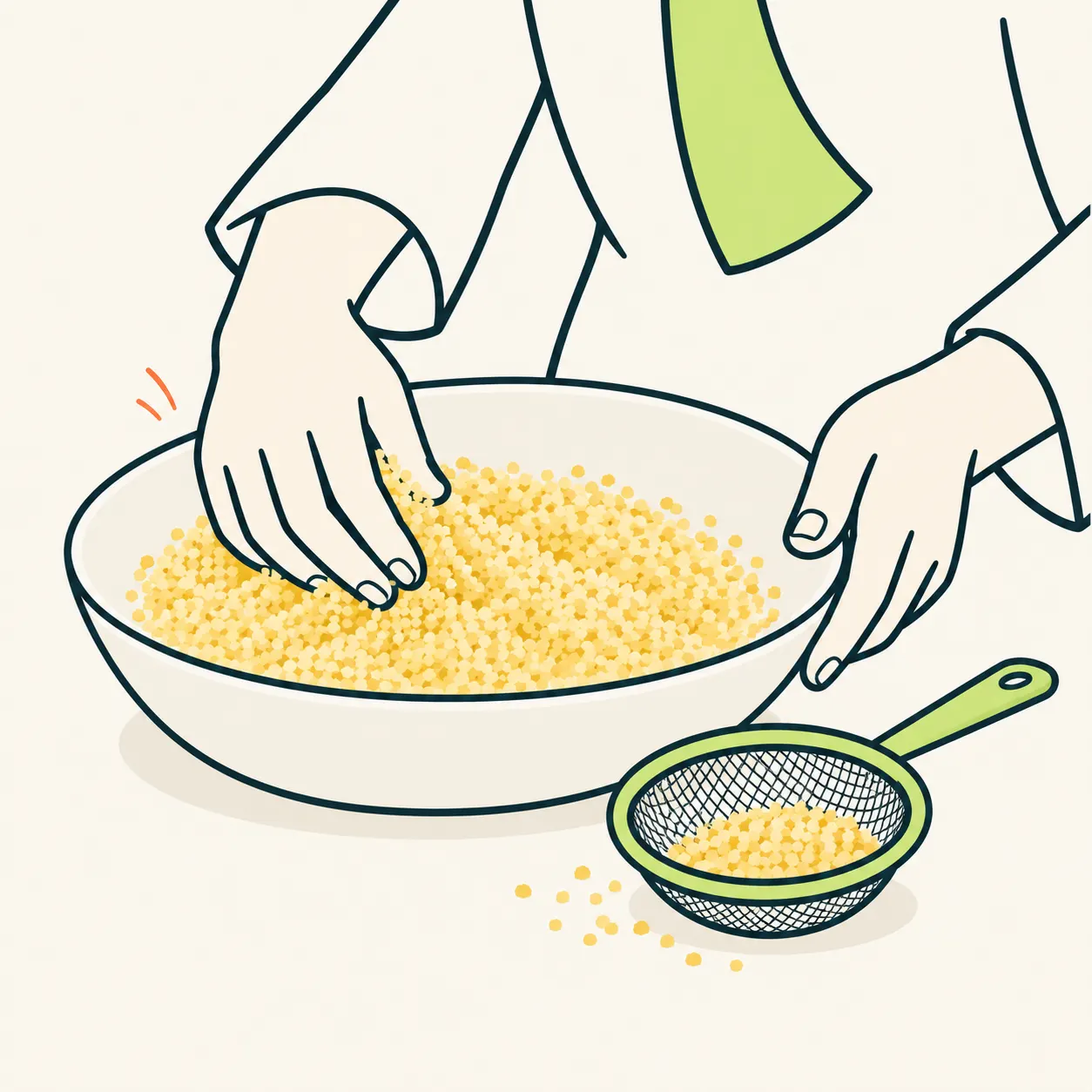
They resemble tiny seeds, but semolina couscous is formed through processing: water, movement and sorting turn small particles into grains.
Read the full story
In Taquile’s textile testimonies, a belt can carry activities and memory: understanding it means listening to its makers as well as looking.
Read the full storyOriginal illustrations made with AI assistance. Facts and sources stay in plain sight.
 Enlarge the chart
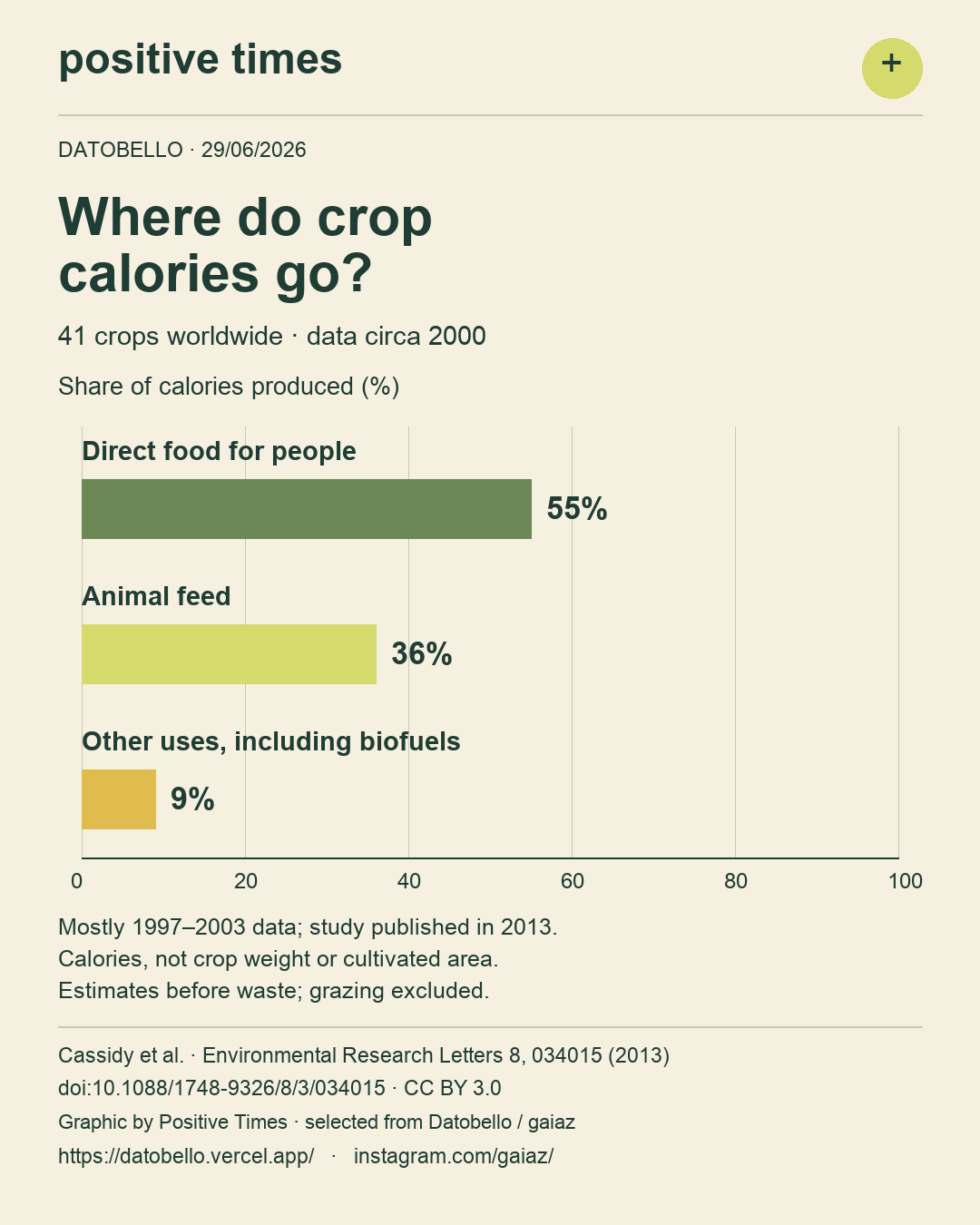
A harvest can follow different paths. In the study by Cassidy and colleagues of 41 crops worldwide, 55% of produced calories were allocated to direct human food, 36% to animal feed and 9% to other uses, including biofuels. The data refer to around 2000, mostly the period 1997–2003: they do not describe the situation in 2026. [1]
The denominator counts calories, not tonnes or hectares. These crops represented over 90% of the worldwide crop calorie production considered by the study. The estimates come before waste and exclude food produced by grazing. The three bars show the initial allocation of the harvest, without counting animal products made from feed a second time. [1]
A project by gaiaz · Instagram
That is quite a lot of good for one day.
Browse the other editions