Latest discovery ·
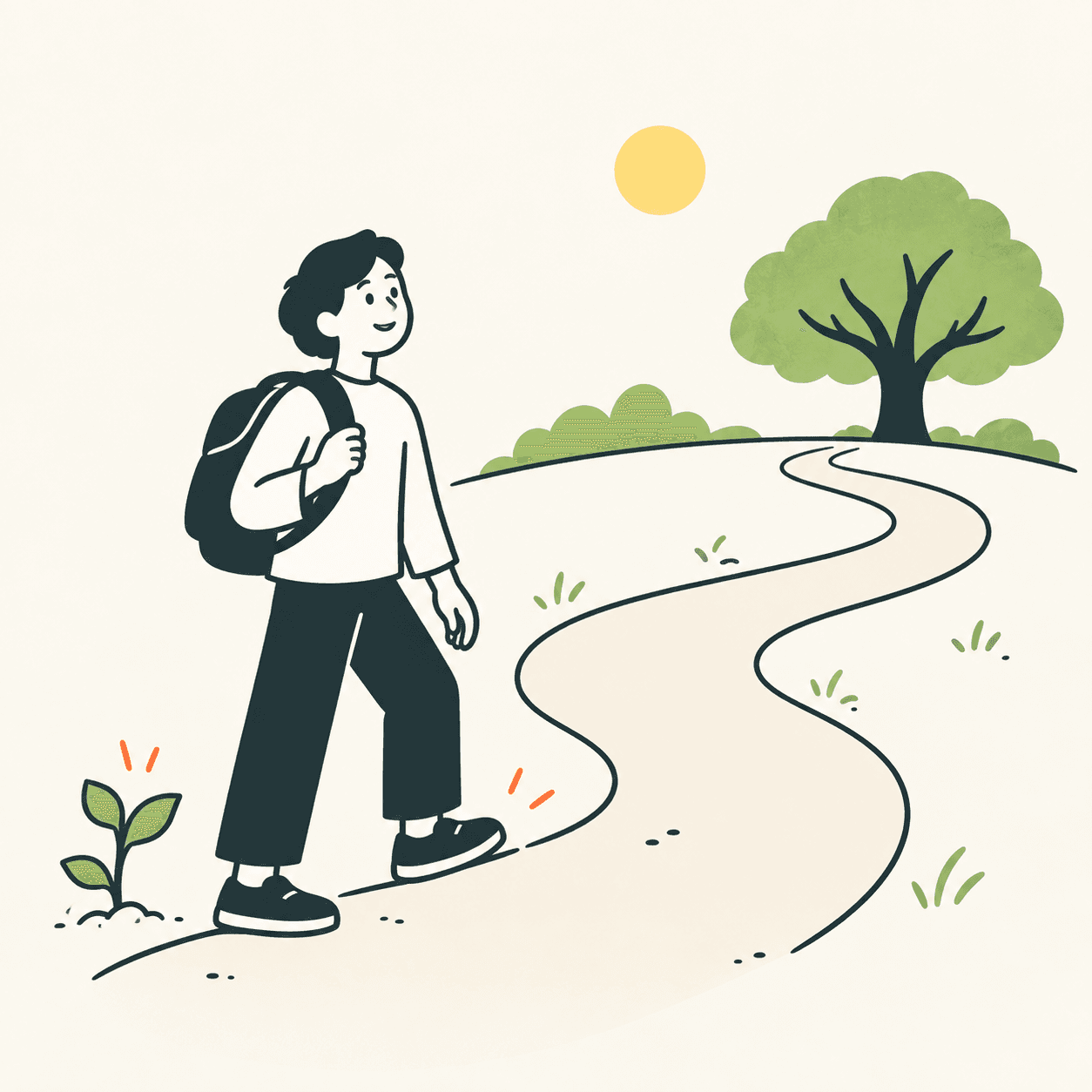
Laozi: the journey begins beneath your feet
A line from the Daodejing asks us to notice beginnings without forgetting what follows: a first step does not guarantee arrival.
Read the full storyBig questions, everyday examples. Ideas to try out in daily life.
27 results
Newest firstLatest discovery ·
A line from the Daodejing asks us to notice beginnings without forgetting what follows: a first step does not guarantee arrival.
Read the full story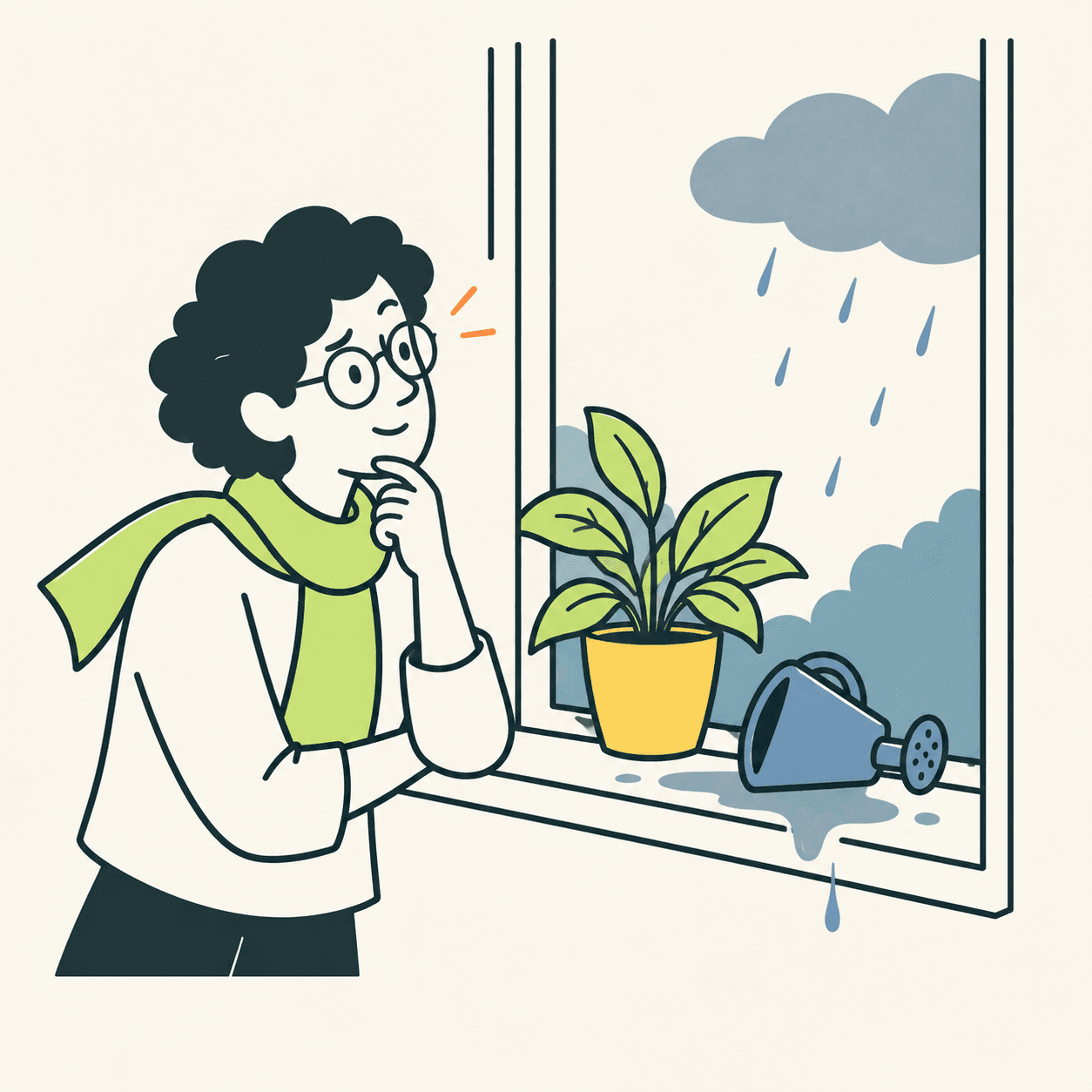
Abduction proposes a possible explanation for a surprising fact. Peirce helps us distinguish that first idea from testing it.
Read the full story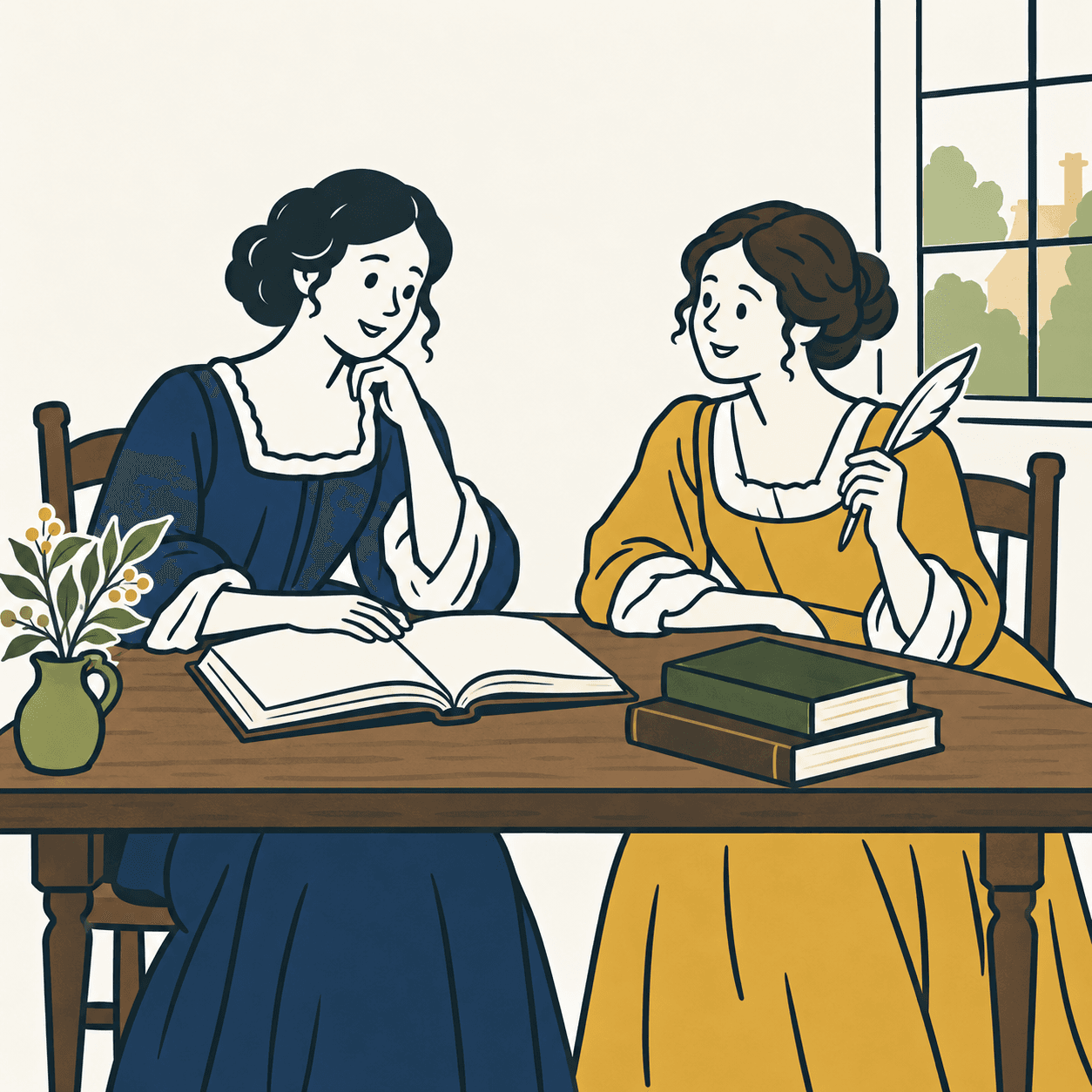
The English philosopher argued for women’s education and a method of thinking: limited access to education does not prove a natural inability.
Read the full story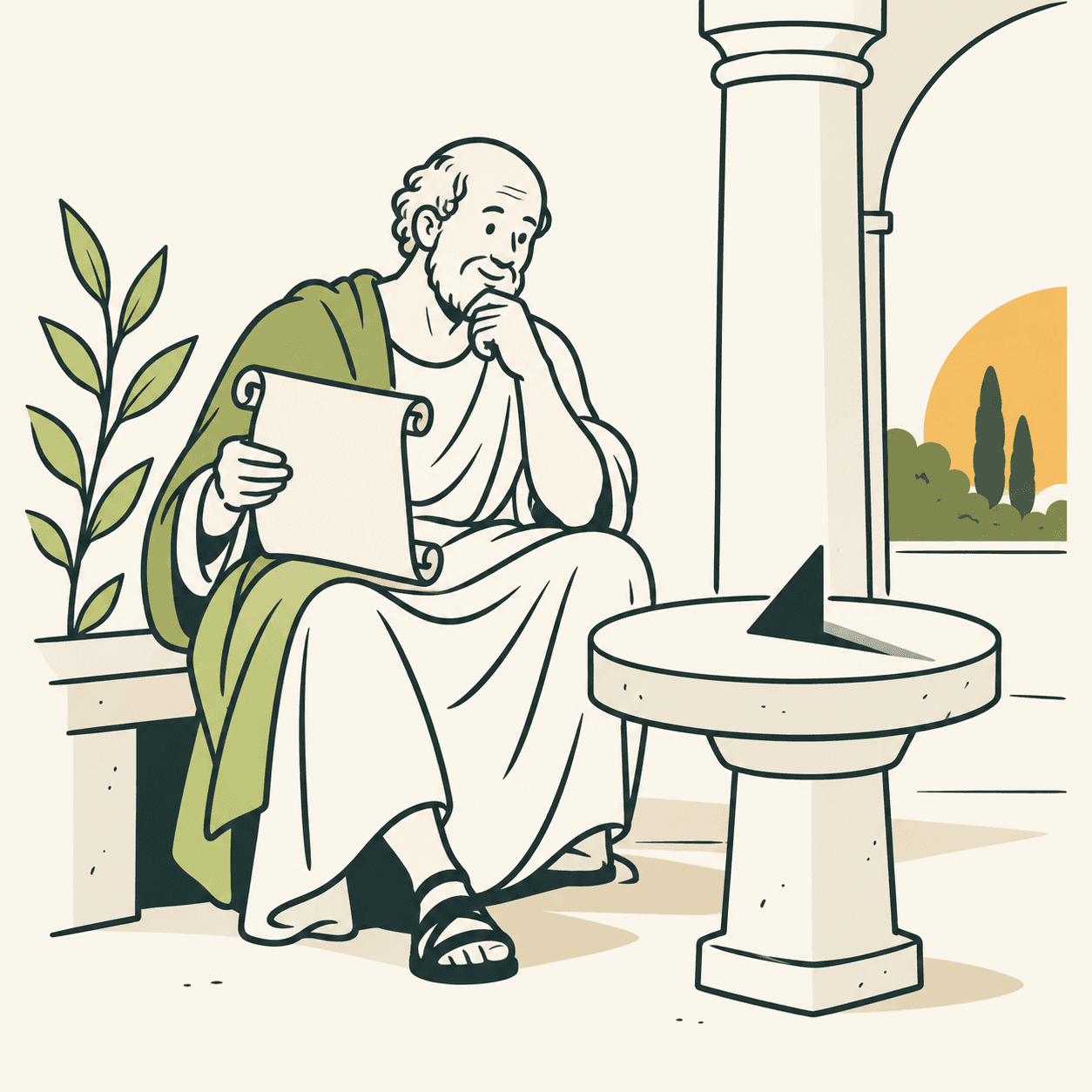
In his first letter to Lucilius, the philosopher admits to wasting time: a starting point is noticing how it happens.
Read the full story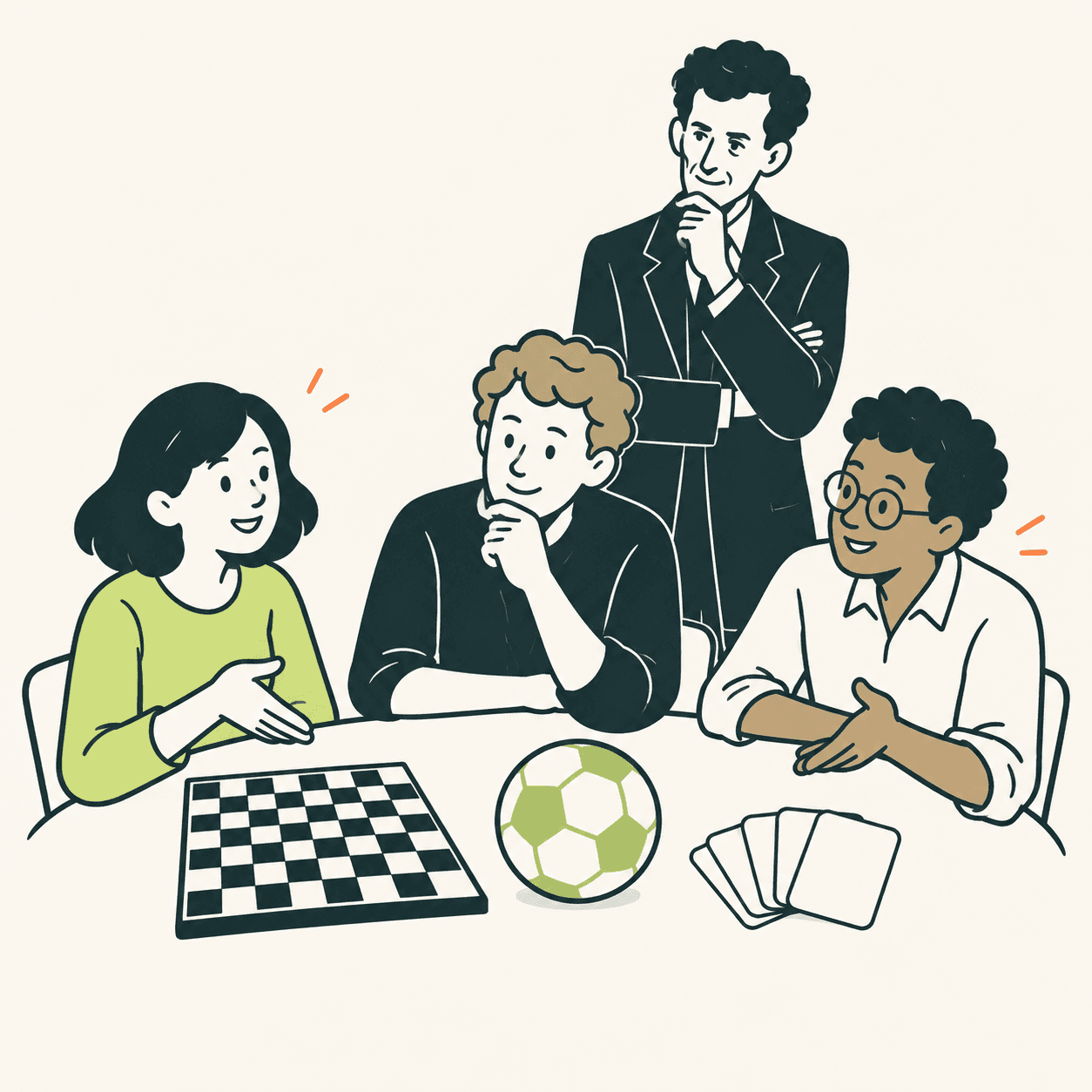
Cards, balls and solitary challenges introduce a philosophical proposal: similarities can overlap without a single feature shared by every example.
Read the full story
Before deciding what to do, it matters what we notice in other people: even a familiar judgement can be reconsidered.
Read the full story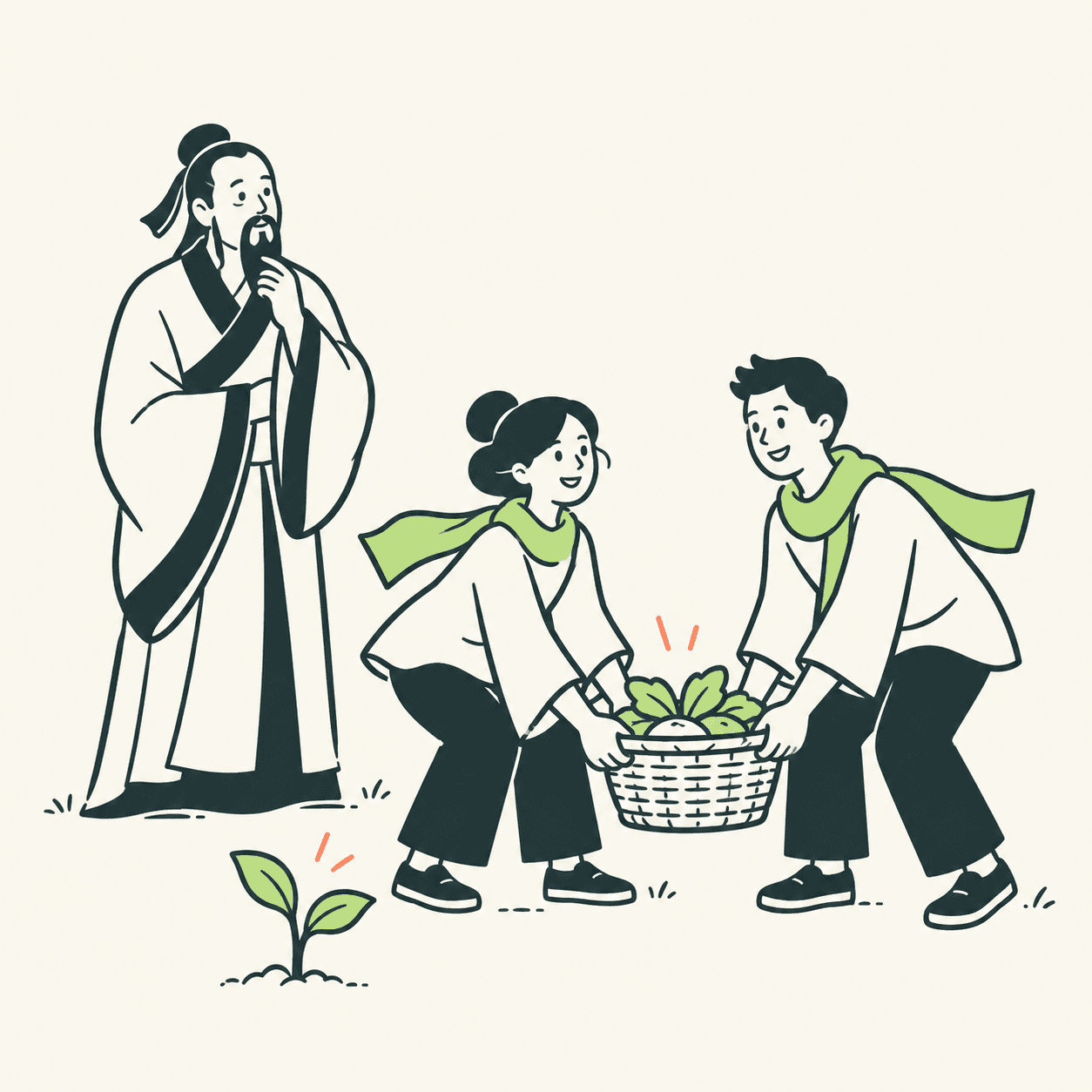
Compassion is a starting point, not a medal already won: a Chinese philosopher asks how we can nurture it through choices.
Read the full story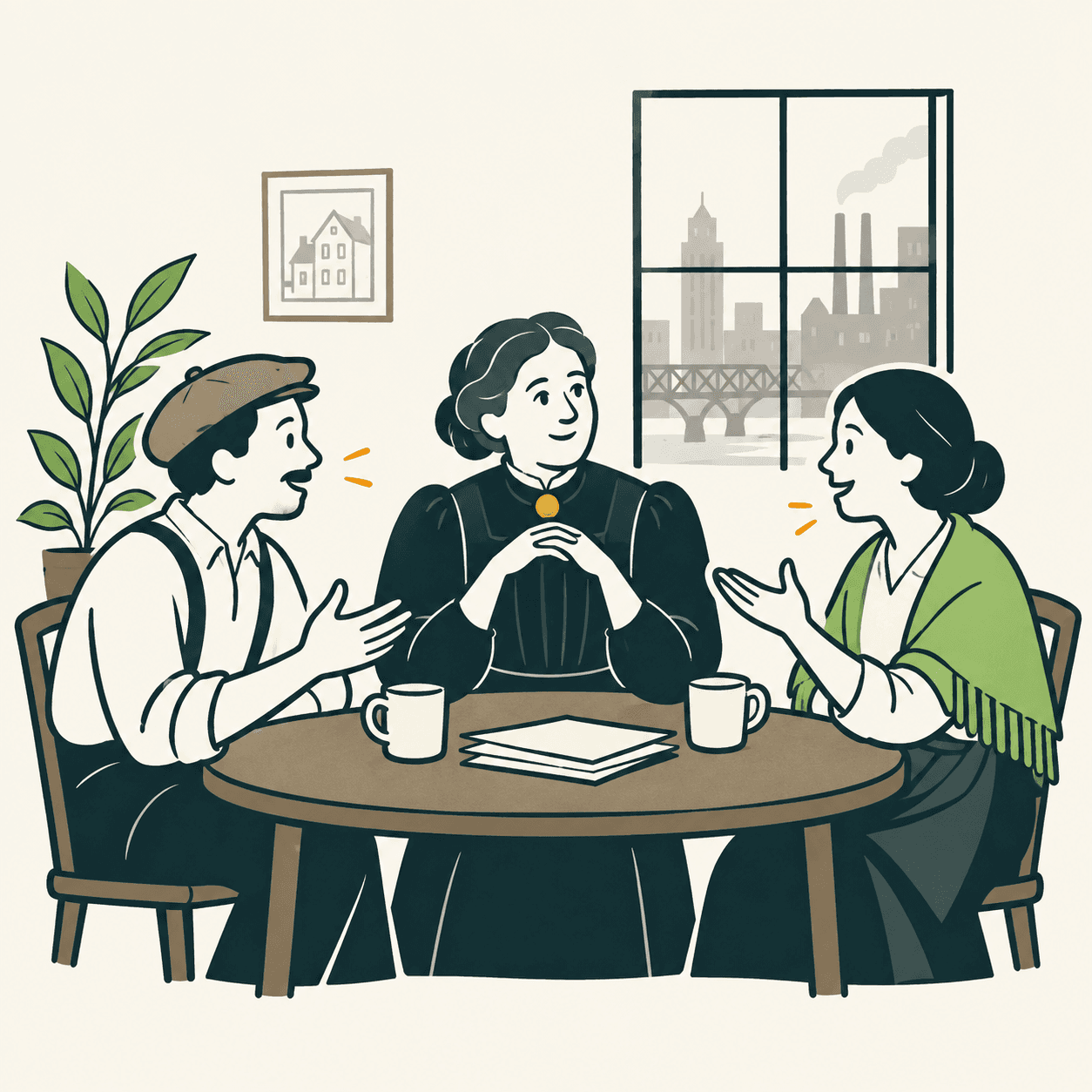
The Hull-House philosopher connected ideas with neighbourhood life: understanding other people takes closeness, questions and a willingness to change our minds.
Read the full story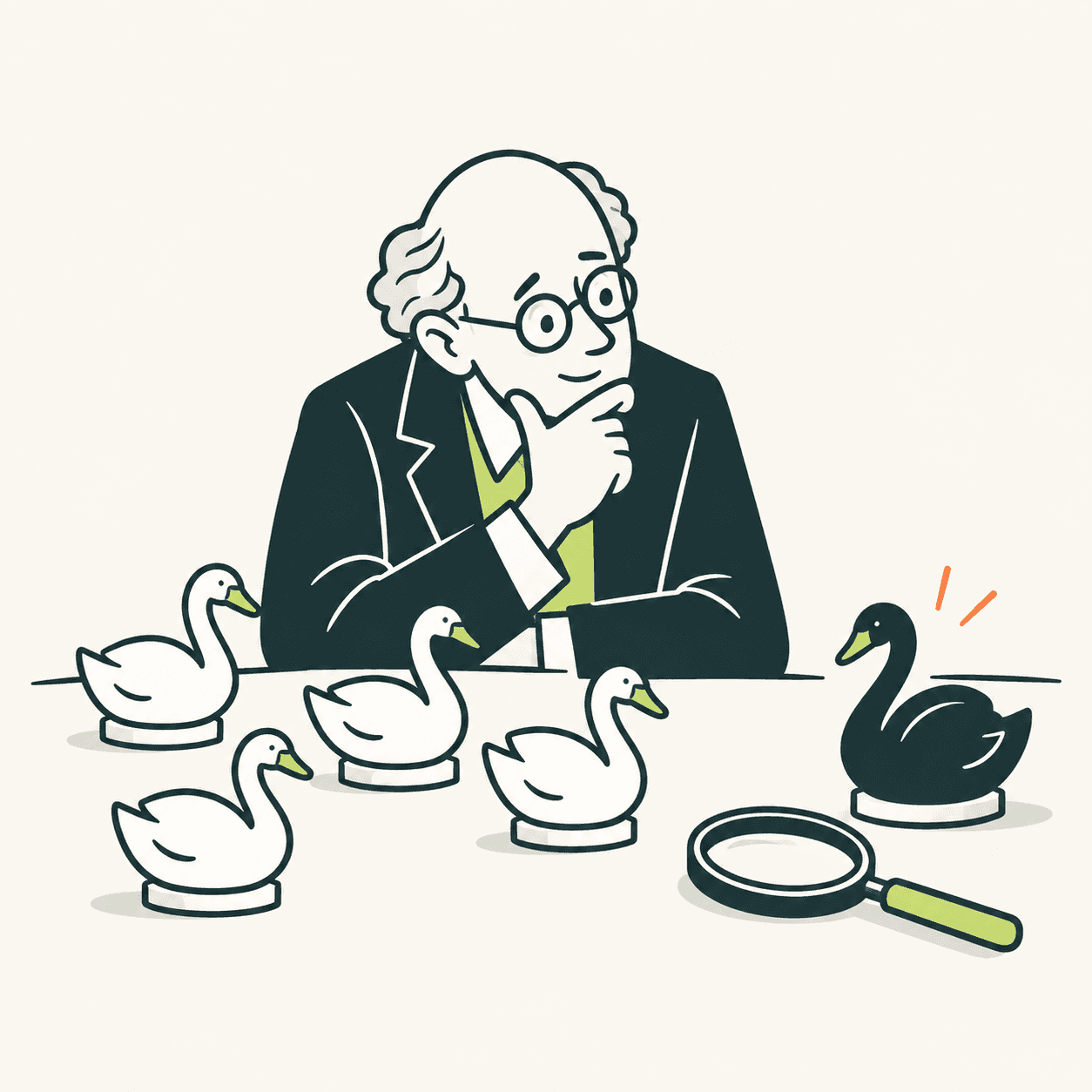
A useful test does more than look for supporting evidence: it leaves room for an explanation to need correction or replacement.
Read the full story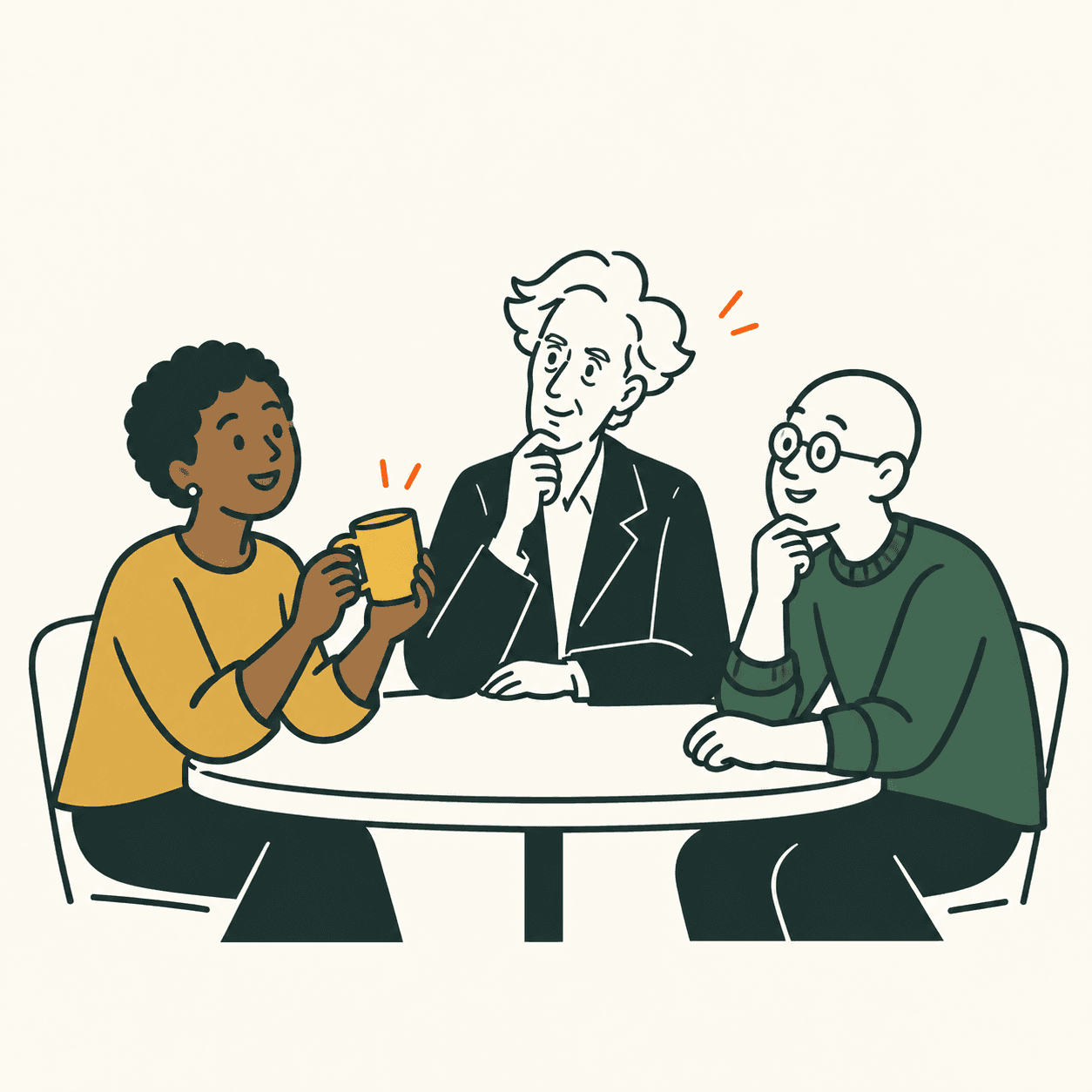
A question can widen what we are able to imagine. Russell invites us to examine certainty while still asking for reasons.
Read the full story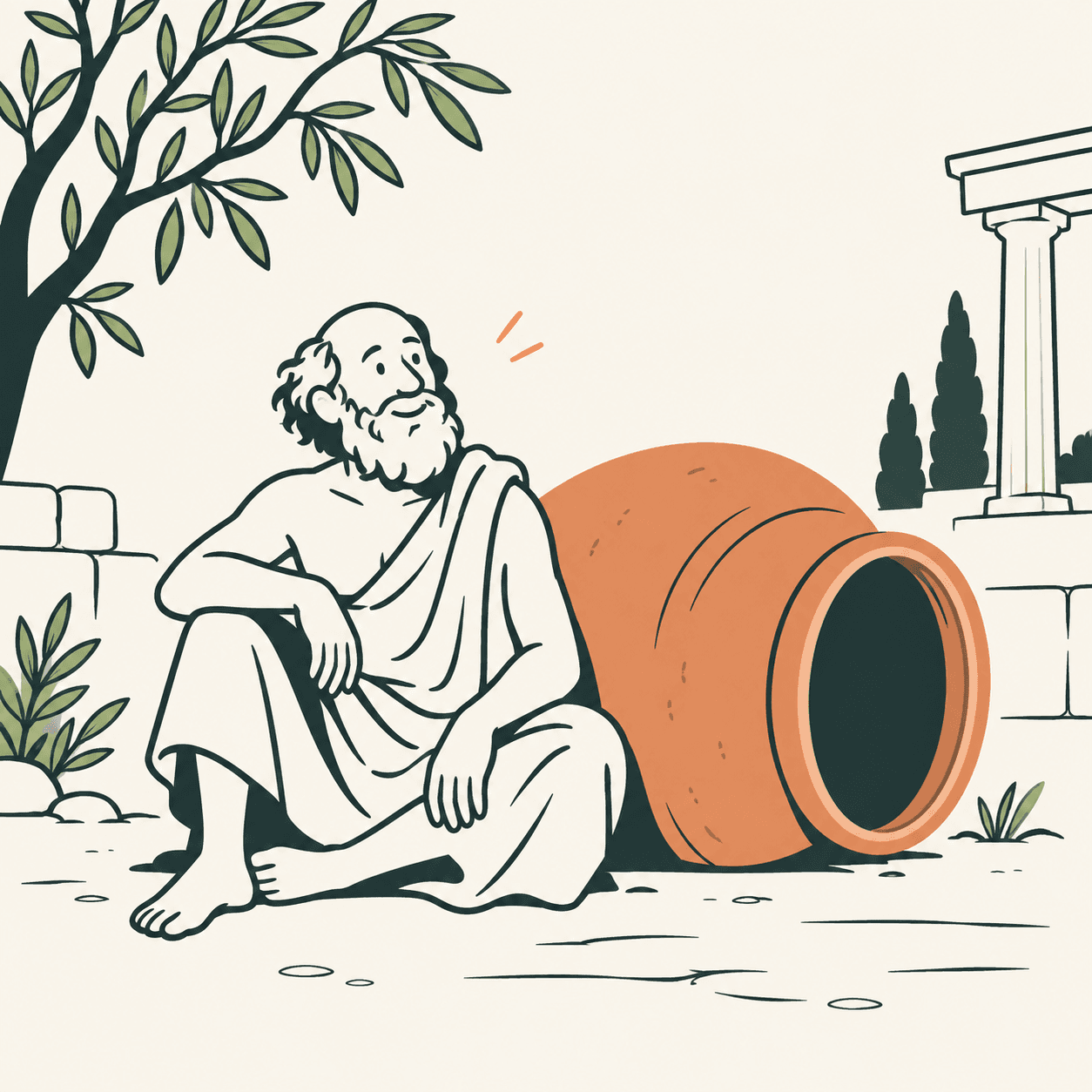
The Cynic philosopher tested everyday conventions. We can explore his question while keeping legendary stories separate from instructions for living.
Read the full story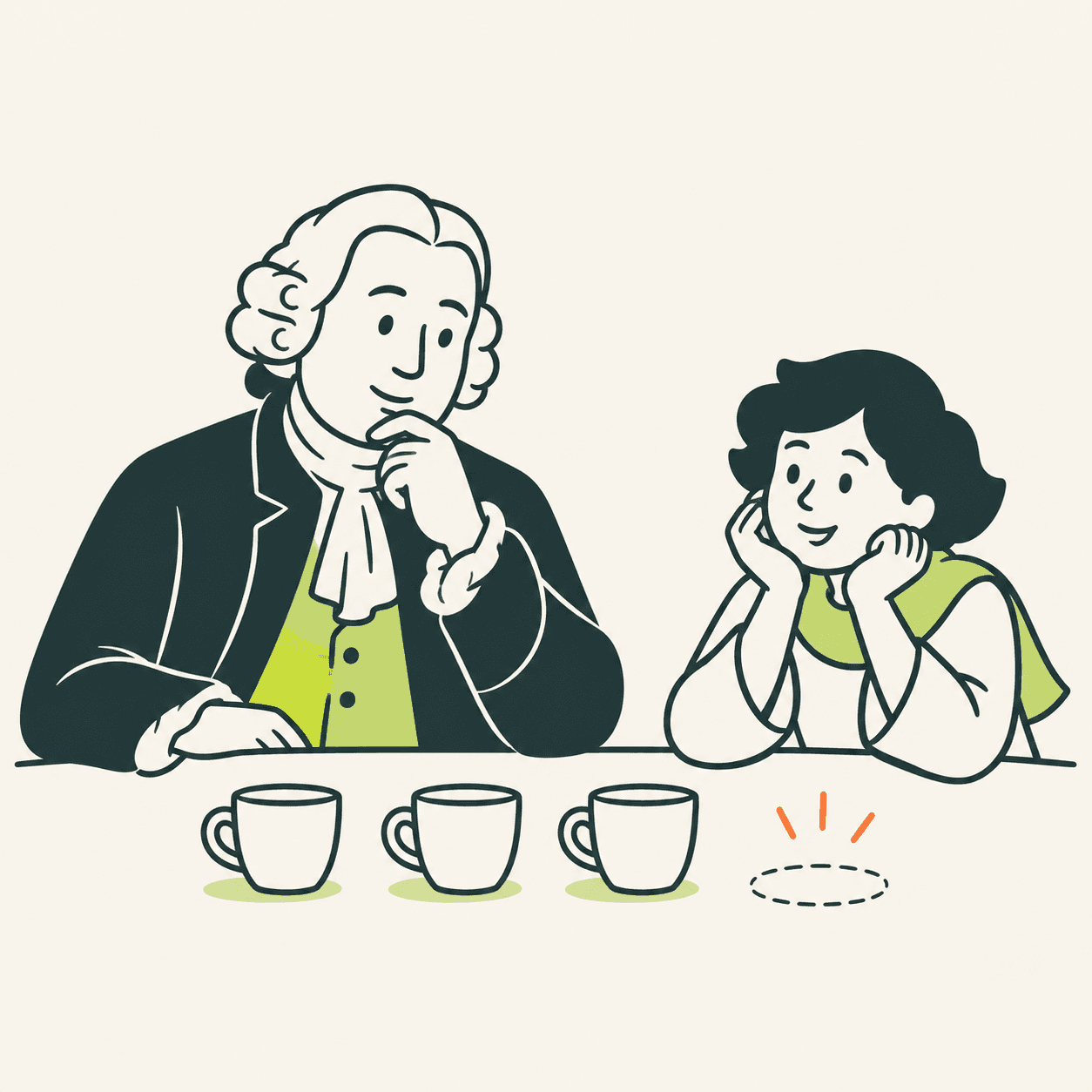
Habits help us predict the world. Hume asks us to tell a reasonable expectation apart from a certainty we have proved.
Read the full story
Asking for help is ordinary. The crucial difference is recognising that the other person has choices and purposes of their own.
Read the full story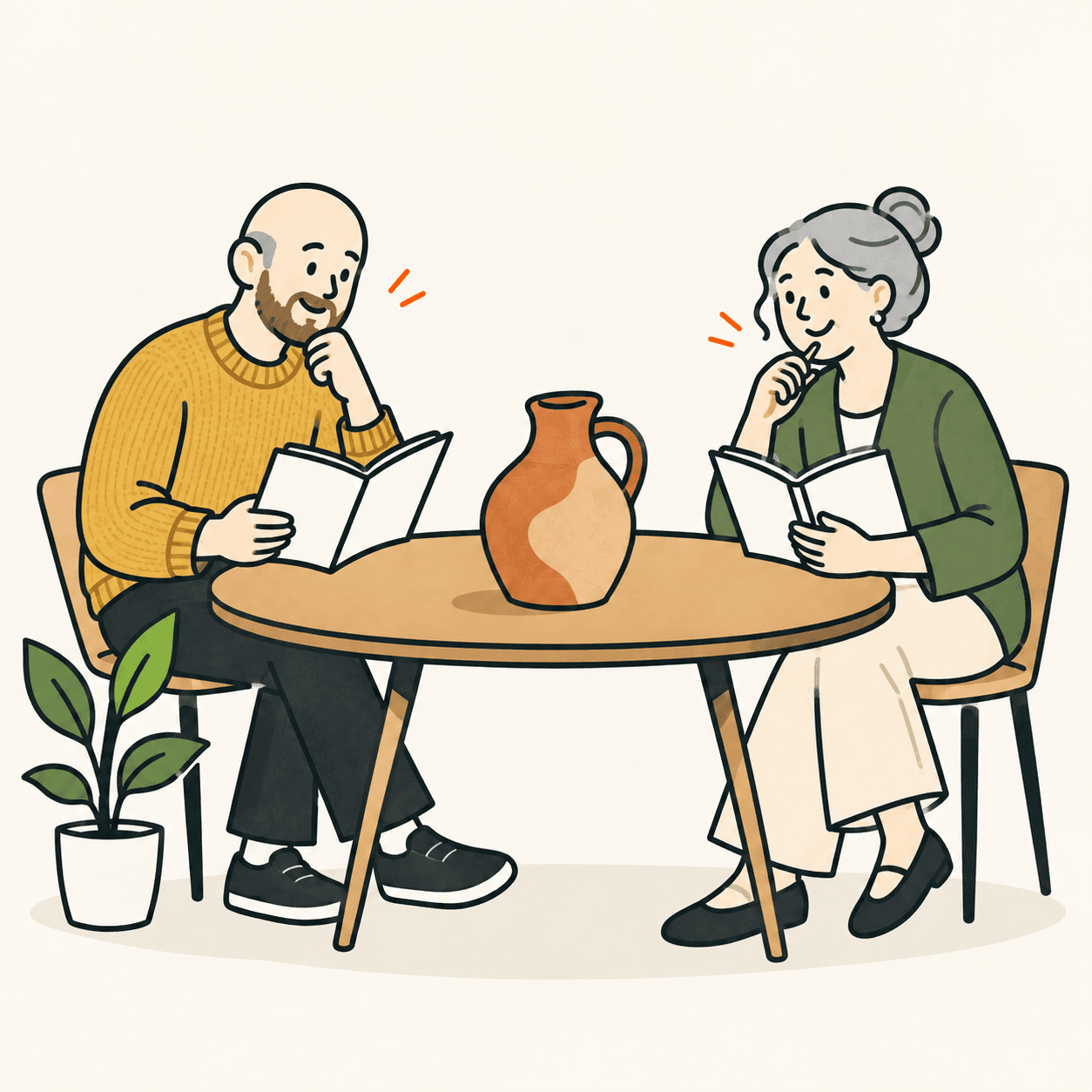
A lesson can become a question: could you use what you have learned when the words and the situation change?
Read the full story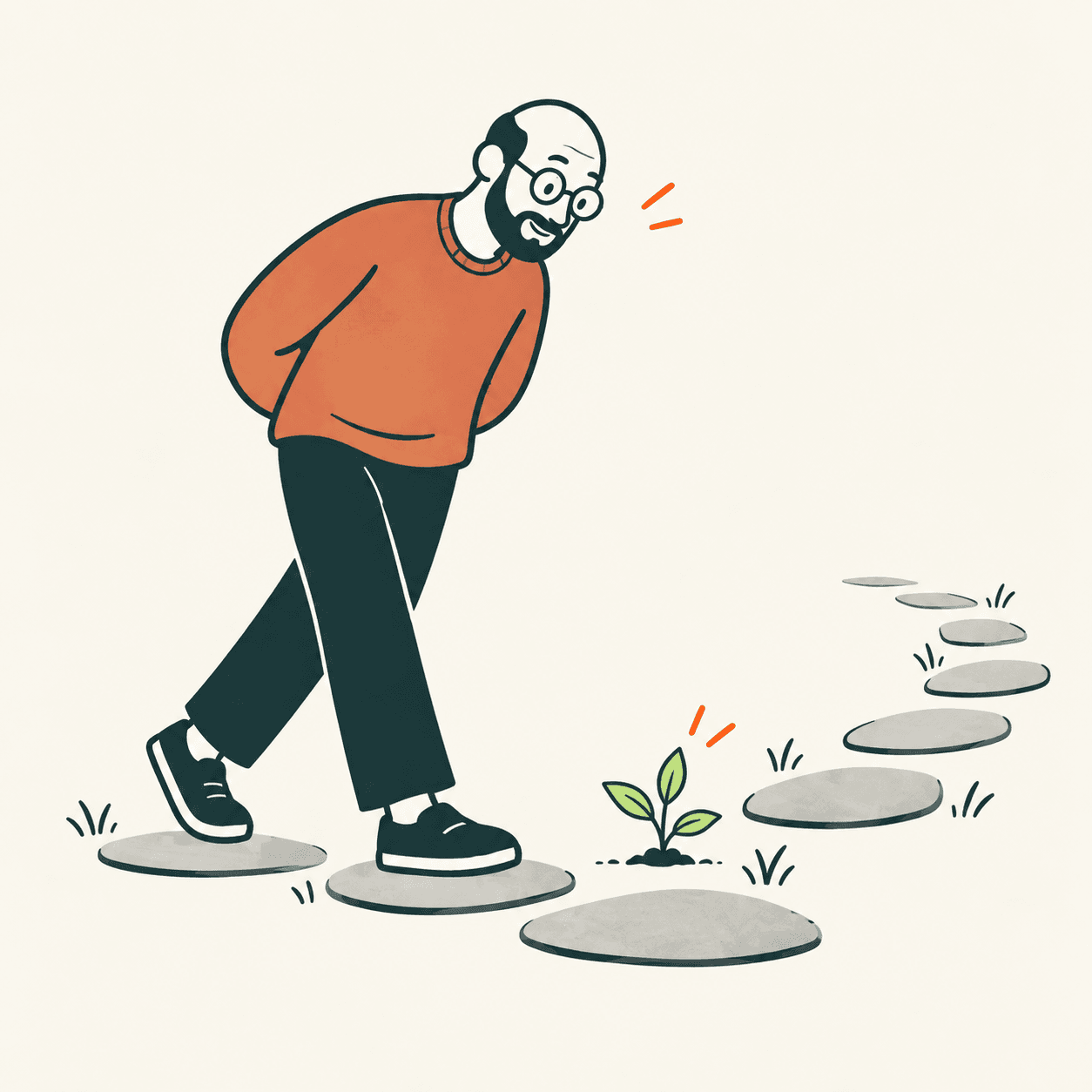
The philosopher and psychologist explored attention and habit: two different ways in which we move through an ordinary day.
Read the full story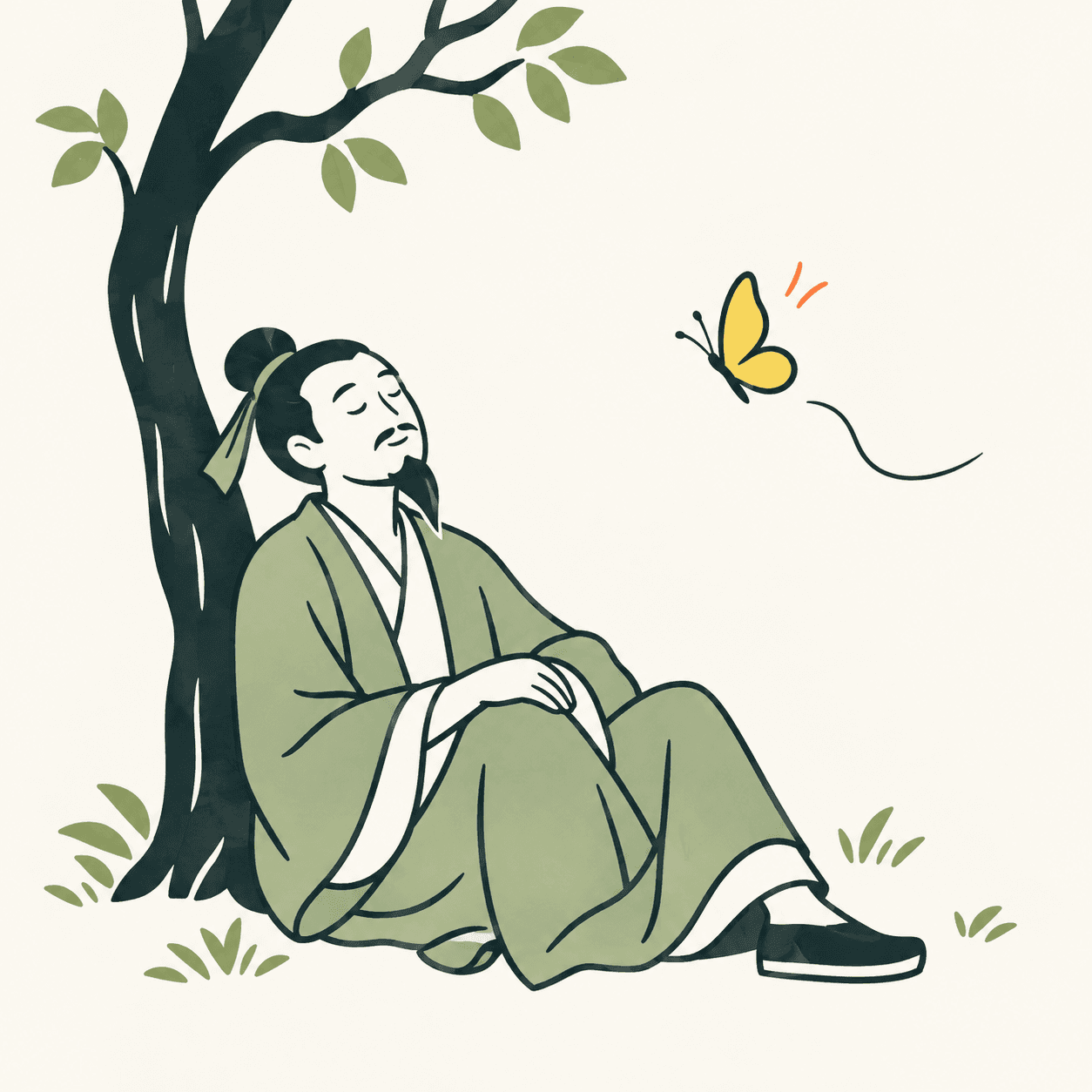
A dream does not prove that nothing is real. In the Zhuangzi, it raises a subtler question about where certainty comes from.
Read the full story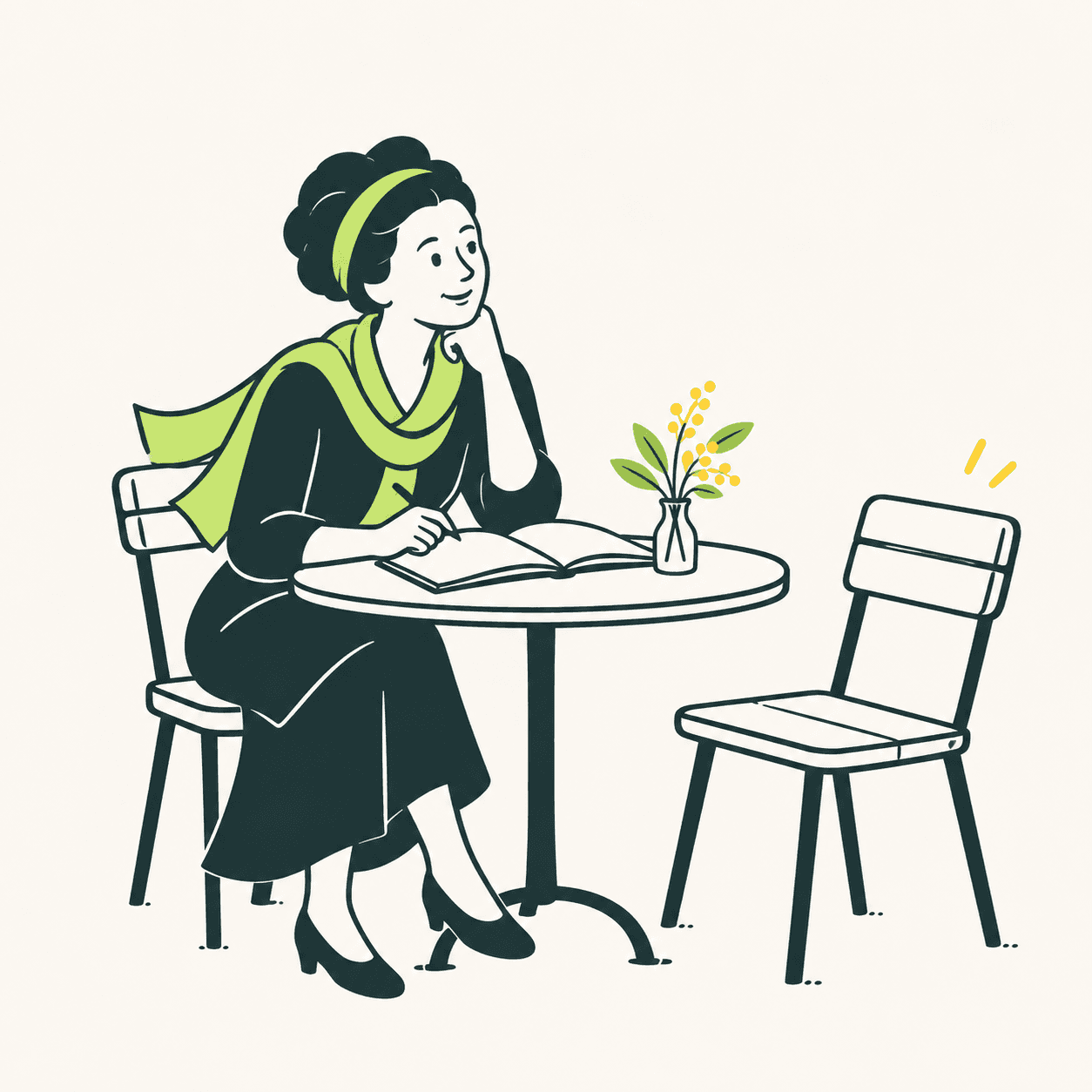
Choice never happens in a vacuum: a philosophical question connects our possibilities with the circumstances of the people around us.
Read the full story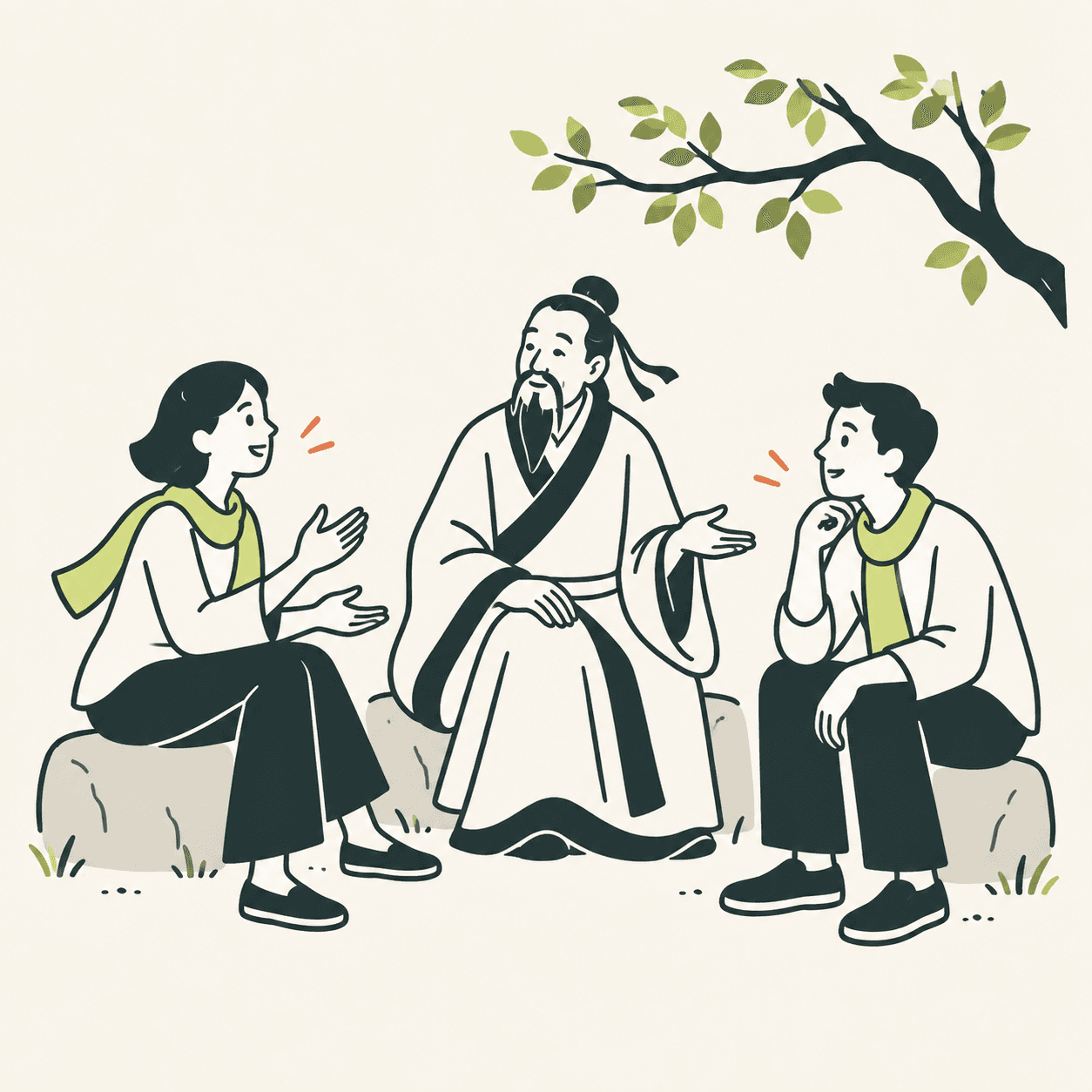
In the Analects, study, reflection and attention to other people form an ongoing practice beyond collecting ready-made answers.
Read the full story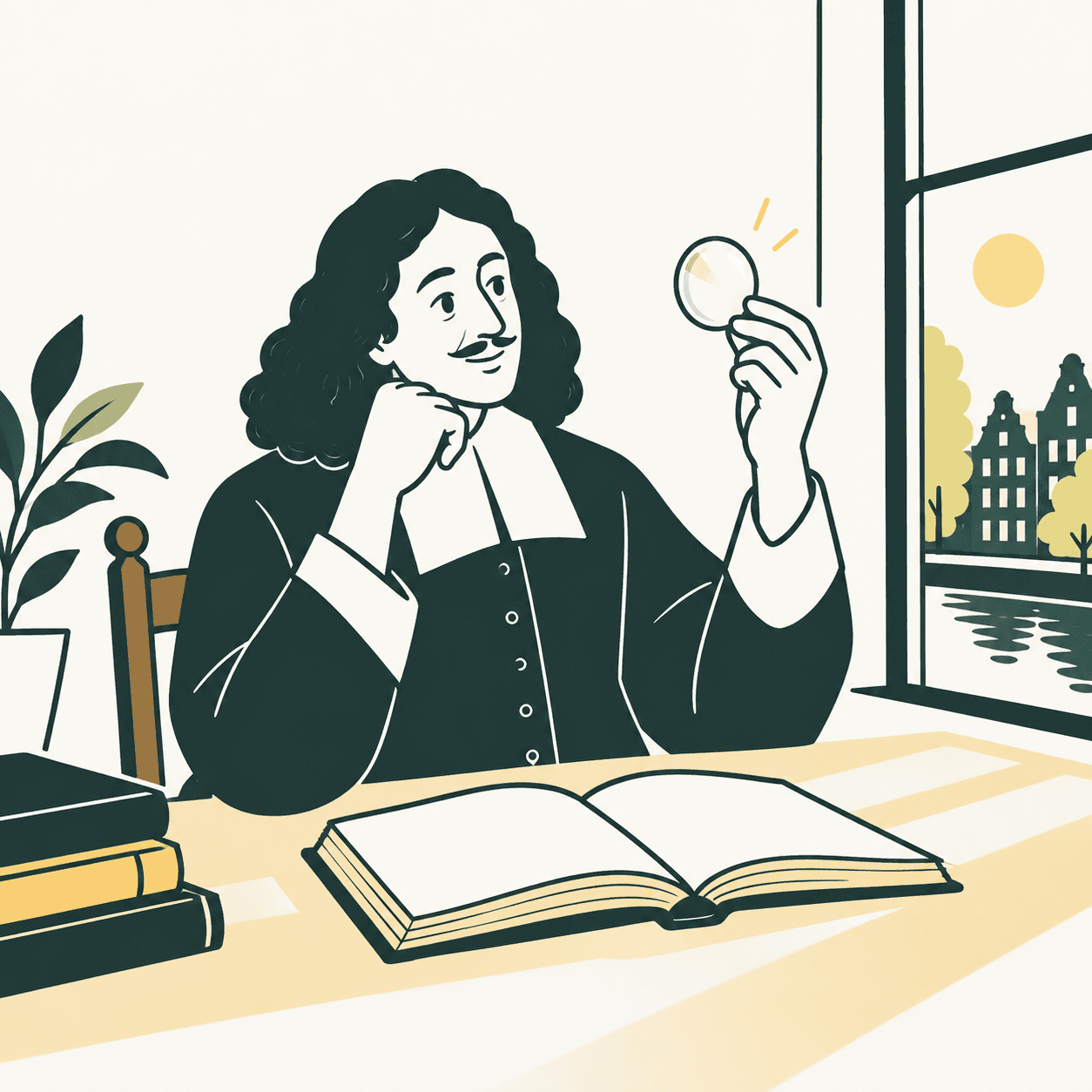
For Spinoza, emotions belong to nature: understanding their causes offers room for freedom, without promising an inner remote control.
Read the full story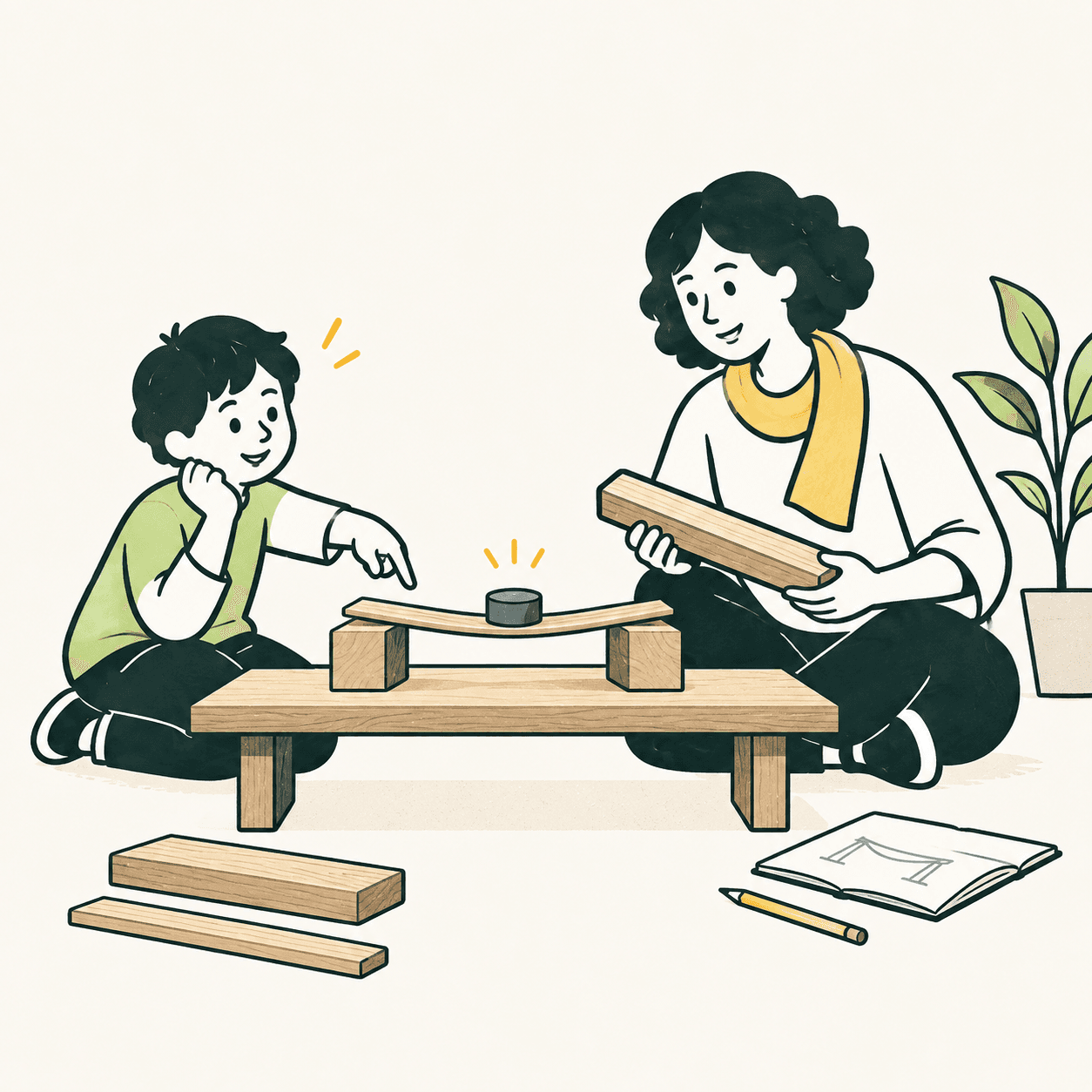
For Dewey, experience becomes educational when we connect our actions with their consequences and allow our explanations to be tested.
Read the full story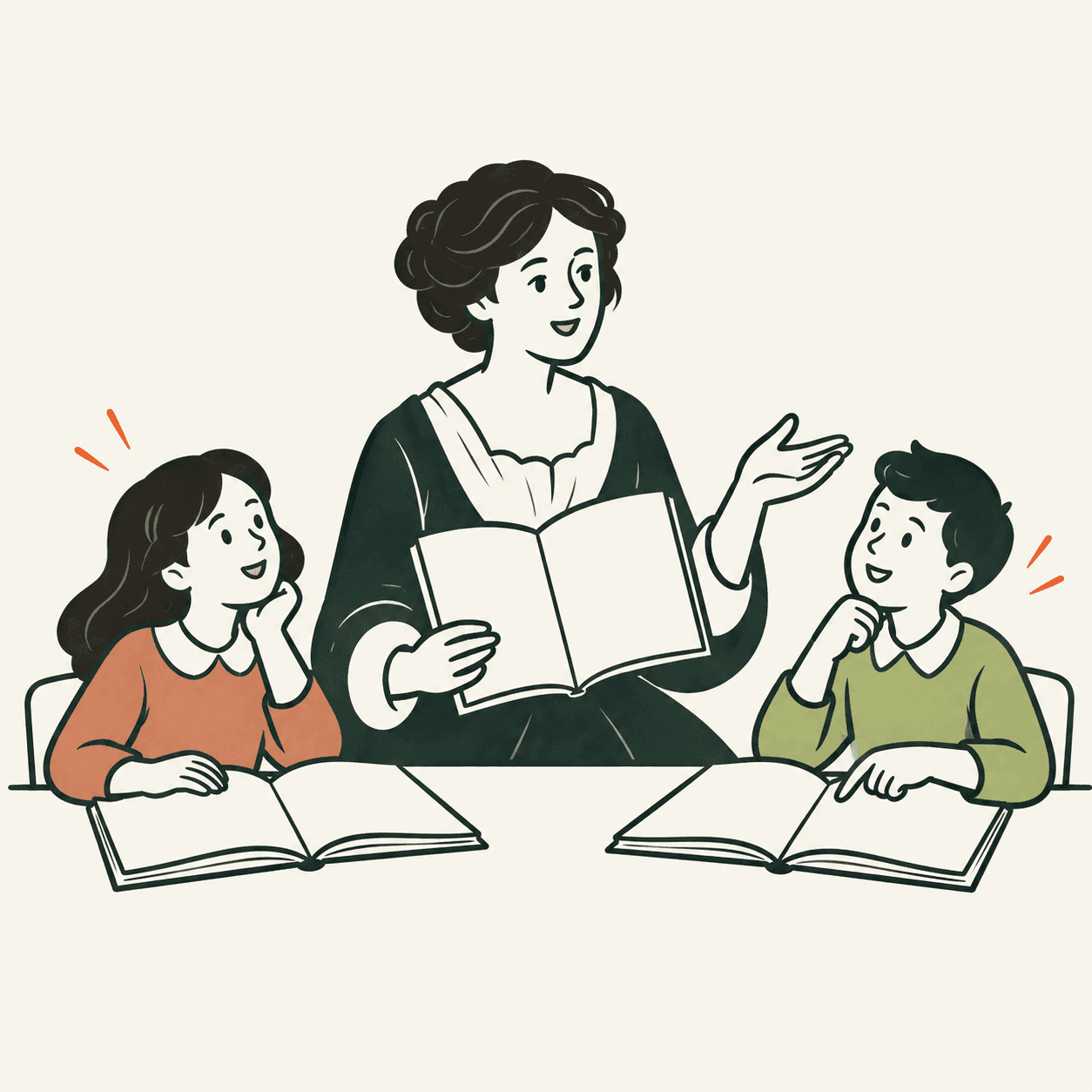
For the philosopher, education should develop independence and judgement: girls and boys ought to learn together at school.
Read the full story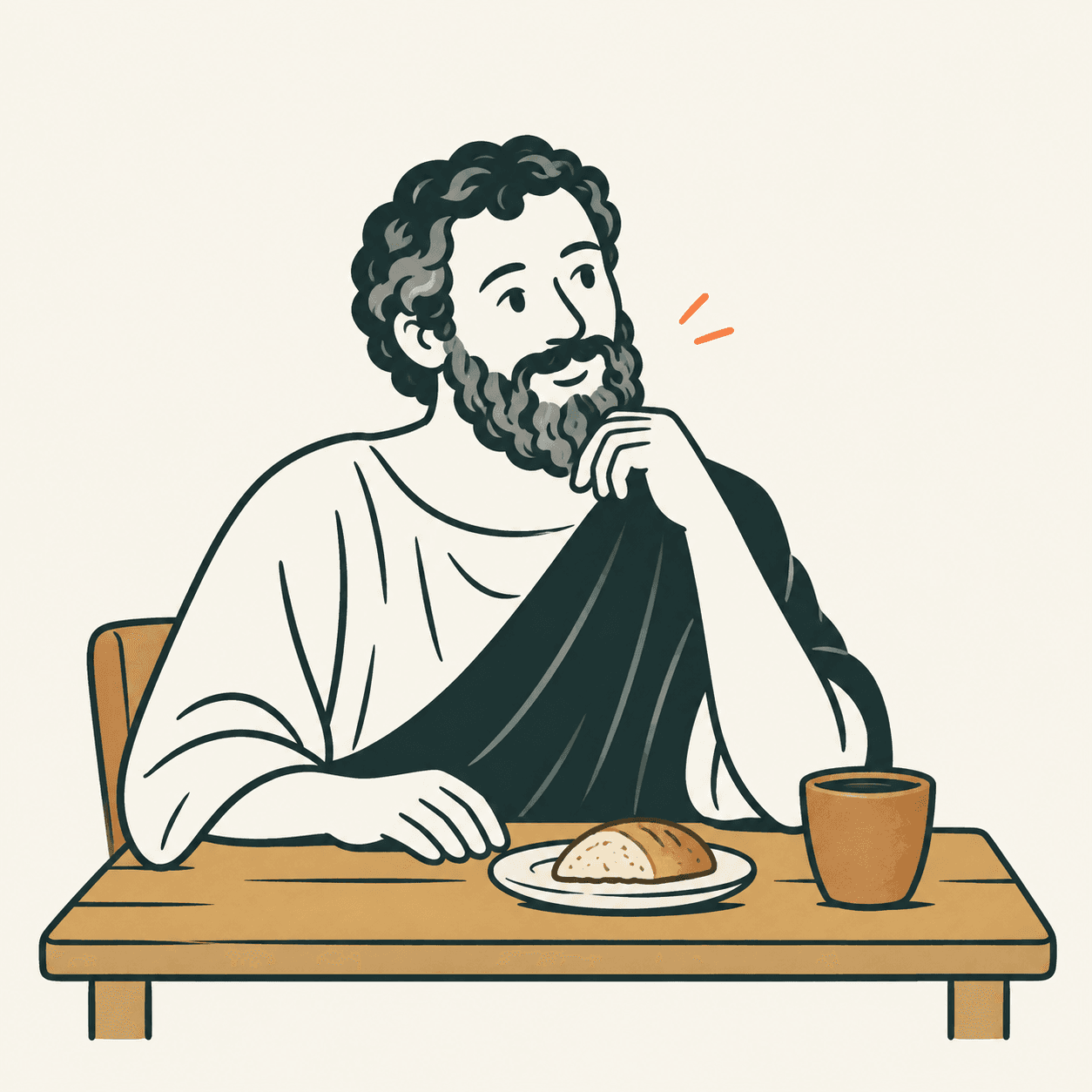
For Epicurus, pleasure does not require an endless collection of desires: even bread and water can help explain the point.
Read the discovery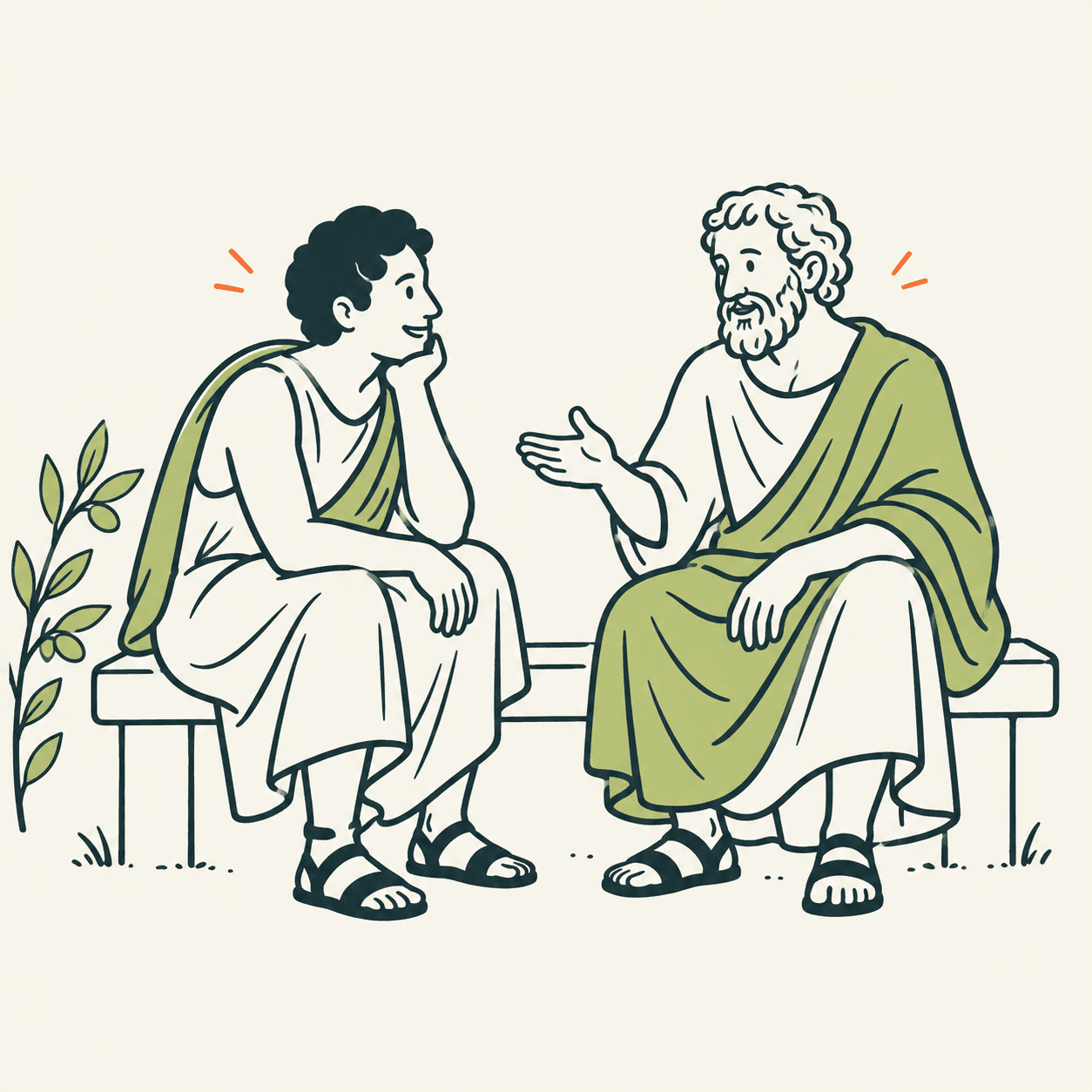
In the Nicomachean Ethics, Aristotle distinguishes useful or pleasant relationships from friendship that values another person for who they are.
Read the discovery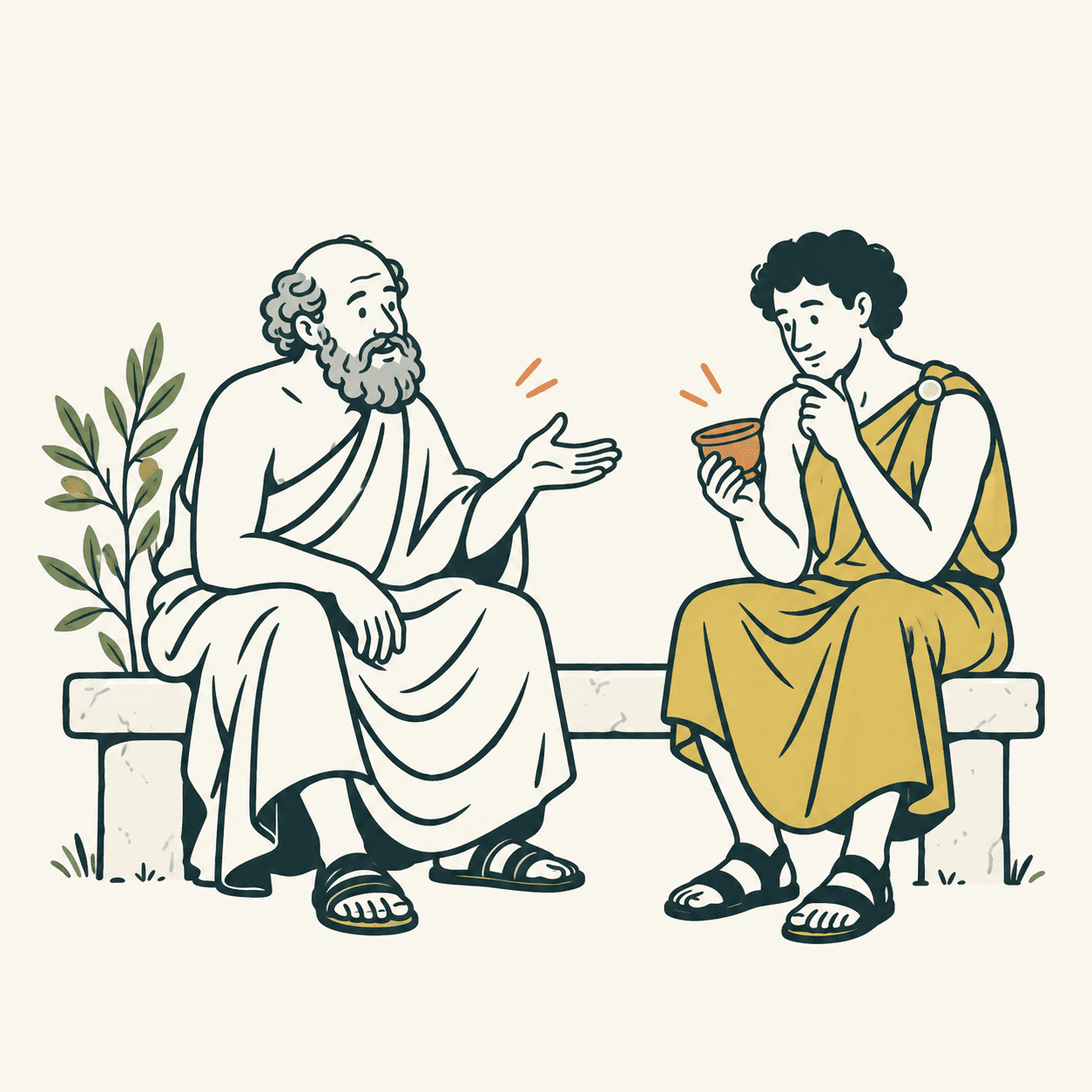
Being good at a craft does not make us experts on everything: a Socratic question can put our confidence in perspective.
Read the discovery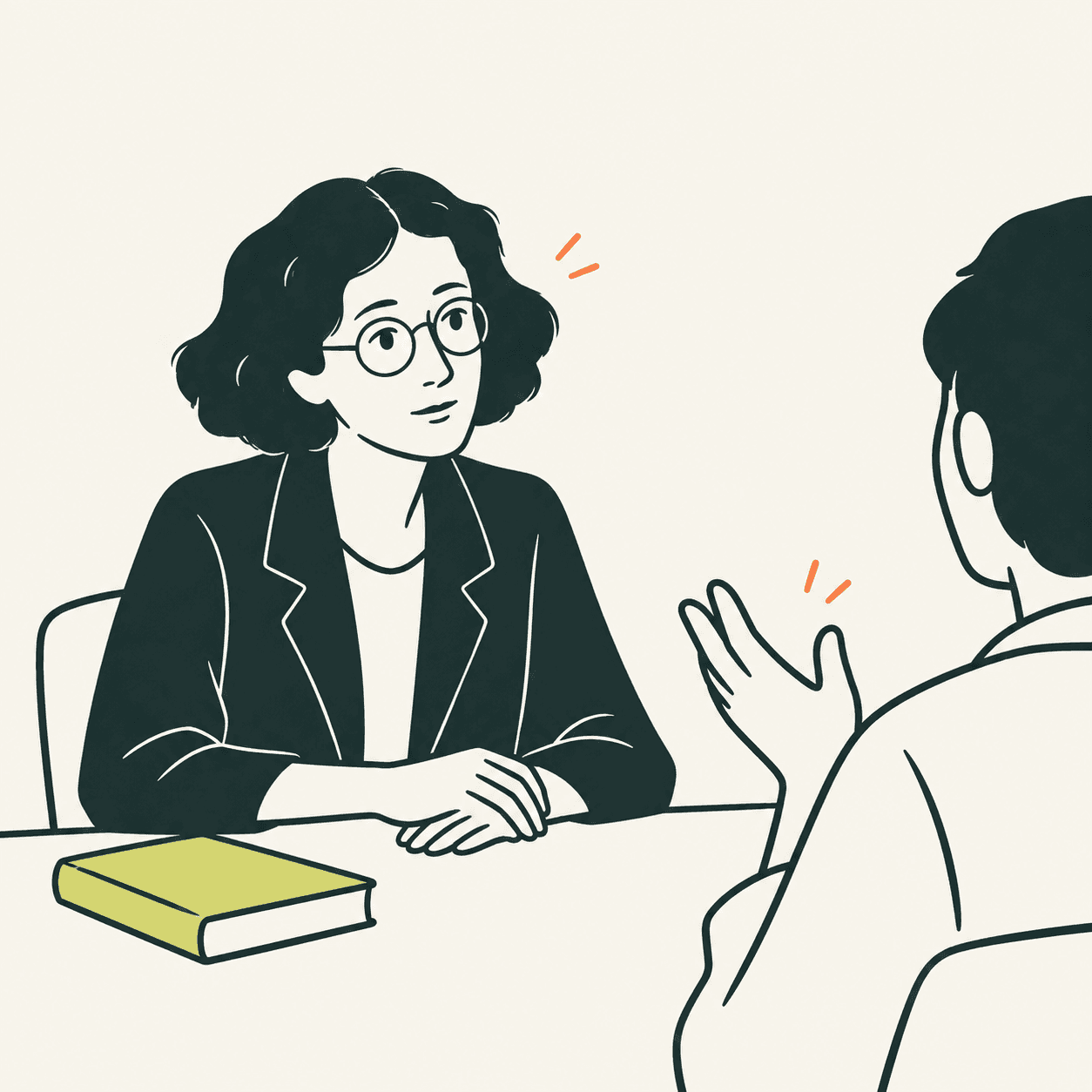
For Simone Weil, paying attention means receiving another person’s reality while allowing our own ready-made answers to wait a moment.
Read the discovery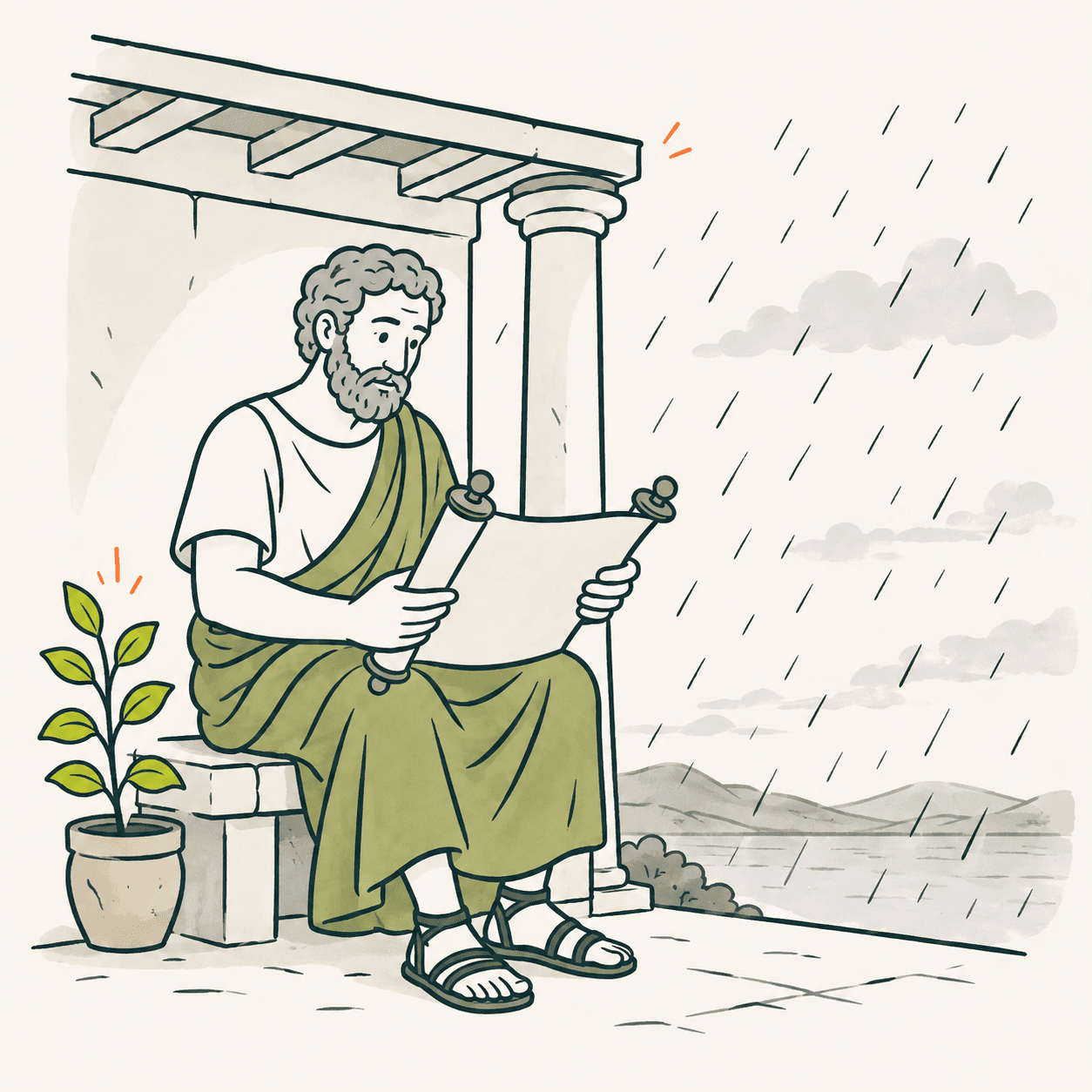
The Stoic separates our choices from things we do not govern: a practical exercise before the next small irritation arrives.
Read the discovery
Plurality is where political life begins: different people can speak and act together while sharing a common world.
Read the discoveryIllustrated reads with verifiable sources. Original illustrations made with AI assistance.