In 1792 Mary Wollstonecraft published A Vindication of the Rights of Woman, placing education at the centre of a political problem: how can women act independently if they are chiefly prepared to depend on other people’s approval? Her demand concerns the ability to reason, opportunities to support oneself and participation in shared life. [1]
The dedication to Talleyrand tests the consistency of proclaimed rights. If reason allows human beings to judge and choose, excluding women requires justification: custom is not enough. Wollstonecraft asks for more than kindness from those in charge. She challenges the claim that one half of humanity can exclusively determine what is good for the other. [2]
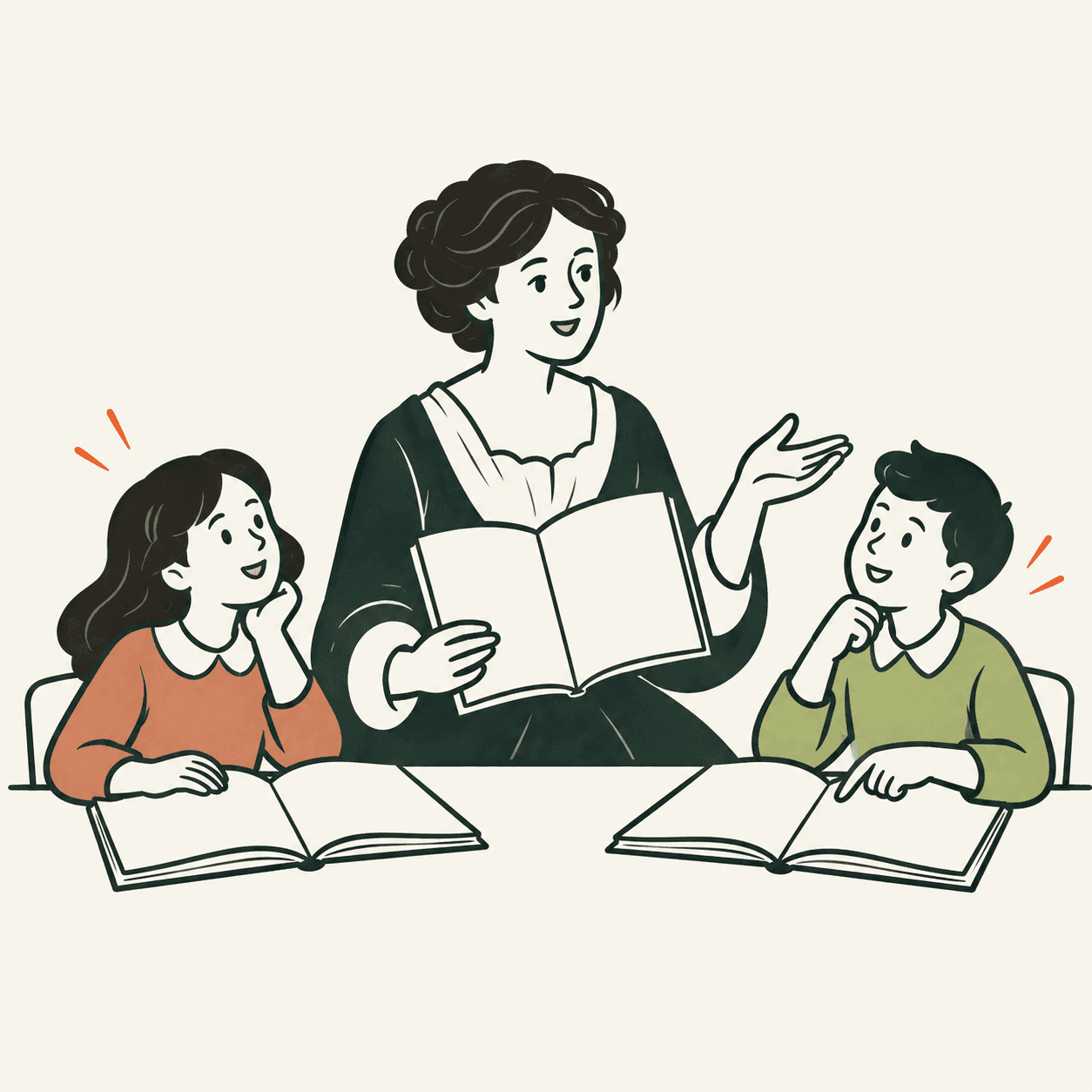
In Chapter XII she proposes government-organised day schools. From five to nine, education should be free and open to girls and boys of every social class. The programme includes reading, writing, arithmetic, natural history and experiments, while protecting time for outdoor exercise. Learning together also means meeting peers with whom to debate, rather than only receiving answers from authoritative adults. [2]
Independence, on this account, needs practice. In Chapter XI the author criticises obedience demanded simply on the basis of parental authority. Understanding a reason and submitting to someone’s will are different activities. Education should prepare a person to assess advice, including advice from someone they love: affection and judgement do not have to exclude each other. [2]
The proposal nevertheless has specific historical limits. After nine, Wollstonecraft distinguishes educational paths according to future occupation, ability and economic circumstances; she also envisages afternoon activities for girls such as sewing and dressmaking. Her mixed school therefore does not match a fully egalitarian contemporary system. Reading these passages prevents us from turning an eighteenth-century thinker into a spokesperson for the present. [2]
The Stanford Encyclopedia of Philosophy notes that her idea of independence included inner resources and the skills to live without marrying out of financial necessity. In our reading, this changes the question we ask of education: alongside how much a person knows, we can ask what decisions they can actually make. A framed qualification cannot answer that on its own. [1]
Consider this editorial example: two people compare a job offer. One lists its advantages; the other must be able to request evidence, identify hidden costs and disagree without ending the conversation. This is not an episode from Wollstonecraft’s life, but a way to put the distinction between approval and judgement to work. The exercise succeeds when the person explaining accepts the need to explain better, rather than immediately being declared right. [2]
Take this with youWhen teaching something, leave room for a reasoned objection. Ask what evidence might change your mind: independence needs practice on the teacher’s side as well.
Read the sources (2)
- Mary Wollstonecraft Stanford Encyclopedia of Philosophy · accessed 15 Sept 2026
- A Vindication of the Rights of Woman — dedica e capitoli XI–XII (1792) Mary Wollstonecraft · Project Gutenberg · accessed 15 Sept 2026
Original writing and illustration made with AI assistance. Our editorial method
More in Philosophy