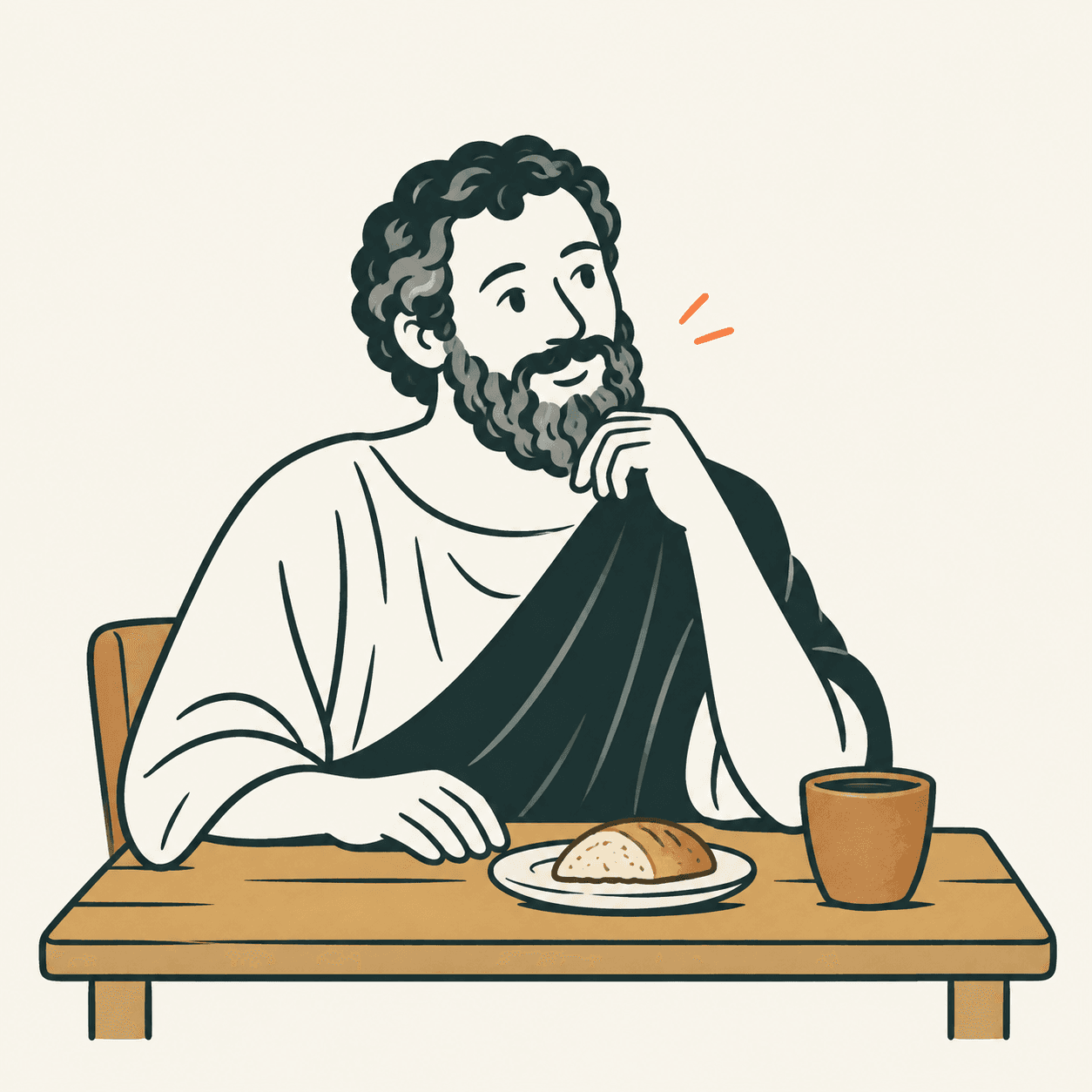
In the Letter to Menoeceus, Epicurus connects a pleasant life with freedom from physical pain and mental disturbance. His example is concrete: bread and water can bring great pleasure to someone who is hungry, without any need for a banquet. [1]
Distinguishing necessary, merely natural and empty desires helps us think through choices. In the Stanford Encyclopedia of Philosophy’s reading, multiplying desires can increase the very agitation we are hoping to remove. [2]
Take this with youA suggestion from our editors: choose something pleasant already available today and give it your attention. The purchasing department can wait five minutes.
Read the sources (2)
- Letter to Menoeceus The Internet Classics Archive · MIT · accessed 13 Sept 2026
- Epicurus Stanford Encyclopedia of Philosophy · accessed 13 Sept 2026
Original writing and illustration made with AI assistance. Our editorial method
More in Philosophy