News dated
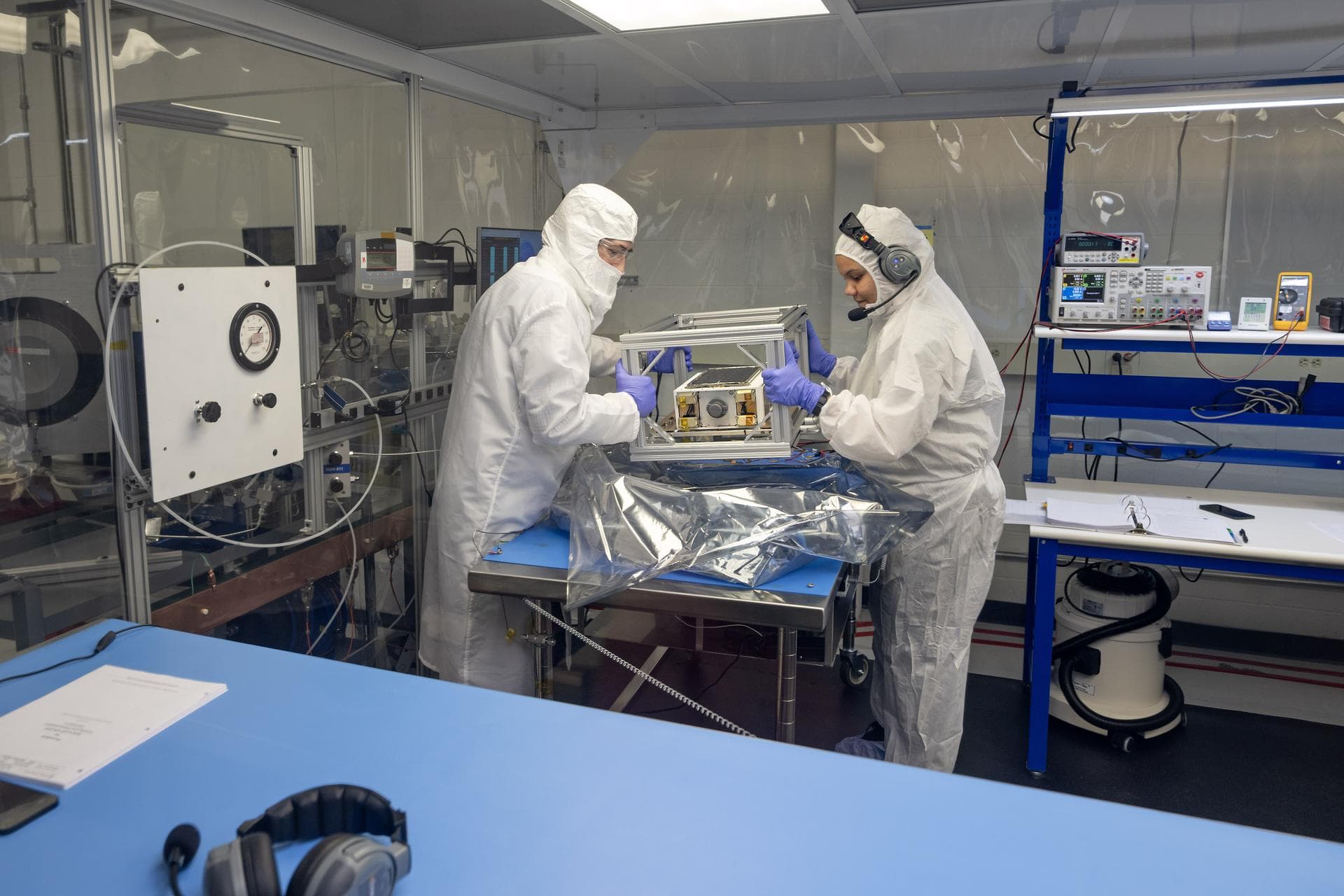
On 25 September, NASA reported that its small ASCENT Propulsion Dual Mode satellite had completed environmental and physical tests. The demonstration in orbit still lies ahead. [1]
The design uses the same propellant, the material that produces thrust, for a chemical engine and electric thrusters. Sharing the system avoids carrying two separate installations, which are particularly bulky on a small satellite. [2]
Final checks and solar-panel integration remain. Launch is scheduled for no earlier than 1 October: a planned step, not an achievement yet. [1]
The bright side
Reducing mass and bulk could leave more room for instruments on future missions. [1][2]
One idea, in simple words
A small satellite must carry everything it needs. The ASCENT project aims to use the same material to supply two types of engine: one chemical engine and electric thrusters. This material is called propellant. [2]
Here is an example made up by our editors to explain the idea: imagine two toys that can draw energy from the same container. You do not have to carry two different containers. The satellite works in a much more complicated way, but seeks a similar advantage: saving space. [2]
On 25 September, NASA announced that ground tests were complete. Other preparations remain before departure. Working during tests is one step forward; showing that everything works in space will be the next step. [1]
A little discovery to keep
What did you discover?
Straight from the source.
- NASA Tests Dual Mode Propulsion CubeSat Ahead of Launch NASA · 25 Sept 2026
- Mission Architecture for the Green Propulsion Dual Mode Mission NASA Technical Reports Server / Georgia Institute of Technology · No publication date provided
Original reporting summaries prepared with AI assistance and accessible sources. Our editorial method.