News dated
On September 30, NASA highlighted Overlap Zoo: volunteers check candidate galaxy pairs, identify their shapes and trace their outlines. A tutorial helps people with no previous experience. [1][2]
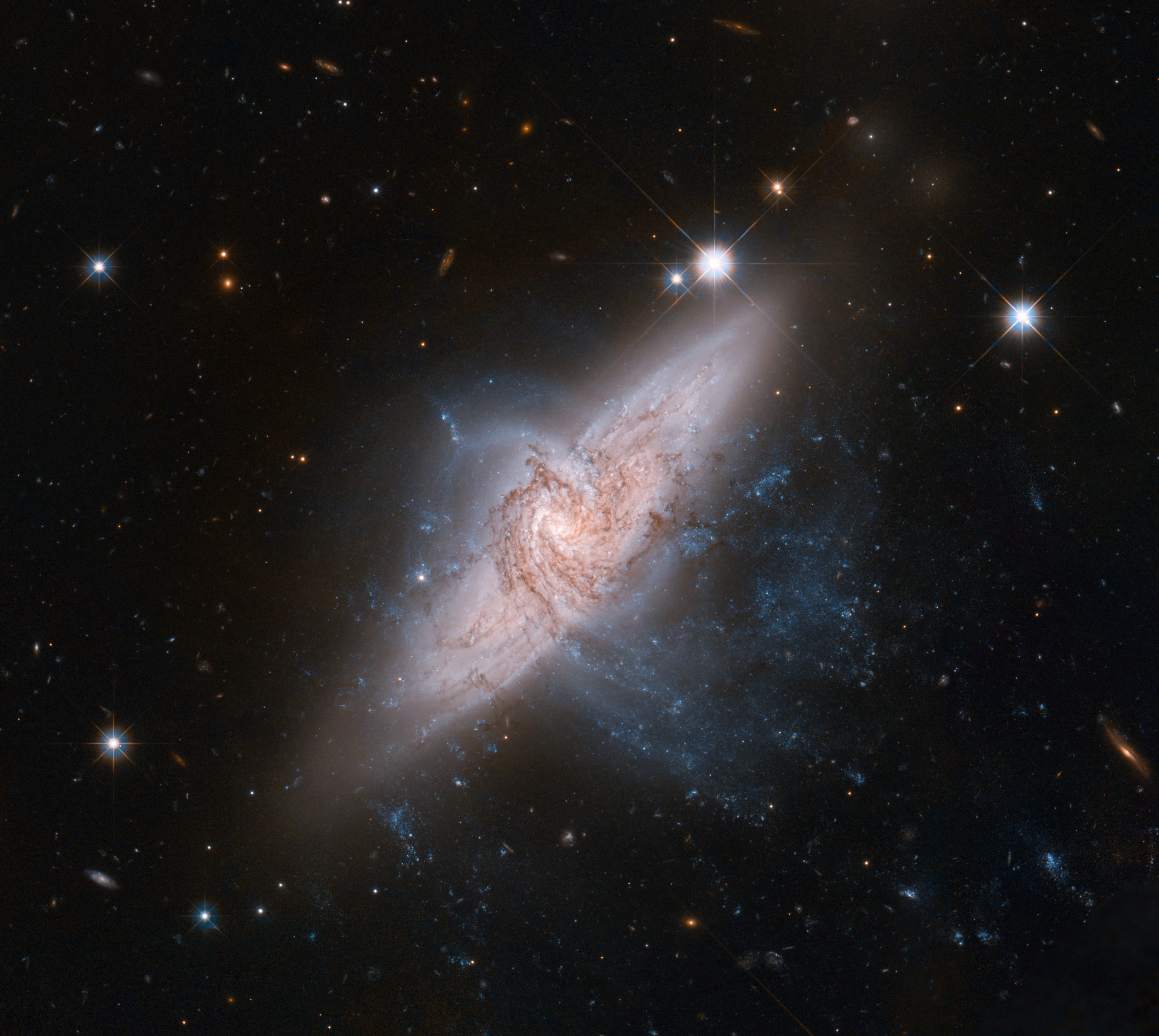
When two galaxies overlap in our view, the one behind illuminates dust in the one in front. The project seeks suitable pairs for studying that dust: the intended catalogue remains a goal, not a completed result. [3]
The bright side
Classification opens a practical research task to volunteers. [1]
One idea, in simple words
A galaxy is a huge collection of stars. In some pictures, two galaxies seem to lie on top of each other, although they may be very far apart. This happens because of our viewing angle. Light from the galaxy behind passes through dust in the nearer one. Some light is absorbed or scattered: looking at the difference helps researchers study dust. [3]
Overlap Zoo asks volunteers to examine these pictures, identify shapes and draw outlines. You do not need to be an astronomer: a guide explains the steps. The aim is to select useful pairs for future studies. Taking part helps prepare research; it does not mean the mystery is already solved. [2][1]
A little discovery to keep
What did you discover?
Straight from the source.
- Help Overlap Zoo Reveal Cosmic Dust NASA · 30 Sept 2026
- Overlap Zoo NASA · No publication date provided
- Research | Overlap Zoo Zooniverse / Overlap Zoo · No publication date provided
Original reporting summaries prepared with AI assistance and accessible sources. Our editorial method.