News dated
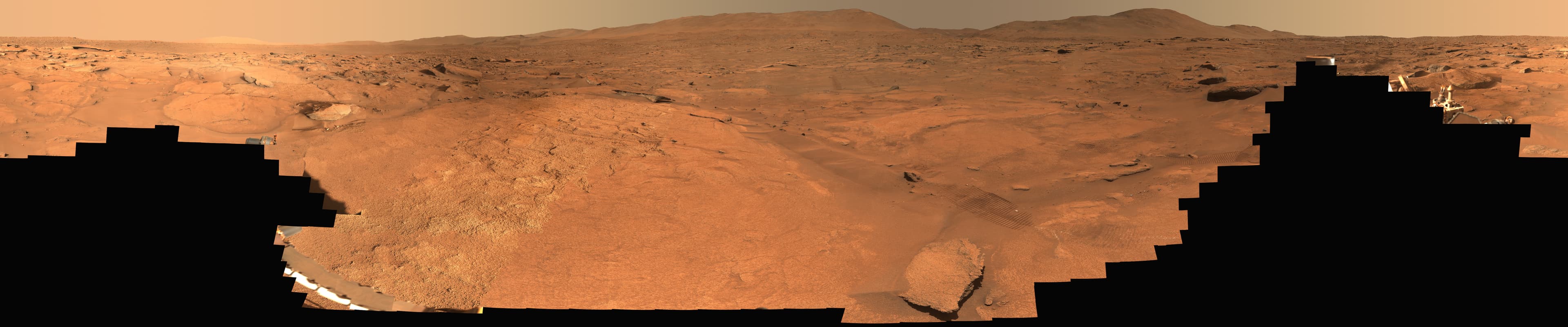
A study published on 21 September traces at least three water episodes in Jezero’s Margin Unit rocks. Data indicate successive changes, with uncertainty over the fluids’ origins. [2]
NASA distinguishes sequence from dates. No Martian life is demonstrated. [1]
SuperCam investigates chemistry and minerals remotely using light and lasers. The useful principle: reading a rock takes more than looking at its colour in a photograph. [3]
The bright side
More clues to Mars’s past. [1]
One idea, in simple words
Perseverance is a robot exploring Mars. In September 2023, it reached an area called the Margin Unit. Scientists have now reconstructed part of its history. They know which change came first, but not when it happened. [1]
A study published on 21 September describes at least three encounters between water and rock. Water can change minerals, the natural substances that make up rocks. These traces help researchers understand the place’s past. [2]
The robot also uses SuperCam, an instrument that analyses light to identify materials. Imagine a detective comparing different clues: that is our example. Colour alone does not tell you the whole story of a rock. [3]
A little discovery to keep
What did you discover?
Straight from the source.
- NASA Discovery Reveals Complex Water Systems on Early Mars NASA/JPL · 21 Sept 2026
- Lake- and groundwater-associated alteration of the olivine-rich Margin unit in Jezero crater, Mars Communications Earth & Environment · 21 Sept 2026
- Perseverance Science Instruments NASA · No publication date provided
Original reporting summaries prepared with AI assistance and accessible sources. Our editorial method.