A wall, a window frame, a stove: in Petrykivka, near Dnipro, these objects and spaces became part of the history of a distinctive decorative painting tradition. The Encyclopedia of Ukraine connects its name with the locality and describes plant motifs arranged in bouquets and friezes. The discovery is more than the fact that a house can be ornamented. Everyday surroundings can become places where a visual language is practised and passed on to other people. [2]
In the ministry’s inventory record held by UNESCO, observation of local plants goes together with the invention of flowers that do not exist in nature. We are therefore not looking at a painted herbarium. Leaves, branches, berries and blossoms are transformed into compositions. The distinction matters: recognising a natural reference does not allow us to identify every flower as a particular species. The record also describes differences between masters’ works within a shared tradition. [1]
Specific gestures lie behind the apparent ease. The Encyclopedia describes brushstrokes in which the pressure changes: a mark can begin broad and finish fine, or follow the opposite course. Others combine several pigments within the same stroke. It is therefore not simply a matter of choosing a flower and filling it with colour. Movement leaves a shape, and that shape relates to its neighbours: the result retains traces of a skill developed through practice. [2]
Transmission belongs to the practice, rather than being a caption added afterwards. In its 2013 description, the Polish National Commission for UNESCO recounts learning within families and local schools. It also discusses the symbolic meanings of birds and protective beliefs associated with the paintings. These are documented traditional beliefs, rather than effects painting has been shown to cause. Similar care applies to the community: a historical description is not an updated census of every household. [3]
The tradition entered UNESCO’s Representative List of the Intangible Cultural Heritage of Humanity in 2013, as Ukraine’s 2014 report records. This is not today’s news. “Intangible” helps shift attention from the object alone towards the ability to create, teach and renew: this is our reading, grounded in the gestures and continuity described by the sources. A plate can be preserved; a way of painting also needs people who continue to practise it. [4][1]
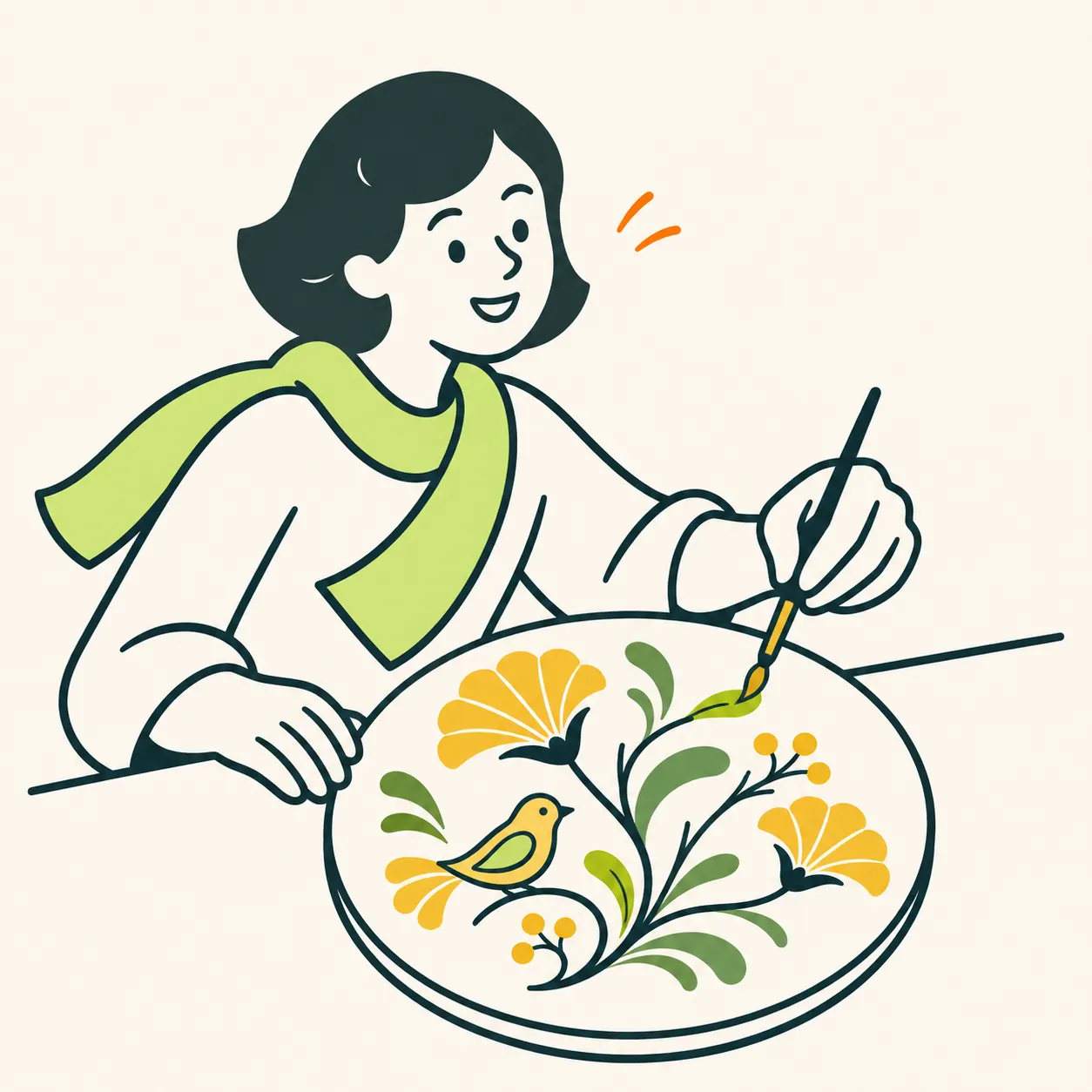
Here is an editorial observation to try: in a documented, attributed work, find a stroke that moves from a broad mark to a point, then follow the rhythm between filled and open spaces. There is no need to copy the design or label our own attempt authentic. The AI illustration accompanies this account with an invented motif in Positive Times’ graphic language; it neither reproduces a Petrykivka work nor replaces its practitioners’ colours, hands or authorship. [1][2]
Take this with youAn ornament can hold knowledge in motion: noticing how it is made also helps us recognise the people who keep it alive.
One idea, in simple words
Petrykivka is a Ukrainian locality associated with a decorative painting tradition. Flowers, leaves and other natural elements become designs on walls and objects. They are not always copies of real plants: artists can invent flowers while drawing on their observations of nature. Gestures matter too. Pressing a brush and then lifting it can produce marks with different shapes. The sources describe this knowledge being shared through families and local schools. The tradition entered UNESCO’s intangible heritage list in 2013; that is not a new event today. Imagine a decorated plate. The plate is an object, while the way of painting it is knowledge that somebody must learn and continue to practise. [1][2][3][4]
A little discovery to keep
What did you discover?
Read the sources (4)
- Petrykivka Painting — national inventory record attached to nomination 00893 Ministry of Culture of Ukraine · UNESCO archive · accessed 4 Nov 2026
- Petrykivka painting Internet Encyclopedia of Ukraine · Canadian Institute of Ukrainian Studies · accessed 4 Nov 2026
- Ukraina — Malarstwo dekoracyjne z Petrykiwki Polish National Commission for UNESCO · accessed 4 Nov 2026
- Ukraine — 2014 periodic report on the diversity of cultural expressions, p. 12 Ministry of Culture of Ukraine · UNESCO archive · accessed 4 Nov 2026
Original writing and illustration made with AI assistance. Our editorial method
More in Cultures & peoples