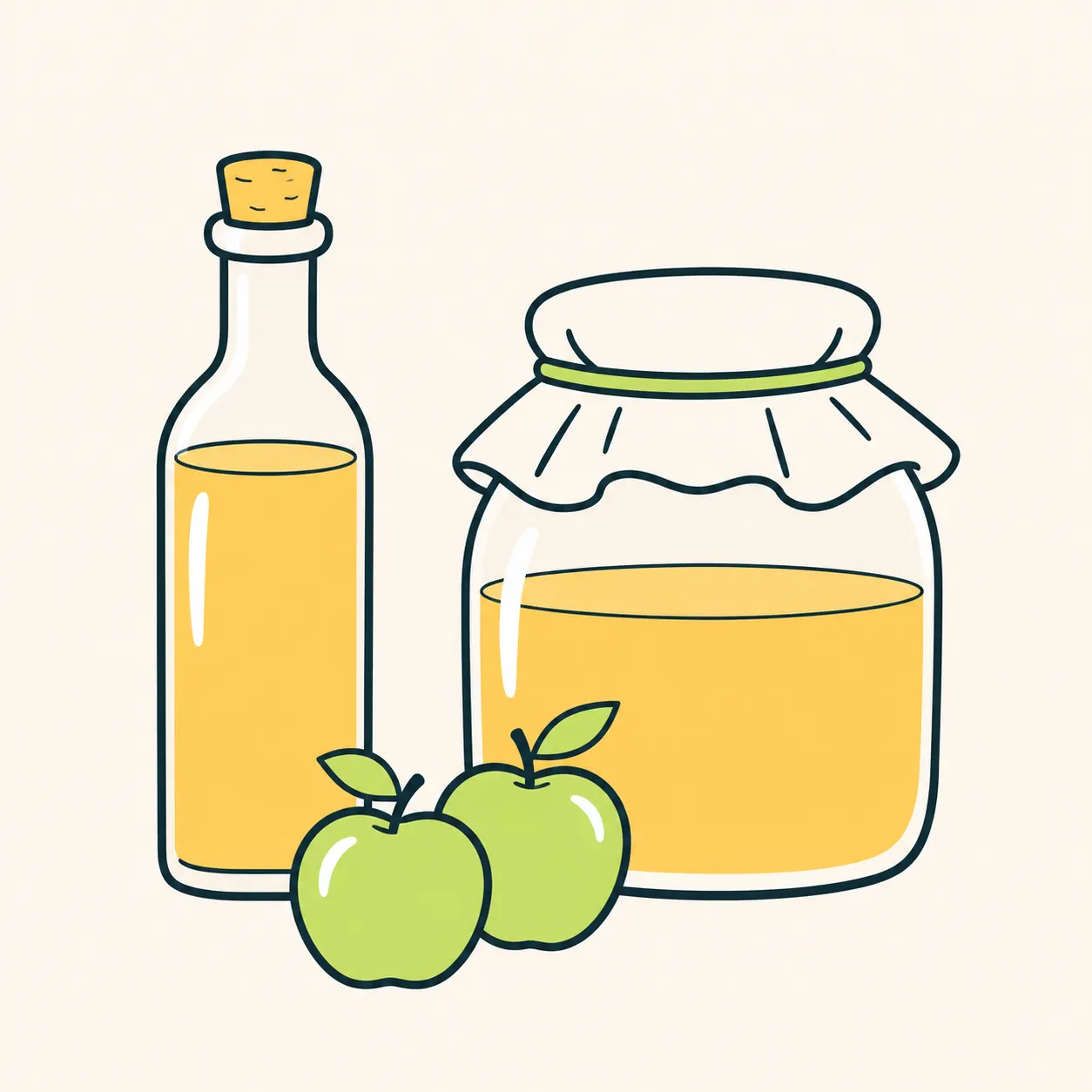
A bottle of vinegar looks like a finished object: we pick it up, season something and put it away. Its history, however, includes transformations that do different jobs. The interesting point is not to imagine a mysterious potion, but to recognise a handover between microorganisms. NC State and Harvard distinguish the production of alcohol from its later conversion into acetic acid. The general word “fermentation” can hide that distinction if we use it without asking exactly what is being transformed at each stage. [1][2]
During alcoholic fermentation, yeasts transform sugars and produce ethanol. In the acetic stage, bacteria use alcohol and oxygen to produce acetic acid, vinegar’s characteristic compound. NC State describes these bacteria as aerobic: they need oxygen. “Acetic fermentation” is the conventional name for the production process, but it does not mean that it takes place without air. Here lies the small surprise: assuming fermentation always requires excluding oxygen prevents us from understanding this particular transformation. Processes grouped under one name do not necessarily require identical conditions. [3][1][2]
Starting materials vary too. The descriptions include vinegars made from wine, cider and other alcoholic bases; vinegar is not simply water with an apple flavour added. The starting material, processing and maturation help distinguish different products. This reading does not claim, however, that a bottle’s whole story can be deduced from its colour or the container’s shape. Its label offers a more relevant starting point than a visual impression, and a broad category does not describe every commercial recipe or manufacturing choice. [1][2]
Understanding air’s role does not amount to a home recipe. NC State warns that simply leaving wine exposed can allow other organisms to grow: tasting sour and undergoing a controlled transformation are not equivalent evidence. We are not suggesting tasting experiments or using homemade products for preserving food. We are following a food process without assigning it curative powers. A bottle remains scientifically interesting even when we abandon the idea that a food needs to perform miracles before it deserves our attention. [1][2]
One editorial exercise is to compare two labels already in the kitchen and record only what they state: raw material, ingredients and any product designation. Then separate that information from your own taste preferences. This is neither a laboratory test nor a quality ranking. It simply reveals, behind a familiar condiment, a sequence of transformations involving different organisms and conditions. When adding a few drops to a salad, we can remember that “acidic” describes a result; it does not tell the whole story of how that result came about. [1][2]
Take this with youTo understand fermentation, ask which microorganisms act and what they transform. In the conversion of alcohol into acetic acid, oxygen belongs in the story.
One idea, in simple words
Vinegar can be produced through two transformations. First, yeasts use sugars and produce alcohol. Then certain bacteria turn alcohol into acetic acid, which gives vinegar its acidic character. These bacteria need oxygen, so processes called fermentation do not all require the same conditions. Imagine a relay in which two groups perform different jobs. This is an editorial comparison, not a real race between microbes. Vinegars can start from wine, cider or other bases. This reading explains a process but is not a recipe to try: leaving a drink exposed to air does not guarantee a safe product. To observe something in your kitchen, simply read the information on an already purchased bottle with an adult. [2][1][3]
A little discovery to keep
What did you discover?
Read the sources (3)
- Vinegar Making NC State Extension · accessed 9 Nov 2026
- Vinegar Harvard T.H. Chan School of Public Health, The Nutrition Source · accessed 9 Nov 2026
- Preserving food at home: Fermentation University of Minnesota Extension · accessed 9 Nov 2026
Original writing and illustration made with AI assistance. Our editorial method
More in Food