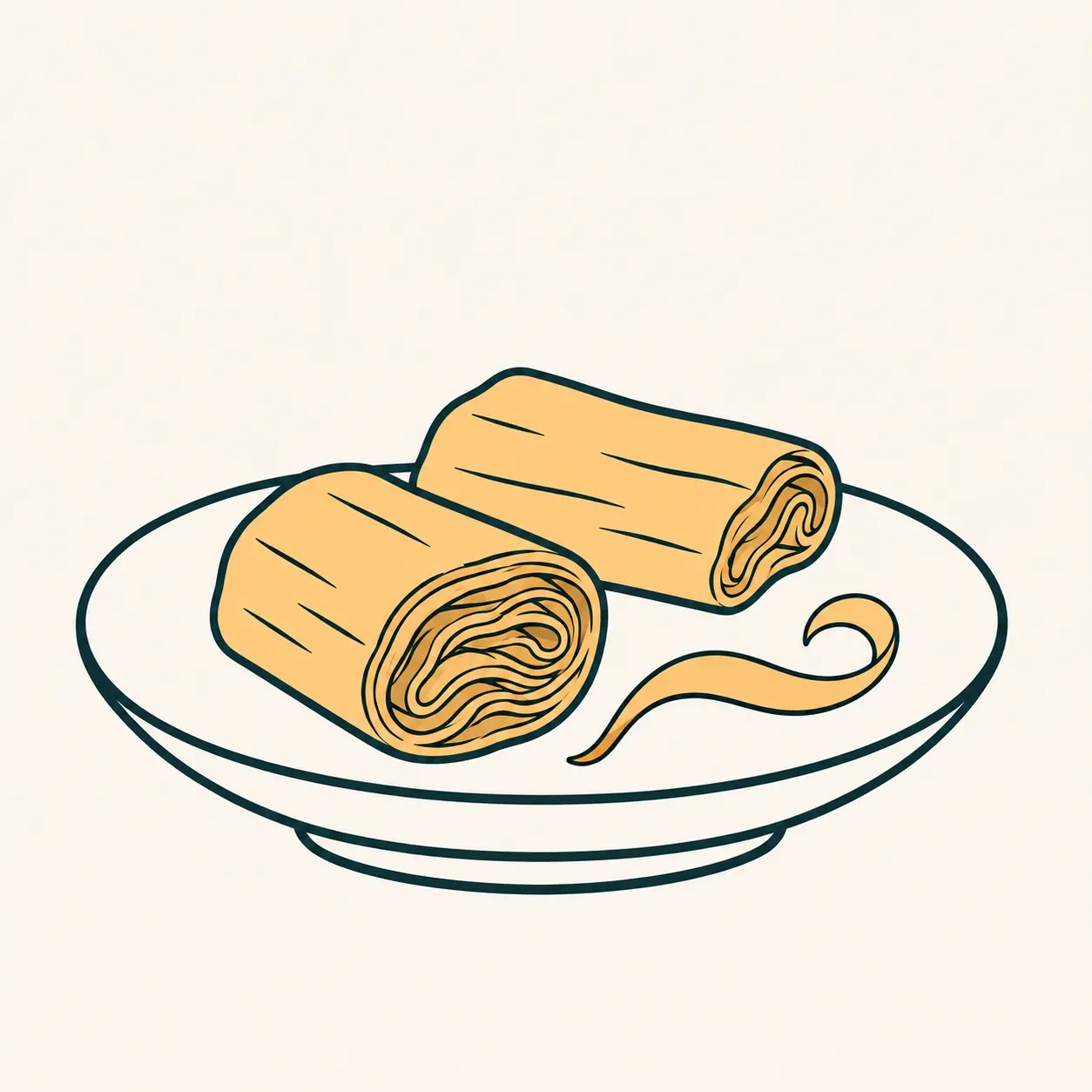
A cinnamon stick looks like a small branch trained to fit inside a jar. But Ceylon cinnamon, obtained from Cinnamomum verum, is processed inner bark, rather than solid wood or a pod. The scientific name helps define our subject: the broad word cinnamon can include different products. Looking at the end of a stick before using it reveals something important. Its appearance can tell part of the story of how it was prepared. [1][2]
The plant can be cultivated by allowing cut stems to regrow: after establishment, stems are cut low and the new growth is harvested later. World Agroforestry describes this system for commercial production. It does not therefore necessarily require felling a large tree for every handful of spice. Timing and practices vary between places and plantations; our interest here is the transition from a living stem to a thin material separated from the wood. [3]
Sri Lanka’s Department of Cinnamon Development describes a precise sequence. The outer layer is scraped away, the stem is rubbed to help loosen the bark, and useful sections are separated. After initial drying in the shade, the sheets are assembled and filled with smaller pieces, then left to dry further. The commercial stick therefore holds two intertwined stories: the behaviour of bark as it curls, and the arrangement created by human hands. [2]
A quill, the roll described in technical accounts, should consequently not be imagined simply as a sheet that rolls itself up. PROSEA distinguishes compound quills, with longer pieces outside and fragments inside. Sri Lanka’s export board also highlights the skills passed on through their preparation. Commercial categories include broken pieces and powder too: their shape and processing change, but that does not turn them into seeds or fruit. Different forms are not different plant organs. [1][4]
The word cinnamon still needs a qualification. The Sri Lankan source distinguishes Ceylon cinnamon from cassia, which has different physical and chemical characteristics. We do not turn that distinction into a universal competition over taste, or a promise of therapeutic benefits in the kitchen. This account concerns Cinnamomum verum and the transformation of its bark. A commercial name, a botanical name and a flavour preference are not three interchangeable descriptions of the same thing. [4]
Here is a small editorial exercise: observe a cinnamon stick sold for food and describe it without immediately naming the spice — layers, curve, surface, fragments. Then compare your description with the jar and its label. Appearance alone cannot certify species or origin, particularly once the product is powdered. The AI illustration makes thin sheets recognisable, but cannot authenticate a product. Fragrance comes at the end of a process; it does not erase the work that came before. [2][1]
Take this with youThe next stick can become a small object to read: its cross-section reveals a plant transformed through skilled handling.
One idea, in simple words
Ceylon cinnamon comes from a plant called Cinnamomum verum. The stick is not a whole branch and is not a fruit. It is made from inner bark, one of the layers around a stem. During processing, the outer layer is removed and useful sections are separated from the wood. Sheets of bark are assembled with smaller pieces inside and left to dry. This creates the rolls called quills. Imagine small sheets gathered together: that is a comparison to help explain their shape. When looking at a cinnamon stick sold for food, you may notice the layers. Appearance alone, however, does not prove which species it is. Cassia is a different product that is also sold as cinnamon. [1][2][4]
A little discovery to keep
What did you discover?
Read the sources (4)
- Cinnamomum verum — PROSEA Handbook 13: Spices PROSEA · Plant Resources of South-East Asia · accessed 4 Nov 2026
- Post Harvest Technology Sri Lanka · Department of Cinnamon Development · accessed 4 Nov 2026
- Cinnamomum verum — Agroforestree Database World Agroforestry · accessed 4 Nov 2026
- Ceylon Cinnamon Cultivation in Sri Lanka Sri Lanka Export Development Board · accessed 4 Nov 2026
Original writing and illustration made with AI assistance. Our editorial method
More in Food