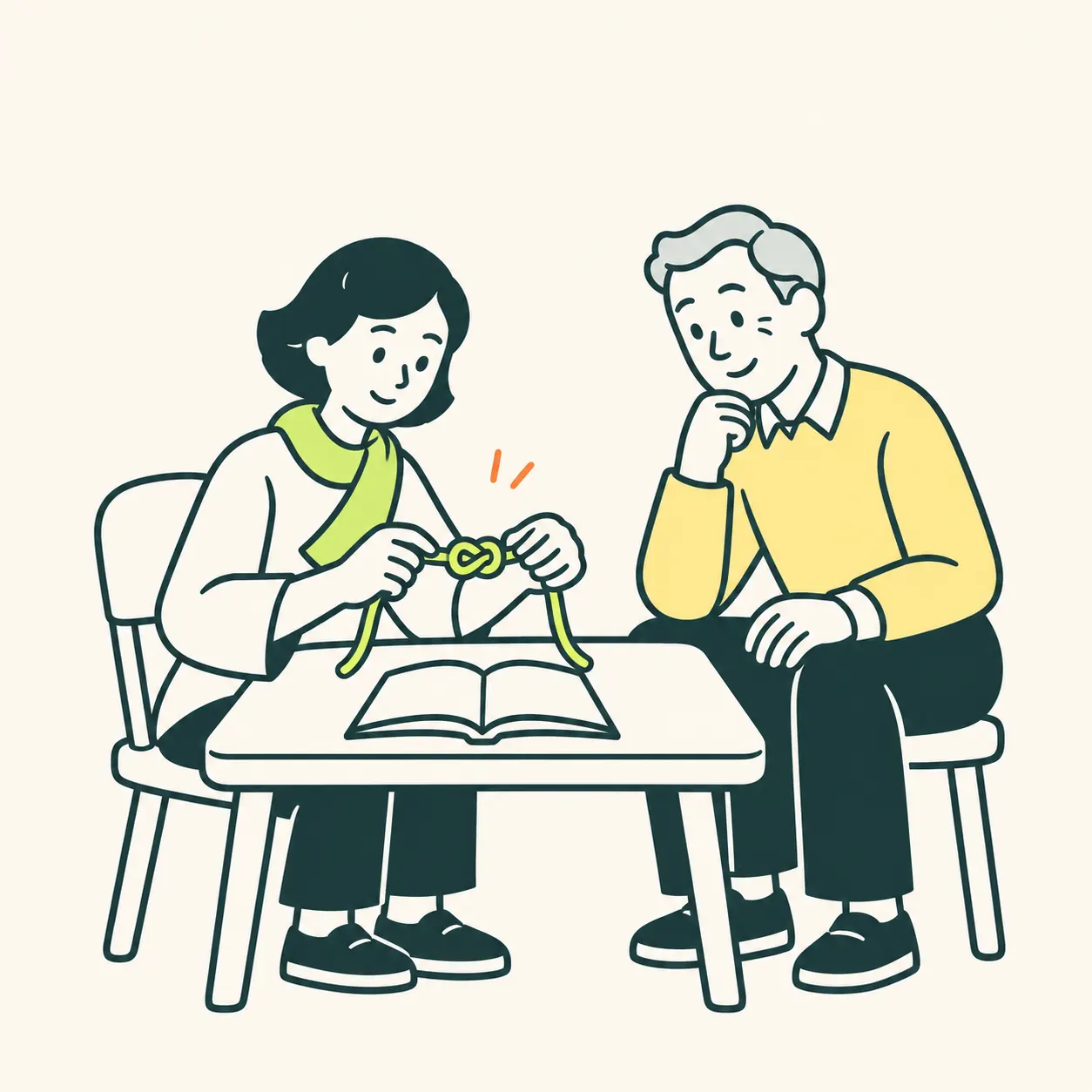
Closing a book can mark the end of a reading session without ending what we learn from it. The opening chapter of the Xunzi, called “Encouraging Learning”, includes 學不可以已. Our translation from Classical Chinese is “Learning must not stop”. The educational dictionary of Taiwan’s National Academy for Educational Research records the phrase and explains its sense of continuity. It is not an anonymous maxim to attach to whichever ancient sage happens to be convenient. [1]
Xunzi was a thinker in Warring States China, associated with the Confucian tradition. The Stanford Encyclopedia of Philosophy warns that his biography and the formation of the text involve uncertainties. We can therefore avoid an overconfident birth date and consider one precise argument: becoming capable of acting well requires education. Having a favourable natural disposition is not enough. Learning adds something and changes how a person approaches the situations that life presents. [2]
What counts as learning? The Taiwanese dictionary’s account of the chapter includes teachers, companions, texts, practices and surroundings. Continuity is not simply a matter of accumulating pages. Knowledge must enter conduct and the cultivation of the self. This is a philosophical proposal about moral education, rather than a scientific discovery of a universal method for faster memorisation. Keeping that distinction prevents us from turning Xunzi into a present-day consultant on personal productivity. [1]
Imagine our own example: we can explain how to listen to someone, yet we interrupt them during an argument. The distance between a definition and our behaviour makes a question close to the text visible: what needs to change for knowledge to become a habit? The example is ours, not Xunzi’s. It tests our reading without pretending that an ancient sentence can by itself settle conflicts, education or differences between people and their circumstances. [1][2]
The Stanford Encyclopedia also emphasises the teacher’s role in interpreting models and judging their application. This is no celebration of isolated self-sufficiency. The thinking nevertheless belongs to a society and a moral project very different from ours: admiring persistence does not require accepting every hierarchy associated with it. Our phrase of the day can remain an open question: after understanding something, what small action would let us see whether we have really made it our own? [2]
Take this with youChoose something you recently learned and describe a concrete action in which it could matter. Separate what you remember, what you can explain and what you can practise: this is our exercise, not a quotation.
One idea, in simple words
Xunzi was a Chinese thinker in the Confucian tradition. A chapter of the book bearing his name discusses learning. Here the editors translate 學不可以已 as “Learning must not stop”. For Xunzi, studying is about more than collecting information. It should help people change their behaviour. Teachers, companions and practice also matter. Imagine knowing the rule “listen before replying”. Remembering it is one thing; using it during an argument is another. This example is ours, not the philosopher’s. His idea concerns moral education, which means learning how to act well. It is not scientific proof that a method will immediately produce better grades. We can read and discuss his argument without accepting every idea from the society in which he lived. [1][2]
A little discovery to keep
What did you discover?
Read the sources (2)
- 〔勸學篇〕 — Encouraging Learning National Academy for Educational Research, Taiwan · accessed 6 Nov 2026
- Xunzi — Summer 2017 archival edition Stanford Encyclopedia of Philosophy · accessed 6 Nov 2026
Original writing and illustration made with AI assistance. Our editorial method
More in Philosophy