Needs attention
How to care for it, step by step
Care guide checked on
Is it for you?
Suitable for somebody able to provide filtered light, ambient humidity and attention to its support: moderate difficulty. Very dry rooms require closer monitoring; this is not a fern to keep constantly waterlogged. [1][2][3]
Where to put it
Choose bright indirect light, frost protection and air circulation without cold draughts. Avoid strong direct sun and dry radiator heat. Watch how the fronds respond to the selected position. [1][2][3]
When and how to water
Check the material around the roots: allow it to dry partly between waterings without leaving it completely dry for long periods. Water thoroughly and let it drain; reduce watering as growth and consumption decline. Amounts and intervals depend on light, temperature and mounting, rather than a fixed weekday. [1][2][3]
Step by step
Identify shields and fertile fronds first; photograph the plant to compare growth without repeatedly handling it. [1][2][3]
Check moisture in the support before watering and ensure excess water can escape. [1][2][3]
Leave old shields in place and do not rub away the pale covering on the fronds. [1][2][3]
Periodically inspect accessible parts for pests; if changes persist, compare several signs before selecting a treatment. [1][2][3]
If something looks wrong
Brown, papery shields
Check
Check whether older shields are changing while new fronds remain healthy. [1][2][3]
What to do
Ageing shields are normal: do not pull them away for cosmetic reasons. [1][2][3]
Unhappy fronds with a constantly wet support
Check
Check drainage, airflow and moisture in the medium: frond appearance alone does not identify a definite cause. [1][2][3]
What to do
Avoid adding water while the support remains saturated; correct drainage and seek an assessment if deterioration continues. [1][2][3]
Brown areas beneath branching frond tips
Check
Check whether these match the species’ reproductive areas, without extending that explanation to every mark. [1][2][3]
What to do
Do not scrape away sporangia; if shape or spread looks unusual, document the area and verify before intervening. [1][2][3]
Read the sources (3)
- Platycerium bifurcatum Royal Horticultural Society · accessed 11 Nov 2026
- Staghorn fern, Platycerium bifurcatum University of Wisconsin–Madison Extension · accessed 11 Nov 2026
- Platycerium bifurcatum NC State Extension Plant Toolbox · accessed 11 Nov 2026
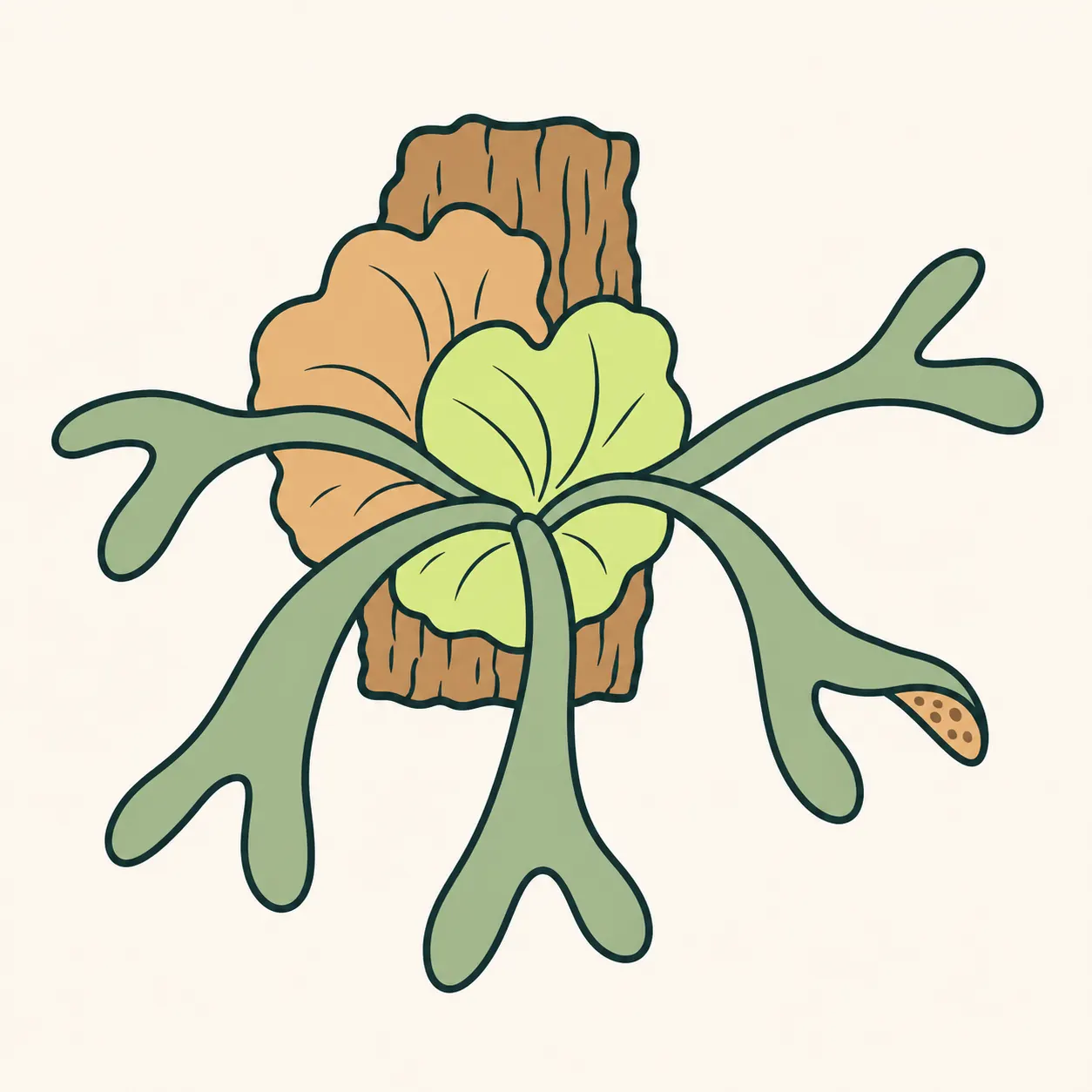
A Platycerium bifurcatum can look like two plants growing together. Some fronds extend and divide like antlers; others make a flattened cup against the support. They belong to the same fern. The discovery is this difference in form and function, rather than a decorative resemblance to an animal. Botanical accounts distinguish sterile shield fronds from branching fertile fronds. Recognising them makes an apparently extravagant plant easier to read and understand. [1][2]
The shields cover the region of the roots and rhizome, the stem from which the fern grows. They can help retain plant material accumulating nearby. As they age, they become brown and papery: that appearance alone does not indicate disease. University of Wisconsin guidance recommends leaving them in place. The domestic temptation to remove everything that is no longer green risks confusing visual tidiness with care for the living plant. [3][4]
The elongated fronds fork: the flat blade divides repeatedly into branches, rather than carrying many separate small leaflets along a stalk. Brown areas containing sporangia, the structures producing spores, can appear beneath their tips. This fern does not flower. Colour can mislead here too: a reproductive area described by botanists should not automatically be mistaken for a stain needing cleaning, or an infestation requiring treatment. Identifying the structure comes before deciding to intervene. [2]
Kew lists the currently recognised species as native to eastern Australia, Lord Howe Island and New Caledonia. It is an epiphyte: it grows on other plants, without being a parasite that takes nourishment from them. A support is not the same as a food source. This distinction helps explain why cultivated specimens may be mounted on a board or grown in a suitable container, rather than an ordinary pot full of dense soil. [5][3]
Here is an editorial comparison: imagine a house with a protective wall and a structure opening outwards. This is not an evolutionary explanation, but an invitation to examine the parts separately. Notice the edges of the shields and the paths of the fronds without rubbing away their pale covering. It is not simply dust: the University of Wisconsin account describes that coating as part of the plant’s surface and advises against removing it. [4]
Care therefore starts with identification. Filtered light, frost protection, air and a freely draining support matter more than a timetable shared by every home. Before cutting away something brown, ask which frond you are examining and how the rest of the plant looks. A single sign is not enough for a diagnosis. Its unusual appearance becomes less mysterious when we stop expecting every leaf to perform exactly the same job. [1][4]
Take this with youIdentify a brown frond before removing it: an old shield can still belong to the fern’s normal structure.
One idea, in simple words
Platycerium bifurcatum is a fern with two shapes of frond, which means leaf. Some fronds are broad and rounded, like shields. They cover the root area and turn brown and papery as they age. They should not be removed just because their colour changes. Other fronds are long and divide into branches. They resemble antlers but are flat leaves. Brown patches beneath their tips can contain structures that produce spores. The fern reproduces with spores and does not make flowers. In nature, it can grow on a tree for support without being a parasite. Imagine a plant finding somewhere to rest: support and food are not the same thing. Looking carefully at the two shapes helps us understand how to care for it. [1][2][3][4][5]
A little discovery to keep
What did you discover?
Read the sources (5)
- Platycerium bifurcatum Royal Horticultural Society · accessed 11 Nov 2026
- Platycerium bifurcatum (Cav.) C.Chr. Royal Botanic Gardens Sydney · PlantNET · accessed 11 Nov 2026
- Platycerium bifurcatum NC State Extension Plant Toolbox · accessed 11 Nov 2026
- Staghorn fern, Platycerium bifurcatum University of Wisconsin–Madison Extension · accessed 11 Nov 2026
- Platycerium bifurcatum (Cav.) C.Chr. Royal Botanic Gardens, Kew · Plants of the World Online · accessed 11 Nov 2026
Original writing and illustration made with AI assistance. Our editorial method
More in Plants