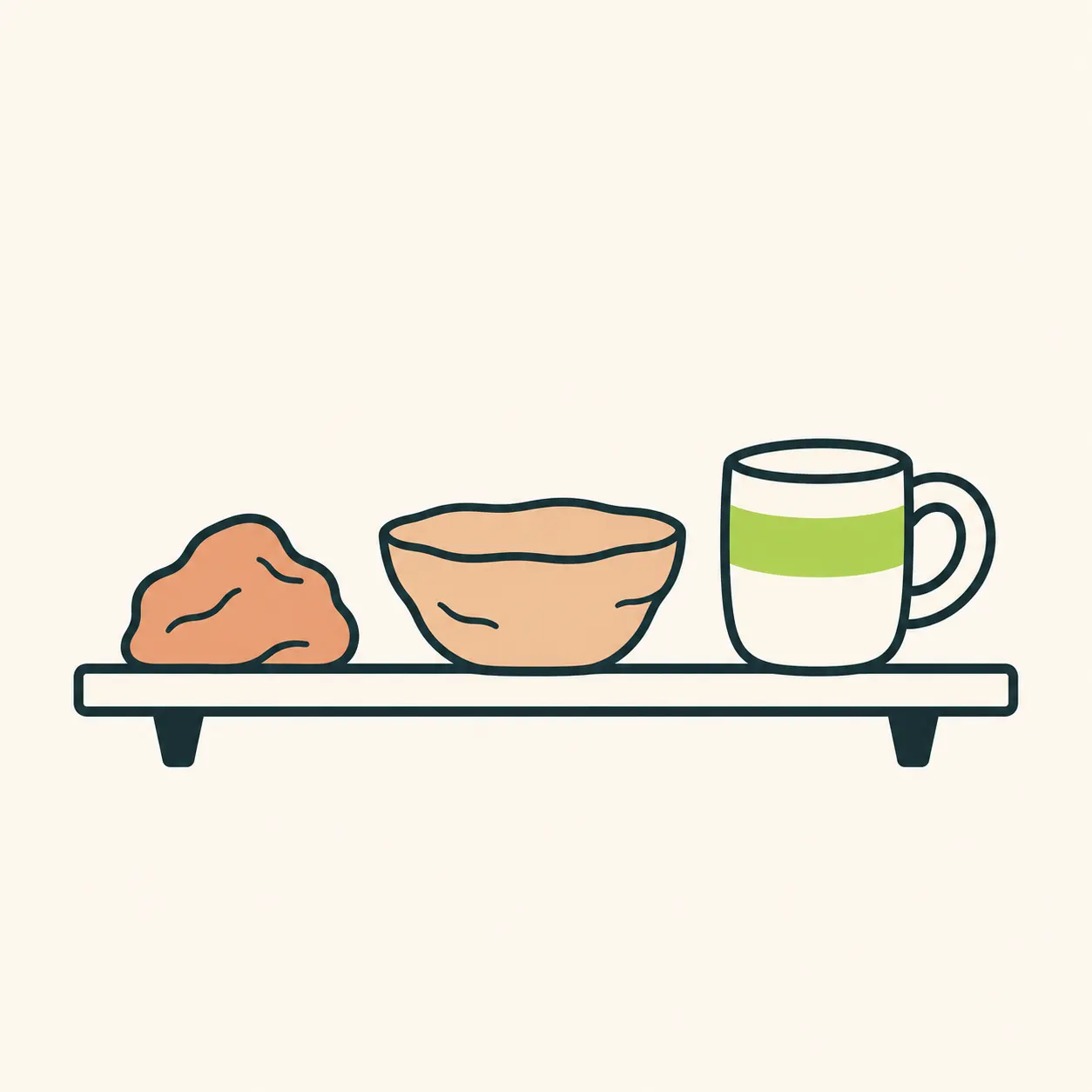
A mug, a tile and a vase can all be described with the Italian word ceramica without much thought about the term connecting them. Our discovery begins with that ordinary linguistic habit. Treccani traces the Italian noun to Greek keramikḗ, with téchnē understood: an art or technique. The word therefore names more than a smooth surface we can touch. It retains a connection with making, with work that turns materials into objects. Here we are exploring the Italian word, rather than offering a separate history of English vocabulary. [1]
The related entry ceramico makes the connection clearer: Greek keramikós derives from kéramos, clay or potter’s earth. That is the documented etymology followed here, without adding legends about inventors or places of origin. A word’s history does not automatically identify the first occasion on which somebody made a bowl. Explaining the source of an Italian name cannot, by itself, date a technology or assign its invention to one people. These are different questions, and answering them would require different kinds of evidence. [2]
In ordinary usage, the same word changes scale. Treccani distinguishes the art and technique, the material, and, in the plural, the objects produced. Try three editorial examples: “studio ceramica”, studying the craft; “una tazza di ceramica”, a mug described by material; “una mostra di ceramiche”, an exhibition of objects. These are constructed examples, not historical quotations. The emphasis moves between skills, substance and things. Grammar does not transform the vase; it changes our viewpoint and what we want to explain about it. [1]
The contemporary technical meaning also reaches beyond the familiar image of a potter at a wheel. Treccani’s encyclopedia includes traditional and advanced ceramics with different compositions and uses. For traditional products, shaping, drying and firing are distinct stages: a shaped lump is not yet the finished object. Etymology illuminates a root, but it does not draw a permanent boundary around everything a name can describe. Words retain traces of the past while extending to objects that were not part of their earliest everyday setting. [3]
We can try a small reading exercise without becoming archaeologists of the kitchen table. Choose an object and ask which description matters: material, process or purpose? Then compare its name with a concrete account of what you mean. This is an editorial suggestion, not a method for certifying a mug’s composition. It helps reveal how much work can hide inside an everyday word. Next time someone says “faccio ceramica”, listen to the verb as well: they are not merely naming things, but describing an activity. [1][3]
Take this with youA root is not an unchanging definition. Ceramica connects the earth in its older name with a craft and the objects we encounter today.
One idea, in simple words
The Italian word ceramica has a Greek history. Treccani connects it with keramikḗ and an understood word meaning art or technique. The related word ceramico comes from a Greek name for clay, the earth used to make pottery. Today, ceramica can describe a craft, a material or, in the plural, the objects produced. Think of studying the craft, describing a mug by its material, or displaying finished pieces in an exhibition. These are editorial examples. The same word directs attention towards skills, substance and objects. It does not tell us who invented the first bowl: the origin of a name and the origin of a technique are different questions. This English reading explains the same Italian word as the other versions. [3][1][2]
A little discovery to keep
What did you discover?
Read the sources (3)
Original writing and illustration made with AI assistance. Our editorial method
More in Words