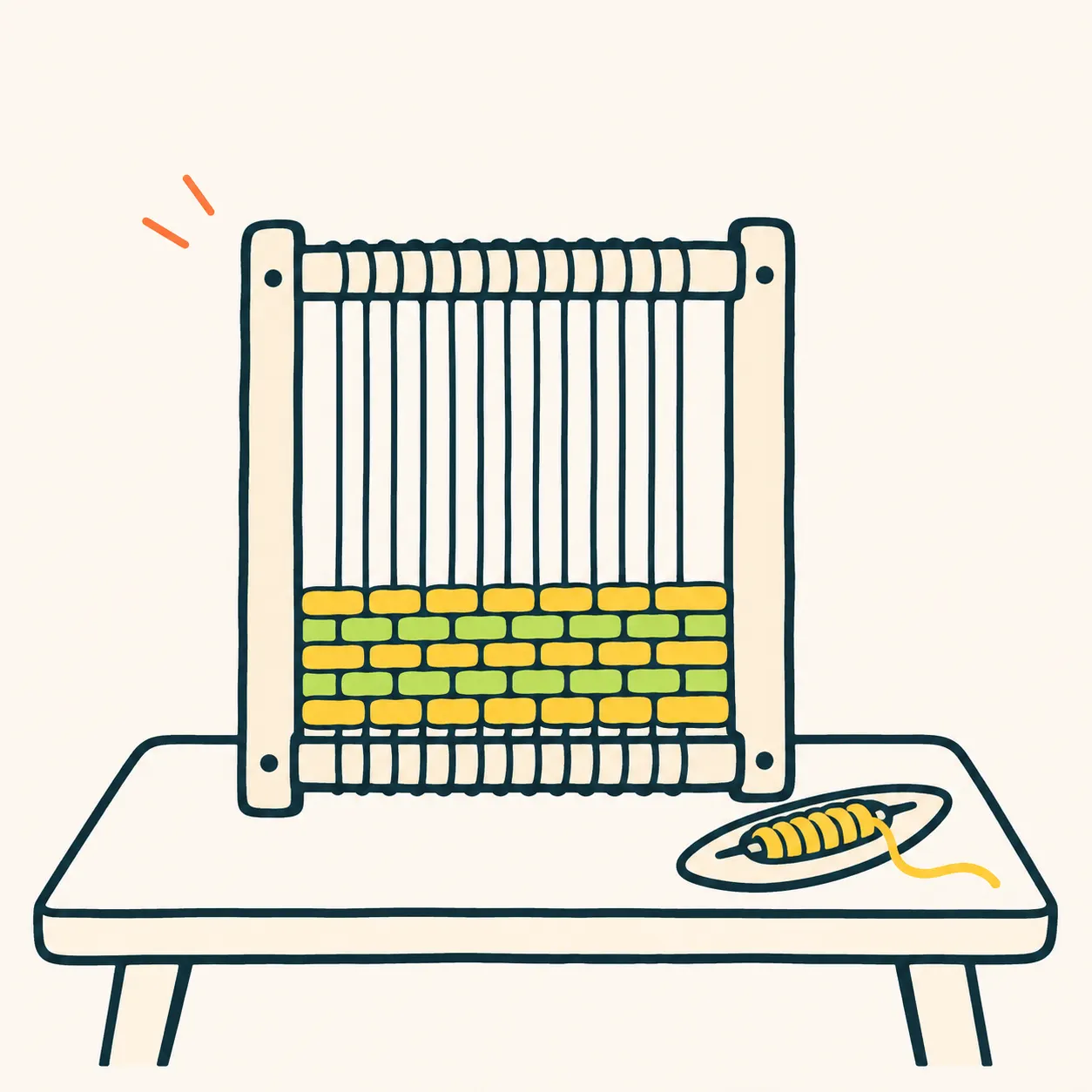
What connects a weaving machine with the structure of a bicycle? In Italian, both can be called telaio, although they are different objects. Treccani traces the word to medieval Latin telarium, derived from tela. There is no need to invent an ancient saying about bringing people together: the documented relationship starts with material work. The discovery is the move from weaving to a supporting structure. [1]
The dictionary’s first meaning concerns the device used to interlace yarns to make fabric. The extended meaning concerns a framework made from connected components. These are two senses of one word, not evidence that everything called a telaio works like a weaving loom. Linguistic history suggests a connection; a technical description must then explain which object is actually in front of us. [1]
Imagine a little workshop, in our editorial example. On the table is a frame holding threads taut; beside the wall is a structure still waiting for its covering. Write telaio beneath each, then add a sentence explaining its function. The exercise shows why sharing a name does not remove the need for context. Sometimes one extra word is enough to avoid ordering the wrong replacement part. [1]
Treccani includes structures for furniture and windows among the extended uses. We can recognise an underlying idea of organised support, but that is our synthesis of the entry, not an alternative etymology. The dictionary does not say that every use emerged at the same moment. Without dated evidence, we should not turn a list of meanings into an invented chronology of inventions and linguistic steps. [1]
In English and French, this column is still explaining the Italian word telaio. Loom and métier à tisser help translate the textile meaning; frame and cadre may help in other contexts. They are aids to understanding, not words that automatically inherit the origin of telaio. Translating a meaning and tracing an etymology are different operations. Similar objects do not establish a family relationship between all their names. [1]
To observe the word in use, try our small household hunt: find an object with a supporting structure and describe what rests on it or is attached to it. Write its function first, then check whether telaio really is the appropriate Italian term. This is an exercise in precision, not a competition to give everything the same name. Even a word holding many meanings together needs boundaries of its own. [1]
Take this with youWhen you meet telaio, ask what it supports and what activity it belongs to. Etymology opens a path; context selects the meaning.
One idea, in simple words
The Italian word telaio comes from medieval Latin telarium, derived from tela. Treccani explains that a loom interlaces threads to produce fabric. The same Italian word also has wider meanings: it can name a structure supporting other parts, as in some furniture. Imagine a little loom with taut threads, then a structure without its covering. They are different objects even if they can share a name. This is our example of why context matters. Etymology explains a word’s documented origin; it does not tell us that all its meanings appeared together. In English and French, we are still explaining the Italian word, without assigning its origin to the translations. [1]
A little discovery to keep
What did you discover?
Read the sources (1)
- Telàio — Vocabolario Treccani · accessed 10 Nov 2026
Original writing and illustration made with AI assistance. Our editorial method
More in Words