News dated
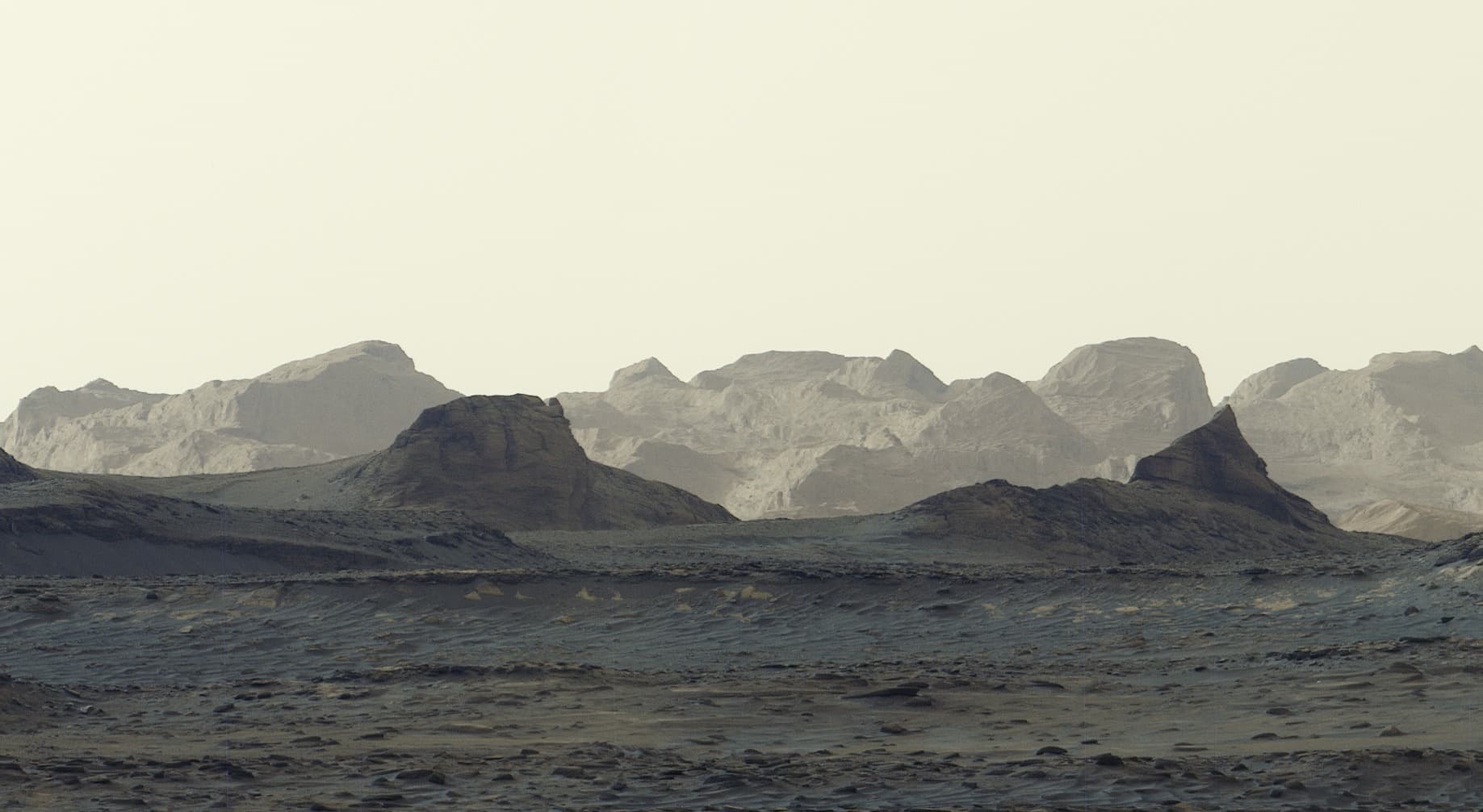
On 6 October 2026, NASA released a Curiosity panorama made from six photographs taken on 11 August, mission sol 4982. Mastcam captured them at 8:30 in the local Martian morning. Processing without the usual white balance preserves the appearance of the morning light; these are not pictures taken yesterday. [1]
On the horizon are yardangs, ridges shaped by wind. Their layer stretches about 16 kilometres across the northwestern side of Mount Sharp, a mountain about 5 kilometres high. The layer’s origin remains uncertain: ancient volcanic ash is one hypothesis. Scientists hope to reach its base in 2027, without promising an arrival. [1]
Mastcam also studies the terrain and supports decisions about driving and sampling. Other rover instruments examine rocks close up or measure their composition: a photograph helps shape the questions, while different measurements are needed to test the answers. [2]
The bright side
The panorama adds useful detail for planning the rover’s next observations, keeping the landscape’s beauty separate from a geological explanation that still needs testing. [1][2]
One idea, in simple words
Curiosity is a robot exploring Mars. On 6 October 2026, NASA showed a panorama made by joining six photographs. The robot had taken them on 11 August, during the Martian morning. Far away are wind-shaped ridges called yardangs. Scientists do not yet know for certain how that layer of rock formed. Ash from ancient volcanoes is one possible explanation, not a proven answer. [1]
The camera helps researchers study the landscape and choose where to go. Here is an example invented by our editors: a stone looks smooth from far away, but a magnifying glass reveals tiny cracks. Changing tools can change what we notice. The rover also uses several instruments: seeing a shape and explaining its origin are two different steps. [2]
A little discovery to keep
What did you discover?
Straight from the source.
- NASA’s Curiosity Rover Catches Stunning Martian Dawn NASA / Jet Propulsion Laboratory · 6 Oct 2026
- Curiosity Science Instruments NASA · No publication date provided
Original reporting summaries prepared with AI assistance and accessible sources. Our editorial method.