News dated
In a story published on 26 October, FAO describes Nana Nikuradze’s experience farming one hectare with her family in Samtredia, western Georgia. She made her first compost in 2026 after attending a farmer field school implemented by FAO through the ENPARD IV programme, supported by the European Union and Sweden. [1]
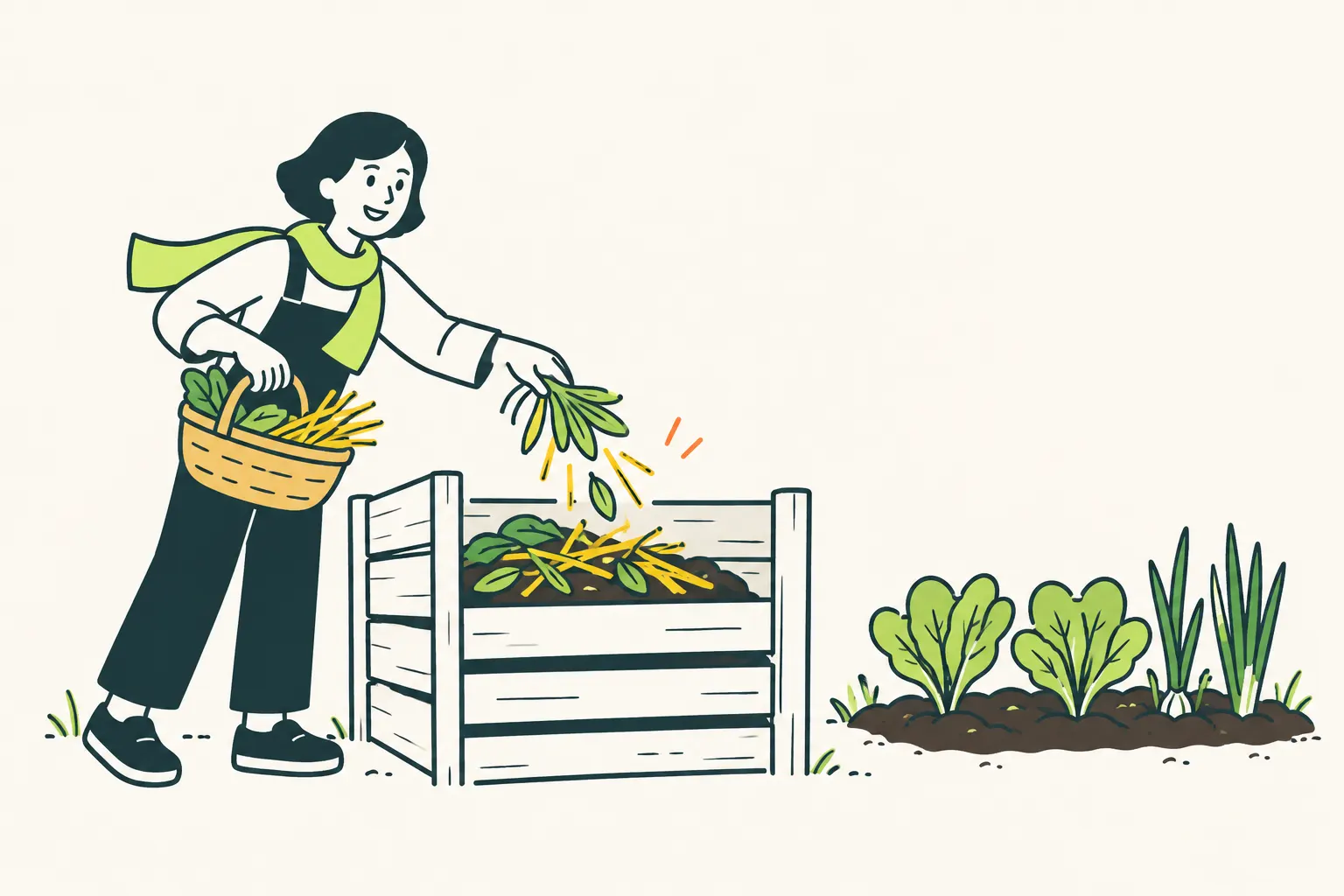
Nikuradze combines crop residues, straw, green material and manure from her small herd, leaving them to decompose. She says material previously burned now returns to the soil. The training also covers soil health, water management and safe use of crop protection products: composting is one part of a wider learning process. [1]
Completely replacing chemical fertilisers is the farmer’s stated ambition, not an achievement already reached. The story presents her testimony and programme observations, without an experimental comparison quantifying all the effects. Producing the first compost is a concrete step; it does not by itself establish organic certification or guarantee an immediate improvement in every harvest. [1]
The bright side
Practical training has become an activity on the farm, recovering agricultural materials for the soil. [1]
One idea, in simple words
Nana Nikuradze grows crops with her family in Georgia, a country beside the Black Sea. FAO, the United Nations food and agriculture organisation, reports that she made her first compost in 2026. Compost is material produced when organic leftovers break down, which can be used for soil. Nana uses crop residues, straw, green material and manure. [1]
She learned at a practical school for farmers. As an example, think of stems left after a harvest: they can be recovered rather than treated only as waste. Nana would like to replace all chemical fertilisers, but this remains a goal. The story does not show that she has already achieved it. It describes one practical experience, not an experiment guaranteeing the same results for every farm. [1]
A little discovery to keep
What did you discover?
Straight from the source.
- Nothing wasted, everything gained FAO · 26 Oct 2026
Original reporting summaries prepared with AI assistance and accessible sources. Our editorial method.