News dated
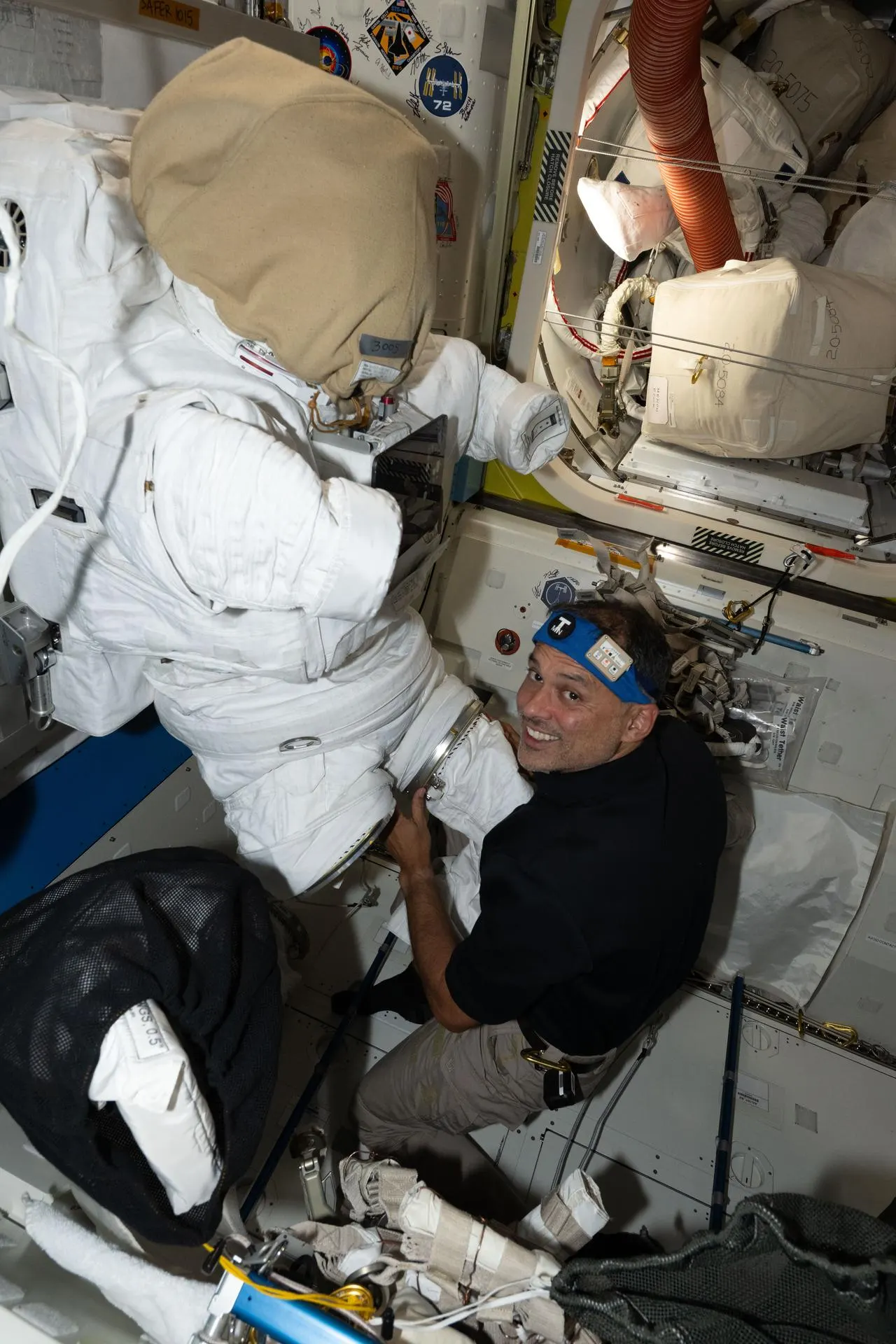
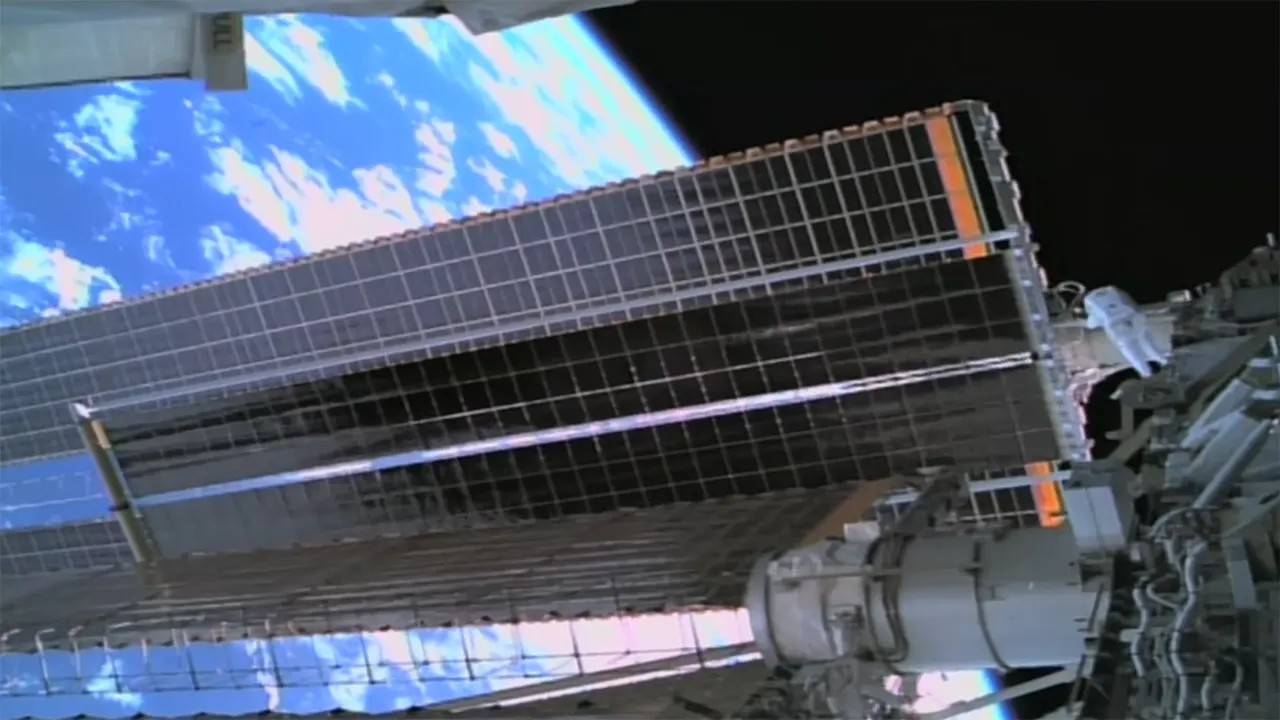
On 5 November, NASA astronaut Anil Menon and Canadian Space Agency astronaut Joshua Kutryk installed and deployed the International Space Station’s eighth and final roll-out solar array, or IROSA. Their spacewalk lasted six hours and 59 minutes. NASA’s report says the combined arrays raise the station’s power generation capacity from 160 to approximately 215 kilowatts. [1]
The array was fitted to power channel 3B. The spacewalk began at 8:36 a.m. US Eastern time. This is an upgrade to infrastructure already in orbit: the news is a completed installation, rather than the launch of another space station. [2]
The bright side
Maintenance in orbit increases the energy available for life and work aboard the station. [1]
One idea, in simple words
On 5 November, two astronauts finished fitting a new solar array to the International Space Station. It was the last of a set of eight. A solar array turns sunlight into electricity. A house or a school can use this technology too, but work on the station takes place in space, with a special suit. The two astronauts spent almost seven hours outside. [1]
The new arrays are called IROSAs and open by unrolling. To picture the idea, think of a rolled-up mat: it takes up little space before you spread it out. That comparison helps explain the movement, not the materials. The report describes an array that has already been installed and opened. It does not mean that another space station has been built. [2]
A little discovery to keep
What did you discover?
Straight from the source.
- Spacewalkers Install Final Roll-Out Solar Array NASA · 5 Nov 2026
- Spacewalk Begins to Install Last Roll-Out Solar Array NASA · 5 Nov 2026
Original reporting summaries prepared with AI assistance and accessible sources. Our editorial method.