News dated
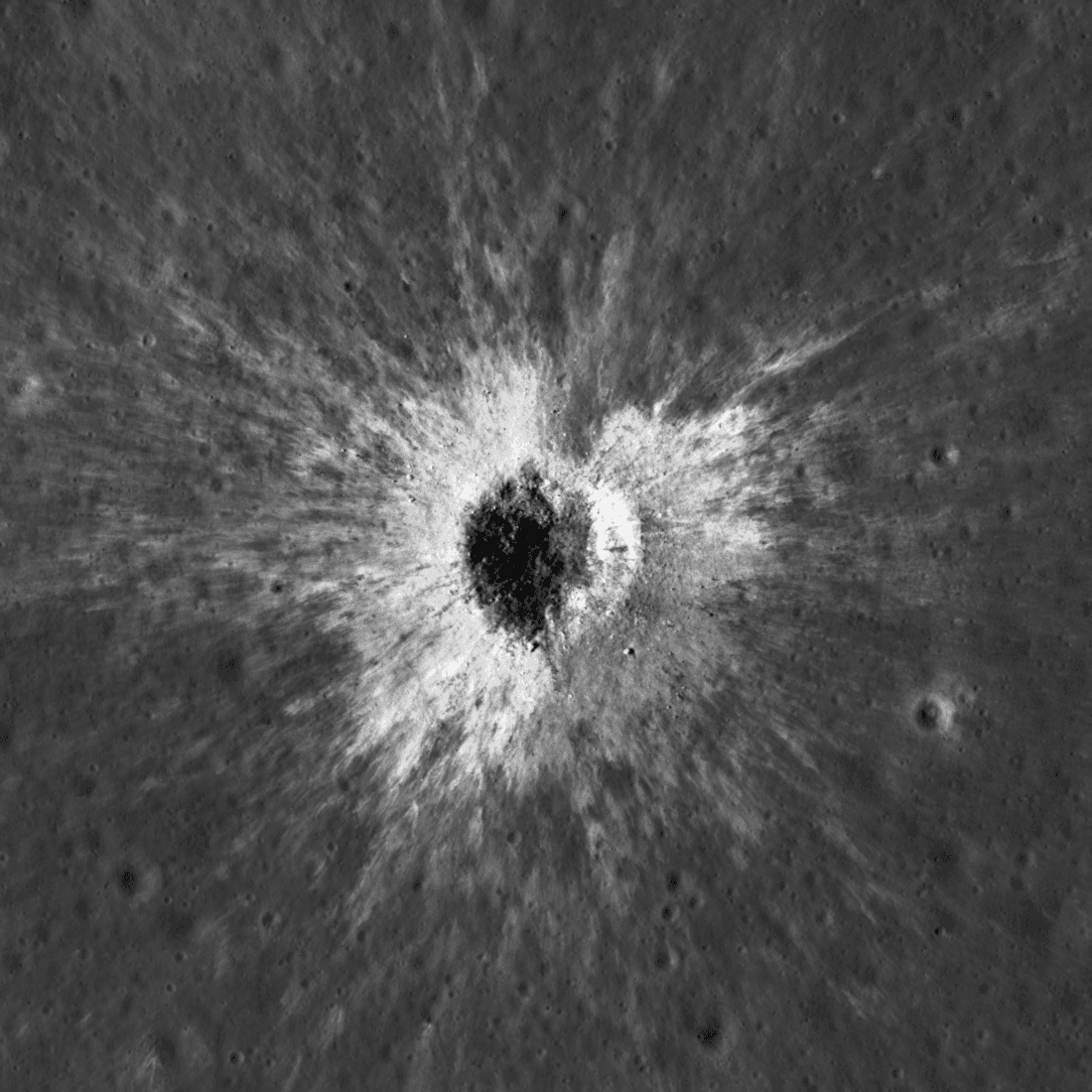
On 16 September, the Lunar and Planetary Institute described McGetchin, a 222-metre-wide crater formed between 11 April and 22 May 2024. It is the largest new crater identified during the LRO mission: the news concerns the study, not an impact today. [1]
The change emerged by comparing images of the same area taken at different times. Later, more detailed observations revealed the crater’s shape. Not every difference marks an impact: shadows and lighting can create false alarms that need checking. [2]
LRO has observed the Moon since 2009. It also measures temperature and surface features: this information helps select suitable landing places for spacecraft and astronauts. A lunar map is therefore a tool to update, rather than a final picture. [3]
The bright side
Studying a freshly transformed surface helps researchers understand the effects of impacts before later changes erase the details. [1]
One idea, in simple words
McGetchin is a crater: a large hollow on the Moon, formed by a space rock in 2024. The study was presented on 16 September 2026. Reporting a discovery does not mean the impact just happened. [4]
How did researchers find it? They compared images of the same place taken at different times. Imagine two photographs of a playground before and after a storm: a new puddle stands out. On the Moon, changing illumination also helps researchers distinguish different surface details. [4]
The images come from LRO, a spacecraft orbiting the Moon. It collects information about the ground and its temperature. These measurements help prepare future exploration. [3]
A little discovery to keep
What did you discover?
Straight from the source.
- NASA’s Lunar Reconnaissance Orbiter Discovers a New 222-m Diameter Lunar Crater USRA — Lunar and Planetary Institute · 16 Sept 2026
- NASA’s Moon Orbiter Spots New, ‘Once-in-Century’ Moon Crater NASA · 16 Sept 2026
- Lunar Reconnaissance Orbiter NASA · No publication date provided
- Spectacular McGetchin Crater LROC — Mark Robinson · 16 Sept 2026
Original reporting summaries prepared with AI assistance and accessible sources. Our editorial method.