News dated
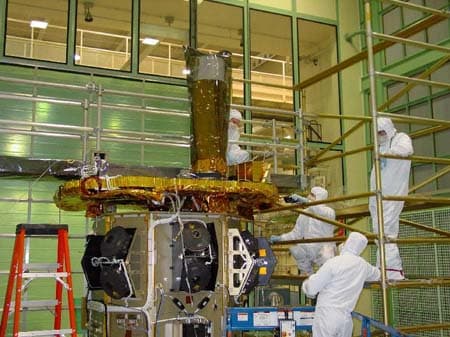
NASA reported on 25 September that Swift was using all three of its science instruments again. The Burst Alert Telescope, which detects gamma-ray flashes, had been calibrated and working again since 18 September; automatic pointing resumed on the 21st. Observing capabilities are returning after restrictions introduced to extend the satellite’s time in orbit. [1]
When Swift detects a flash, it can interrupt its daily schedule and turn its X-ray and ultraviolet/visible-light telescopes towards the source. That speed helps it study rapidly changing events: the instrument that raises the alert and those that examine it more closely can work together again. [1]
The restart does not secure the satellite’s future. In NASA’s update, Swift was about 325 kilometres above Earth; below 300 kilometres, operations become harder and observations will probably stop. The team estimated that it would reach this threshold in early to mid-October. The positive result is therefore recovered research time, without hiding how limited that time may be. [1]
The bright side
Three instruments and automatic pointing are available again to collect observations during the remaining operational window. [1]
One idea, in simple words
Swift is a telescope travelling around Earth. It also watches gamma rays: a very energetic kind of light our eyes cannot see. On 25 September, NASA reported some progress. Its instrument for finding these flashes had been working again since 18 September. Since the 21st, the satellite can also turn automatically to study them with its other telescopes. Imagine a camera changing direction when it spots something interesting: that is our example to explain the movement. There is an important limit, though. Swift is moving closer to Earth. The team expects observations could end in early to mid-October. Restarting lets the satellite collect more information, but it does not solve that problem. [1]
A little discovery to keep
What did you discover?
Straight from the source.
- NASA’s Swift Powers On Third Instrument, Restarts Automated Slewing NASA · 25 Sept 2026
Original reporting summaries prepared with AI assistance and accessible sources. Our editorial method.