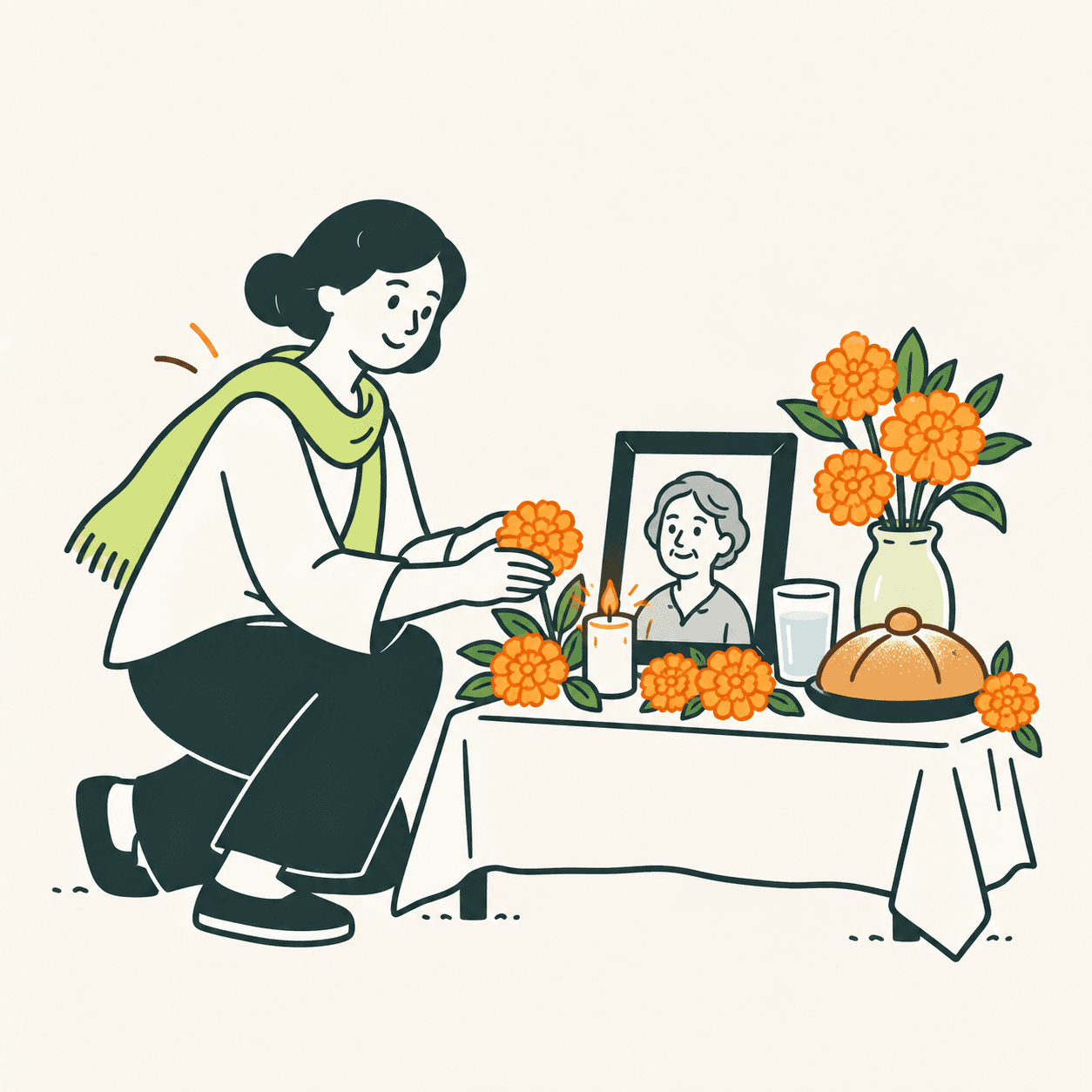
A table with flowers, water and food might look like an arrangement made for photographs. During Día de Muertos, an ofrenda has a purpose: remembering and honouring people who have died. Mexico City’s official portal describes relatives and friends preparing offerings while recounting events from their lives. The central discovery is this relationship between objects and memory, rather than a rule about how all Mexican people should feel. [1]
A resource from the Secretaría de Educación Pública explains that a portrait identifies the person remembered, while offerings include dishes that person enjoyed. Flowers, candles and water carry ritual meanings connected with the return of the dead. These are beliefs and symbols within the tradition described. Respectfully explaining them does not establish a physically verified return. Copying the objects cannot reveal the family history behind their selection. [2]
CONABIO, the Mexican institution concerned with biodiversity, highlights another connection: ofrendas include cempasúchil flowers, copal and foods using cacao, chillies and maize. Plants therefore participate in the celebration through materials, scents and preparations. We need not turn that list into a compulsory recipe. Instead, we can ask where the elements of a practice come from and how they connect with the landscape and the people who use them. [3]
A particular place helps us avoid generalisations. The city’s account of San Andrés Mixquic, in Tláhuac, documents the importance of observances on 1 and 2 November and the presence of many visitors. This is a specific community, rather than a summary of all Mexico. The dates describe an annual tradition. This September feature does not announce that the celebration is happening today or promise a programme for the coming November. [4]
Here is an example invented by our editors. A family keeps a cup because it recalls conversations with someone dear to them. A visitor sees an ordinary cup. Only by listening to the story can they understand why it was chosen. We are not saying that this family celebrates Día de Muertos, or treating every practice of remembrance as interchangeable. The example shows the gap between seeing an object and knowing the meaning someone gives it. [1]
A classroom activity from our editors: examine the illustration and write three respectful questions, without inventing answers for the imagined family. Who is being remembered? Who chose these objects? Which memory would they like to share? Next, distinguish what the sources explain from details we do not know. Nobody has to discuss a personal bereavement to take part. Studying a tradition can mean learning to listen while leaving room for what another person prefers to keep private. [2]
Take this with youBefore calling it decoration, ask what story it holds. Understanding a tradition begins with respecting the people who give it meaning.
One idea, in simple words
Día de Muertos is a tradition celebrated in Mexico. An ofrenda is a collection of offerings remembering people who have died. It may include photographs, flowers, water and foods the person enjoyed. While preparing it, relatives and friends may tell stories about that person’s life. [1]
The objects have meanings connected with the celebration’s beliefs. For example, a portrait shows who the offering remembers. These practices should not be used to claim that all families are alike. Here is an example invented by our editors: a cup reminds someone of many conversations with a loved person. Without hearing the story, we see only a cup. An ofrenda also invites respectful questions. We should not touch its objects or demand that anyone share personal memories. [2]
A little discovery to keep
What did you discover?
Read the sources (4)
- Ofrendas de Día de Muertos Gobierno de la Ciudad de México · MexicoCity · accessed 25 Sept 2026
- Elementos básicos para la ofrenda de Día de Muertos Secretaría de Educación Pública · Nueva Escuela Mexicana Digital · accessed 25 Sept 2026
- Tradicionalmente natural · Ecos de la Naturaleza núm. 36 CONABIO · Biodiversidad Mexicana · accessed 25 Sept 2026
- San Andrés Mixquic, Tláhuac Gobierno de la Ciudad de México · MexicoCity · accessed 25 Sept 2026
Original writing and illustration made with AI assistance. Our editorial method
More in Cultures & peoples