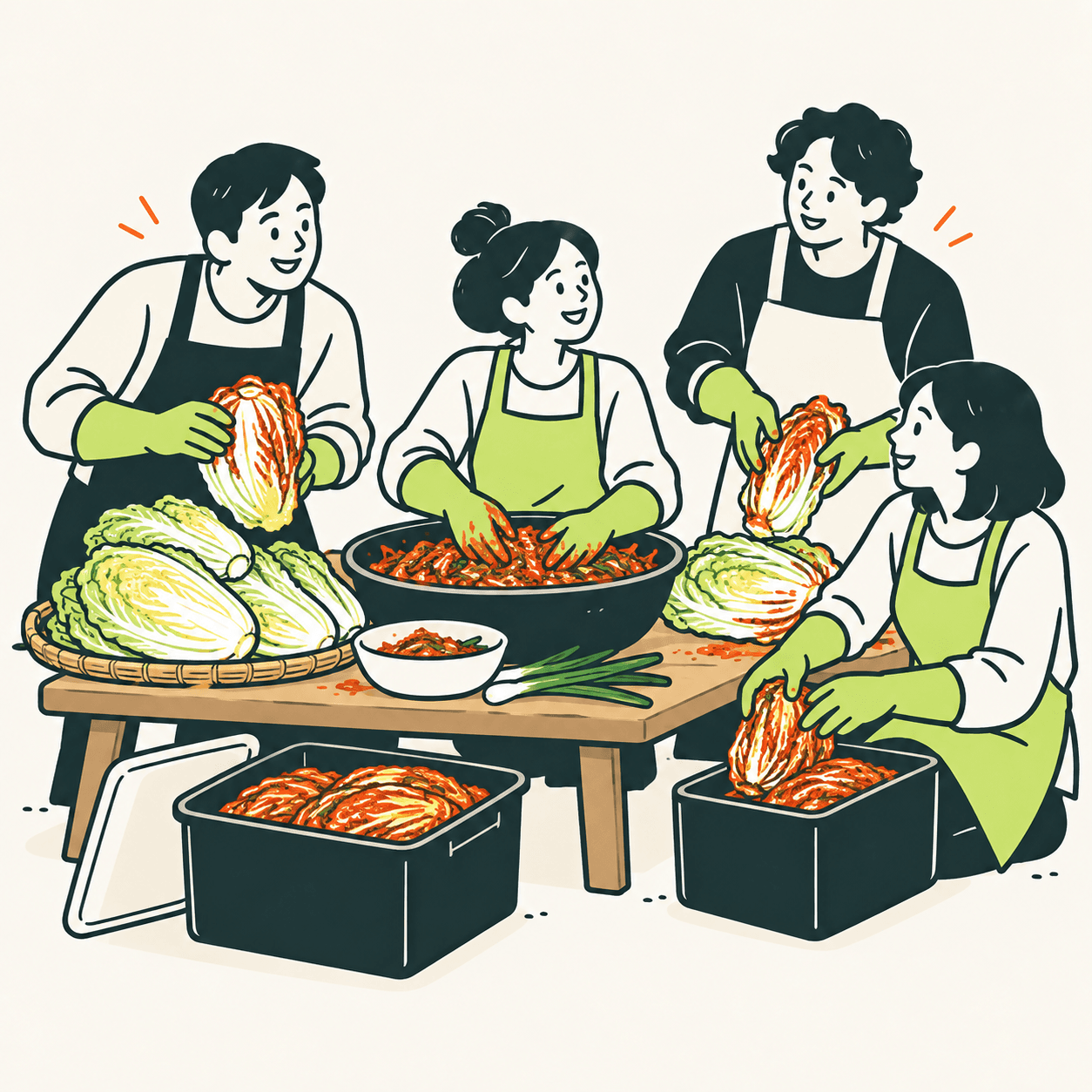
Kimchi and kimjang do not mean exactly the same thing. The first name concerns preparations of fermented vegetables; the second describes a practice of making and sharing, traditionally connected with winter supplies in the Republic of Korea. A December 2023 article from the Korean Ministry of Culture describes families and communities working together. Our discovery centres on no secret recipe: it concerns the relationship between food and the people who prepare it. [1]
Among its examples, the report follows a family in Chungcheongnam-do Province. Harvesting, salting and seasoning take time; the son-in-law interviewed describes an occasion for work, conversation and getting together. This is a documented example, rather than a portrait of every Korean household. Describing a tradition accurately means holding together a recognisable practice and differences between people who continue it, adapt it, or do not personally take part in making it. [1]
In a first-person piece for Korea.net in 2021, journalist Tim Alper describes preparing cabbage-based baechu kimchi and the work involved in spreading seasoning between the leaves. He also describes exchanging finished containers with friends and relatives. We cite his experience for what it is: an account situated in particular circumstances. It does not entitle us to infer the character, preferences or behaviour of an entire population from one person's encounters. [2]
Variety matters on the plate too. The ministry notes preparations using different vegetables and seasonings; Alper also describes a shift from large earthenware vessels to smaller containers and dedicated refrigerators in modern homes. A tradition can therefore continue while its tools and organisation change. Authenticity need not mean remaining motionless, and a single photograph of red-seasoned cabbage cannot summarise every kind of kimchi or every household's way of preparing it. [1][2]
Here is a scene invented by our editors to explore the difference between a product and a practice. A group prepares something to share: one person brings ingredients, another demonstrates a gesture, and a third organises distribution. Afterwards, we photograph only the containers. What is missing? We cannot see the time spent, the explanations given or the people who will receive the result. This comparison does not recreate kimjang: it helps us ask better questions about heritage made partly from relationships. [1]
If someone tells you about their own kimjang, you might ask who takes part, which stage they enjoy, and what has changed from their family memories. These are open questions, rather than a test of authenticity. Our sources describe particular contexts and moments; they do not prescribe how a Korean person ought to live. We are studying a cultural practice, without turning a food story into preservation instructions or promises of health benefits for anyone who eats it. [1][2]
Take this with youWhen discovering a tradition, notice who teaches, who helps and who shares. Then make room for people’s own accounts: no magazine feature can speak in their place.
One idea, in simple words
In the Republic of Korea, kimjang is a practice of making and sharing kimchi, meaning fermented vegetables. Fermenting means transforming food through the activity of microorganisms: very tiny living things. Traditionally, people prepared supplies before winter. The work could bring relatives and neighbours together. [1]
The important part is not only the finished food. People cooperate, demonstrate skills and share what they have made. Households may use different ingredients and tools: no single recipe describes everyone. Here is an example from our editors: photographing only a bowl does not tell us who helped prepare it. To understand a tradition, we can ask people how they experience it. We should not imagine that everyone always does exactly the same things in the same way. [1][2]
A little discovery to keep
What did you discover?
Read the sources (2)
- Centuries-old kimjang practice continues as global kimchi appetite grows Ministry of Culture, Sports and Tourism · Republic of Korea · accessed 27 Sept 2026
- Korean kimchi’s secret ingredient: a taste of community spirit Korea.net · Tim Alper · accessed 27 Sept 2026
Original writing and illustration made with AI assistance. Our editorial method
More in Cultures & peoples