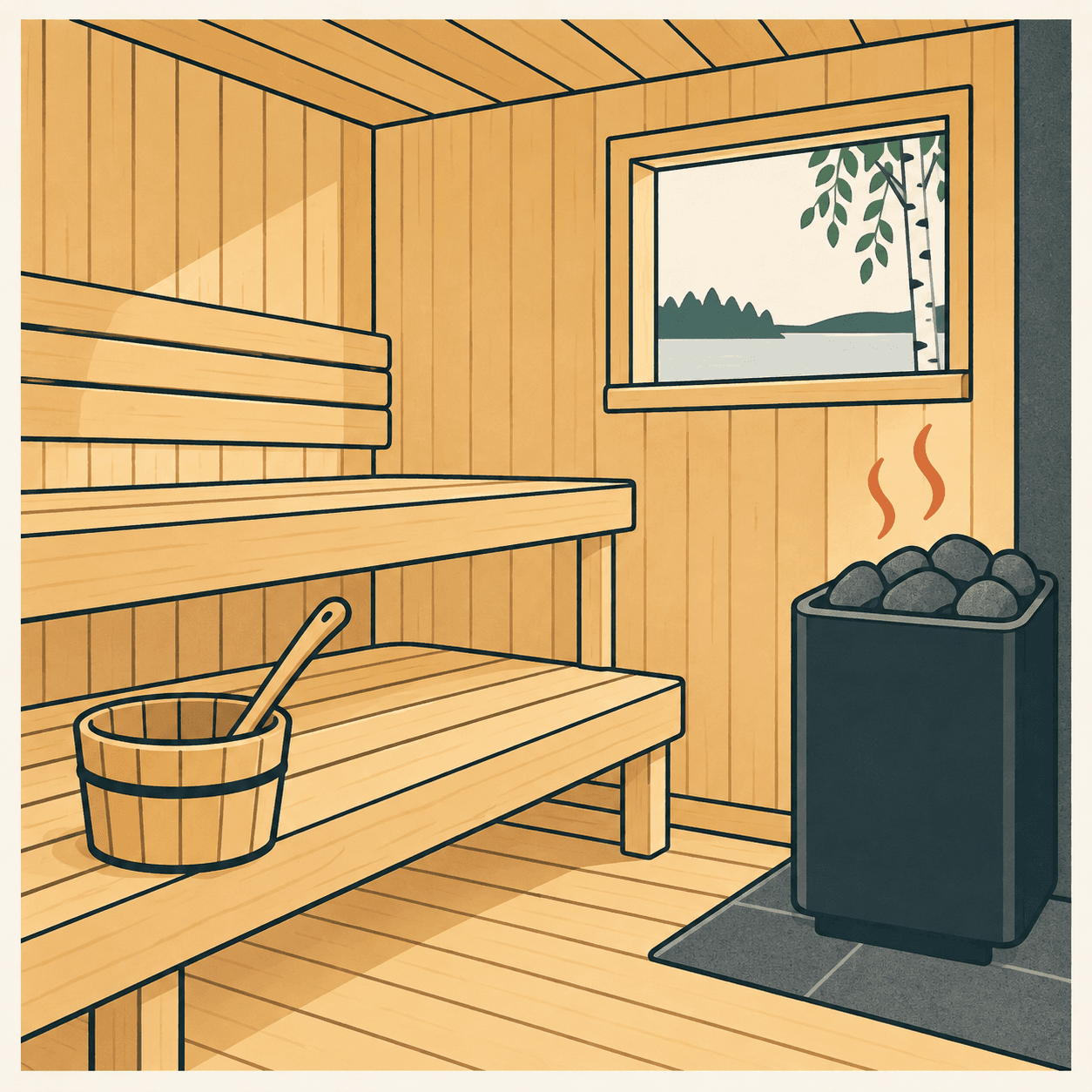
Sauna culture became Finland’s first element on UNESCO’s intangible heritage list in 2020, as documented by the Finnish Heritage Agency. Let us start with an editorial question: does an empty room tell us everything that happens inside it? In this reading, we will also look for gestures and knowledge, leaving people room to describe different experiences in their own words. [1]
A concrete example is löyly: the Finnish term for the steam and heat that spread when water reaches the hot stones on the stove. Finland’s Ministry for Foreign Affairs website explains that the culture also includes preparation, encounters and memories. Understanding the practice therefore takes more than photographing an empty bench: what happens around the room is part of the story too. [2]
The Finnish Sauna Society describes knowledge passed between generations and a nomination prepared by groups, associations and institutions. The tradition therefore includes shared practices. We can begin an editorial exercise from that idea: explain a gesture to somebody, ask what they understood and listen to a question. This is our example of passing something on, not a documented scene from the nomination process. [3]
Habits are not identical everywhere. Visit Finland distinguishes family settings and public spaces, with different arrangements to read about and discuss. It also encourages consideration for nearby people when water is added to the stones. The interesting cultural detail is the relationship: a gesture that changes a shared environment calls for attention to others, rather than just familiarity with the tradition. [4]
Imagine a scene invented by our editors. Someone is invited for the first time and asks how that particular place works. Their companion explains the customs, listens to what makes them comfortable and accepts that they might prefer to stay outside. This is an example of respectful hospitality, not a description of every Finnish family. Learning about a custom can open a conversation; it does not let us guess someone’s wishes from their nationality. [4]
Our illustration also chooses a limited perspective: it shows a setting and some objects, while leaving people free to describe their own experiences. This reading concerns cultural history. It offers no recommended times, temperatures or health benefits, and no test of endurance in heat. Recognition as heritage does not oblige every resident to practise something or make all experiences identical. A tradition can offer a meeting point without becoming an examination of who belongs. [1][4]
Take this with youWhen you encounter a new practice, ask how the person in front of you experiences it. Their individual answer adds something a general description cannot decide for them.
One idea, in simple words
In 2020, UNESCO recognised Finnish sauna culture as living heritage. It includes what people share, rather than only a heated room. [1]
One part is löyly, the steam and heat produced when water reaches hot stones. Families and groups can have different habits. It is helpful to ask how a particular place works and consider the other people there. [2][4]
Here is an example invented by our editors. A guest asks what to expect. Their host explains and listens to what feels comfortable for them. The guest can also choose not to join. Learning about a tradition does not mean that every person from a country enjoys it in exactly the same way. You can prepare a friendly question and listen to the answer. [4]
A little discovery to keep
What did you discover?
Read the sources (4)
- Sauna Culture in Finland Finnish Heritage Agency · accessed 21 Sept 2026
- Unesco highlights the intangible but very real spirit of Finnish sauna culture thisisFINLAND — Ministry for Foreign Affairs · accessed 21 Sept 2026
- Sauna coalition Finnish Sauna Society · accessed 21 Sept 2026
- 10 sauna tips for beginners Visit Finland · accessed 21 Sept 2026
Original writing and illustration made with AI assistance. Our editorial method
More in Cultures & peoples