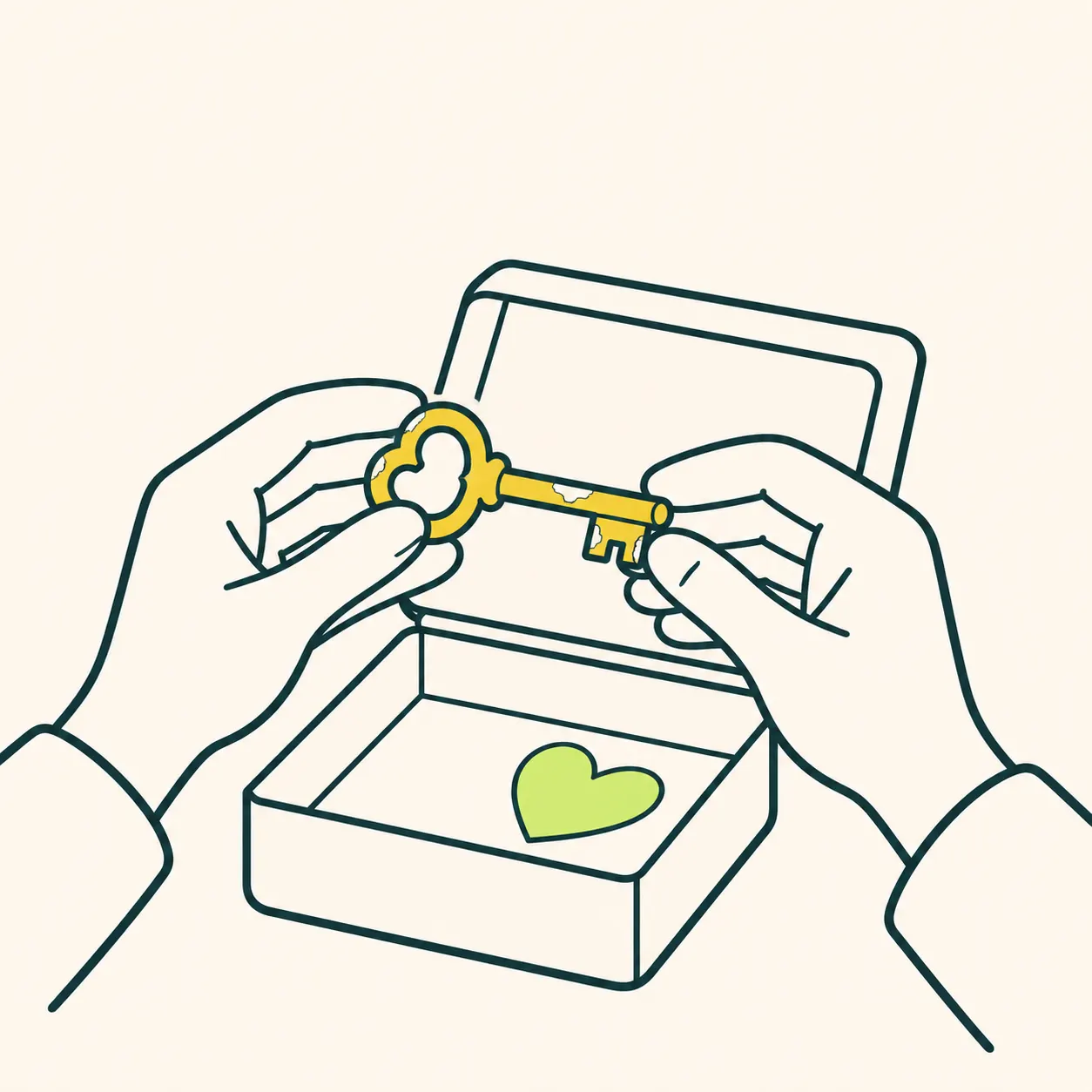
A ticket in a pocket, a name coming back, something to do before leaving: Italian speakers use ricordare in quite different situations. The word contains a documented surprise. Treccani traces it to Latin recordari, formed from re- and cor, cordis, meaning “heart”, formerly regarded as a seat of memory. This is an etymology, an account of a word’s history. It does not demonstrate that the heart physically stores what we have experienced or studied. [1]
The root lets us encounter an image from the past without turning it into an anatomical truth. We may find the association between memory and the heart evocative, but the dictionary is explaining a linguistic formation. It does not say that every ancient people or thinker held an identical theory. Separating word, image and bodily explanation makes the discovery more interesting: a language can preserve traces of ideas even when our own questions have changed. [1]
Present-day uses also deserve attention. Ricordare can mean recalling something, reminding someone else or suggesting a resemblance. Consider our editorial examples: ricordo quel cortile, “I remember that courtyard”; ti ricordo l’appuntamento, “I remind you about the appointment”; questa finestra mi ricorda casa, “this window reminds me of home”. The verb crosses personal experience, a reminder and an association. These are neither literary quotations nor psychological evidence, but different ways the same Italian word works in sentences. [1]
The noun ricordo, derived from the verb, can also denote an object kept to recall a person, place or event. Treccani distinguishes this concrete use from the general faculty of memory. A postcard can therefore be un ricordo without physically containing a journey. Our observation helps identify a small transition: the name of an act or mental content can also describe a thing that helps bring it back. This concerns Italian, not the origin of English remember. [2]
Imagine choosing three objects on a table: one used daily, one kept from an occasion, and one whose reason for being kept you have forgotten. This is no memory test or measurement of emotional value. It is a proposal for noticing language: which would you call ricordi, and in what sentence? The history of recordari cannot decide your answer for you. It adds another layer to a word without demanding that every reminder should move us emotionally. [1][2]
Take this with youNotice how Italian ricordare is used today: to recall, remind or suggest resemblance. Keep its Latin origin separate from the meaning of a particular sentence. Etymology opens a question; it does not replace the whole dictionary.
One idea, in simple words
The Italian word ricordare comes from Latin recordari. Treccani explains that it contains cor, cordis, meaning “heart”. In the old image associated with this word, the heart was a seat of memory. This explains language, not where memories are physically stored. Today the Italian verb has several uses. Ricordo il cortile means remembering a courtyard. Ti ricordo l’appuntamento means reminding someone about an appointment. Questa finestra mi ricorda casa means that a window reminds someone of home. These are the editors’ examples. An object can also be called un ricordo: a postcard kept after a journey, for instance. The postcard does not contain the journey but can recall it. A word’s origin does not give it only one meaning forever. [1][2]
A little discovery to keep
What did you discover?
Read the sources (2)
- Ricordare — significato ed etimologia Vocabolario Treccani · accessed 6 Nov 2026
- Ricordo — significato ed etimologia Vocabolario Treccani · accessed 6 Nov 2026
Original writing and illustration made with AI assistance. Our editorial method
More in Words