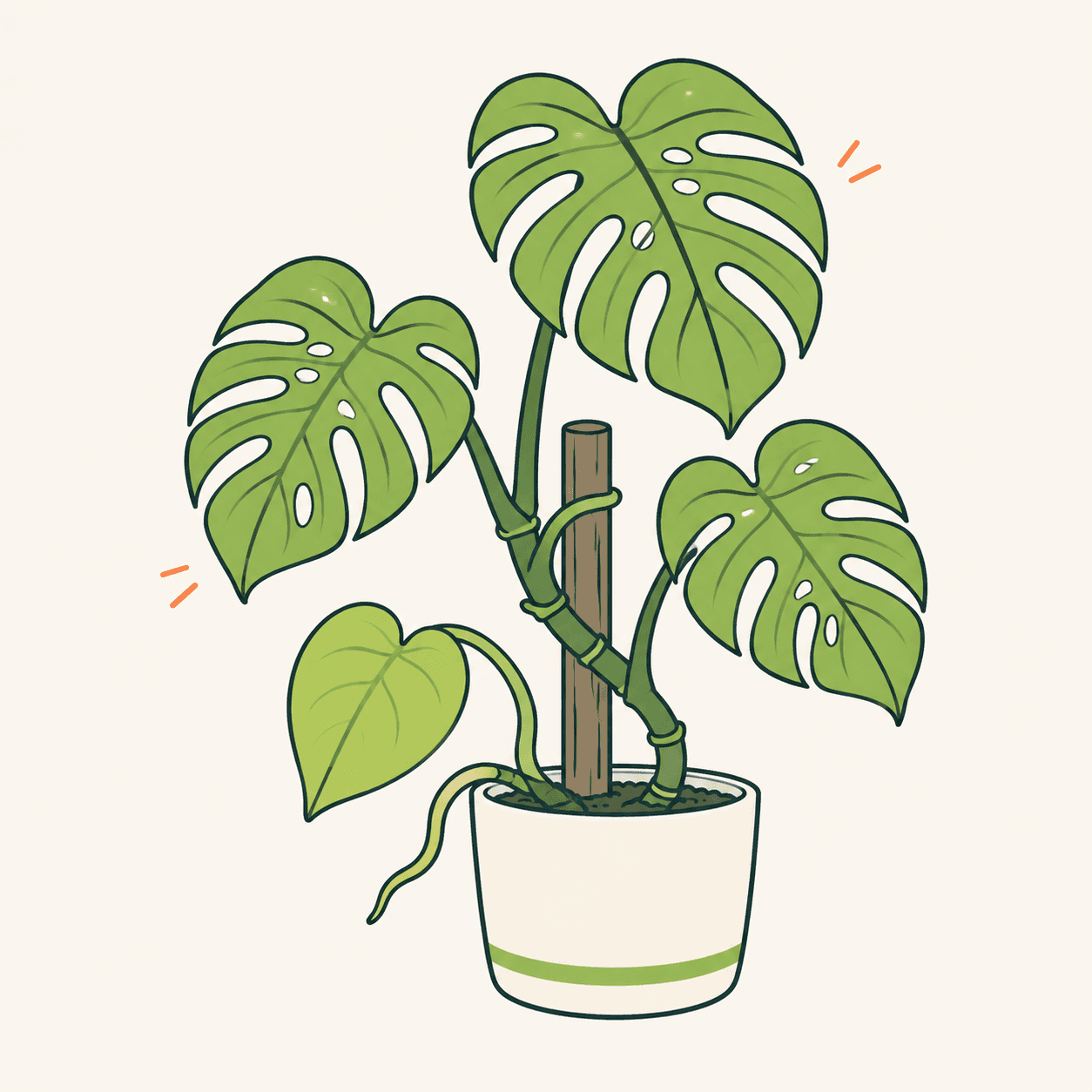
Monstera deliciosa is a climber from the wet tropics, native to a region Kew identifies as Mexico to Guatemala. Adult leaves are broad, with splits along the edges and openings inside. Aerial roots help it climb: its original setting was a forest, rather than a living room. [1][2]
Young plants usually have leaves without the characteristic holes; as they mature, they can produce new leaves with openings. To observe the difference, compare a small leaf with a more developed one without cutting anything. Those natural perforations need no scissors: the plant runs its own graphics department. [3]
Take this with youLook closely: whole and perforated leaves can reveal different stages of growth.
Read the sources (3)
- Monstera deliciosa Liebm. Plants of the World Online, Royal Botanic Gardens, Kew · accessed 8 Sept 2026
- Monstera deliciosa (F) Royal Horticultural Society · accessed 8 Sept 2026
- How to grow Swiss cheese plants Royal Horticultural Society · accessed 8 Sept 2026
Original writing and illustration made with AI assistance. Our editorial method
More in Plants