4 THINGS WORTH KNOWING /

Little Discoveries

Design · Philosophy · Plants · Curiosities. 4 discoveries in this edition.

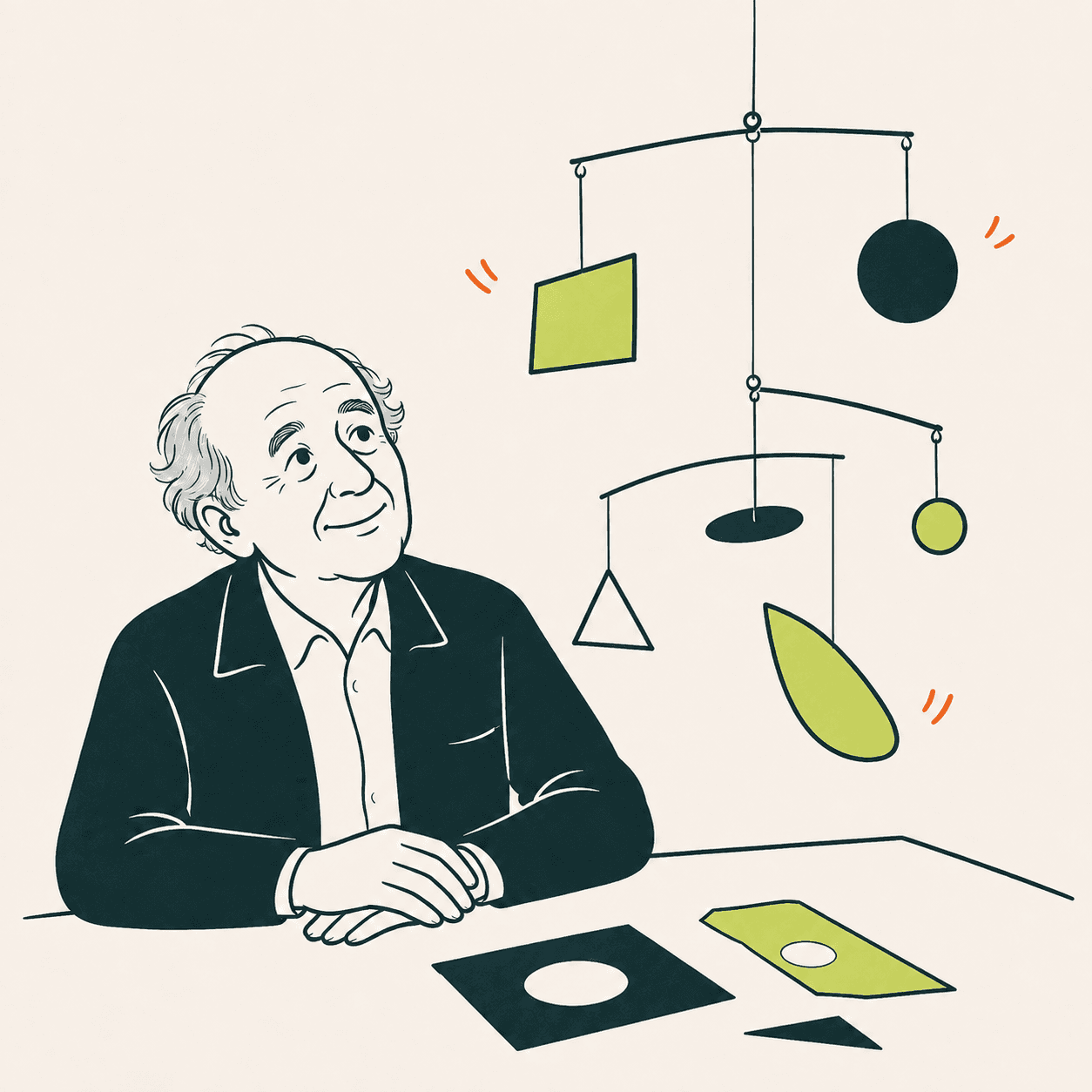
An illustration of Bruno Munari at a desk watching a suspended mobile of green and dark geometric shapes, with visible supporting threads.
Positive Times · ImageGen · AI-assisted illustration

Bruno Munari: the use of a useless machine

Bruno Munari, an Italian artist and designer, made suspended arrangements of lightweight materials. His useless machines move with the air, changing the relationships between shapes, light and shadow. The Centre Pompidou holds an example dated around 1949: a little choreography entrusted to its surroundings. [1]

The name is ironic: these works have an aesthetic purpose instead of doing a practical job. Our own exercise: watch a hanging object for a minute and follow its shadow. There is no need to measure its productivity. Your eyes can do something that will never appear in a spreadsheet. [2]

Take this with youRemember: looking carefully is an activity, even without a deliverable.

Read the sources (2)
  1. Macchina Inutile (Machine inutile) Centre Pompidou · accessed 8 Sept 2026
  2. Useless machine Musei di Genova · accessed 8 Sept 2026
Read the discovery
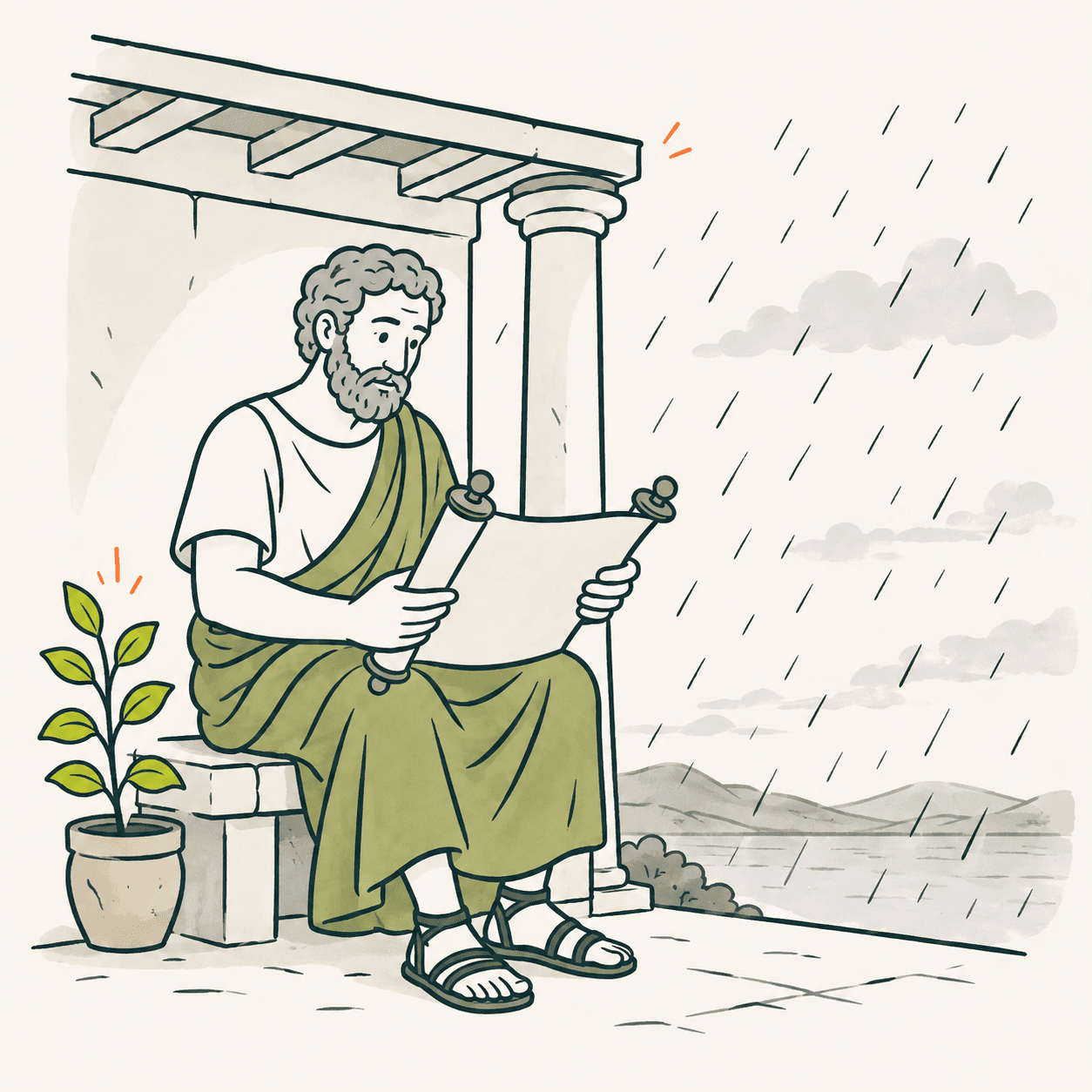
An imagined portrayal of Epictetus with a beard and tunic, seated under a portico holding a blank scroll while rain falls outside.
Positive Times · ImageGen · AI-assisted illustration

Epictetus: the weather does not take orders

The Handbook of Epictetus, the Stoic philosopher, separates what depends on us from what does not. Judgments and choices belong to the first sphere; wealth and reputation to the second. The question is where to direct our efforts, without treating every external outcome as a personal decision. [1][2]

His practice asks us to examine first impressions and how we choose to respond. Our own modern example: rain spoils a walk, but we can consider another plan. Complaining to the clouds remains a remarkably inefficient customer service arrangement. [2]

Take this with youTry separating the external event from the response you can choose.

Read the sources (2)
  1. The Enchiridion The Internet Classics Archive, MIT · accessed 8 Sept 2026
  2. Epictetus Stanford Encyclopedia of Philosophy · accessed 8 Sept 2026
Read the discovery
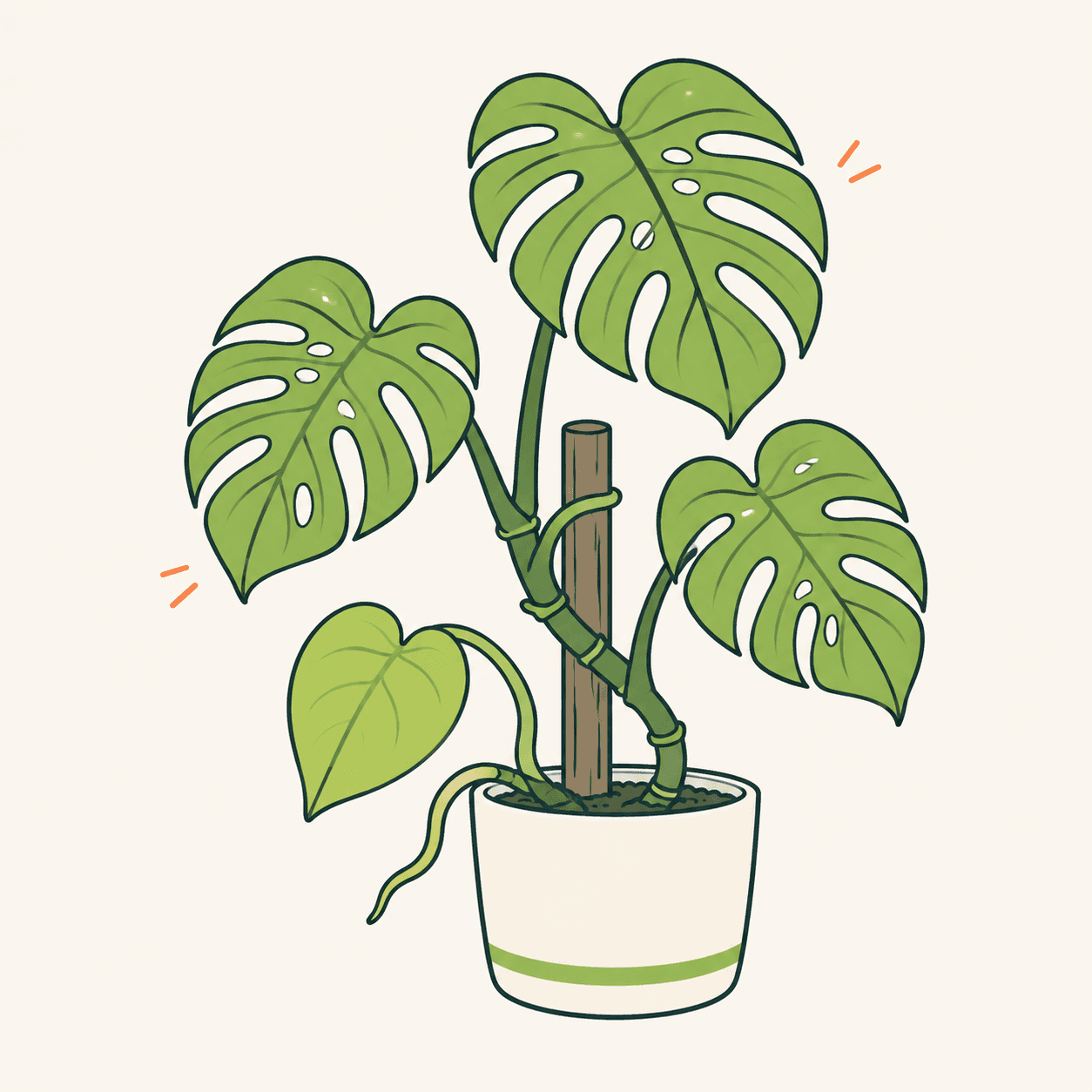
An illustrated potted Monstera deliciosa with a support, three perforated mature leaves, one whole young leaf and an aerial root.
Positive Times · ImageGen · AI-assisted illustration

Monstera deliciosa: the holes come as standard

Monstera deliciosa is a climber from the wet tropics, native to a region Kew identifies as Mexico to Guatemala. Adult leaves are broad, with splits along the edges and openings inside. Aerial roots help it climb: its original setting was a forest, rather than a living room. [1][2]

Young plants usually have leaves without the characteristic holes; as they mature, they can produce new leaves with openings. To observe the difference, compare a small leaf with a more developed one without cutting anything. Those natural perforations need no scissors: the plant runs its own graphics department. [3]

Take this with youLook closely: whole and perforated leaves can reveal different stages of growth.

Read the sources (3)
  1. Monstera deliciosa Liebm. Plants of the World Online, Royal Botanic Gardens, Kew · accessed 8 Sept 2026
  2. Monstera deliciosa (F) Royal Horticultural Society · accessed 8 Sept 2026
  3. How to grow Swiss cheese plants Royal Horticultural Society · accessed 8 Sept 2026
Read the discovery
An illustrated orange octopus with eight sucker-lined arms above the seabed; three symbolic hearts float above its head.
Positive Times · ImageGen · AI-assisted illustration

An octopus has three hearts. All with jobs to do.

An octopus has three hearts with different jobs. Two push blood through the gills, where it picks up oxygen; the third sends it around the rest of the body. They are not three spare copies: they belong to the same circulatory system. A small working group that cannot skip its meeting. [1]

Another surprise: oxygenated blood is blue. The oxygen carrier is haemocyanin, a protein containing copper, rather than our iron-containing haemoglobin. Three hearts and different chemistry: before inventing an extraterrestrial, it is worth taking a look beneath the sea. [2]

Take this with youRemember: two hearts for the gills, one for the rest of the body.

Read the sources (2)
  1. Octopuses, Squids, and Relatives Smithsonian Ocean · accessed 8 Sept 2026
  2. Octopuses keep surprising us – here are eight examples how Natural History Museum, London · accessed 8 Sept 2026
Read the discovery

Original writing and illustrations made with AI assistance. Each discovery includes its sources. Our editorial method