4 THINGS WORTH KNOWING /

Little Discoveries

Design · Philosophy · Plants · Curiosities. 4 discoveries in this edition.

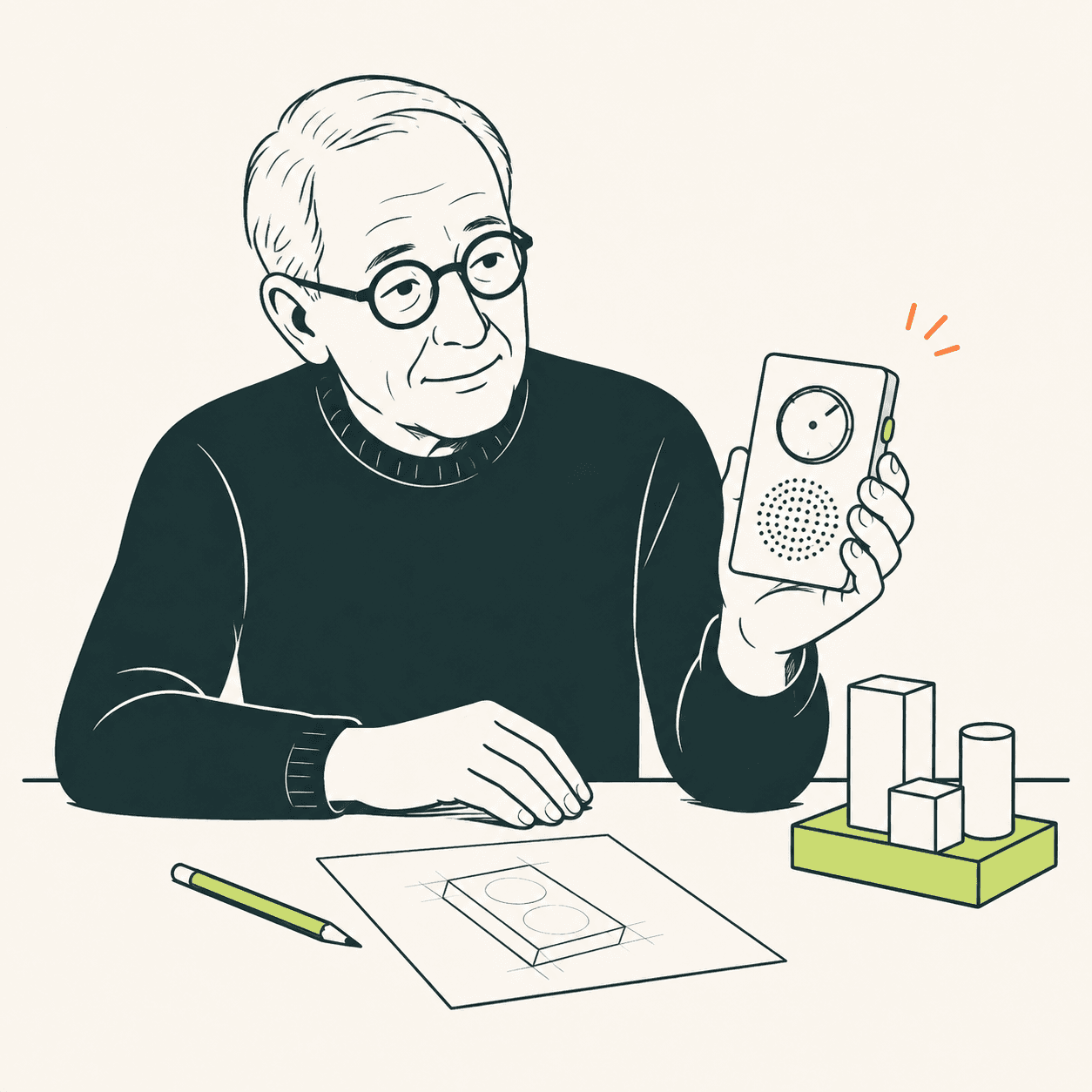
An illustration of Dieter Rams holding a small white radio at a desk with a pencil and a geometric sketch.
Positive Times · ImageGen · AI-assisted illustration

Dieter Rams: fewer things, done better

Dieter Rams treats design as a practical companion: objects should be understandable, useful and built to last. In his ten principles, simplicity removes whatever gets in the way of an object’s purpose. This is not a competition to see who can leave the emptiest room. [1]

Consider the 606 shelving system, designed for Vitsœ in 1960. Its components can be rearranged and expanded as homes or needs change. Instead of throwing everything out and starting again, you adapt what is already there. [2]

Take this with youRemember: good design leaves room for life to change.

Read the sources (2)
  1. The power of good design Vitsœ · accessed 7 Sept 2026
  2. 606 Universal Shelving System Vitsœ · accessed 7 Sept 2026

Read the discovery
An illustration of Hannah Arendt holding an open book between two people talking around a round table.
Positive Times · ImageGen · AI-assisted illustration

Hannah Arendt: the world has more than one viewpoint

For twentieth-century political thinker Hannah Arendt, plurality is a condition of political life: we share a world, yet nobody sees it from exactly the same position. Speaking and acting together lets people reveal who they are without becoming identical copies. Difference is not a fault to be fixed. [1]

Our own example: redesigning a public square looks different when you listen to children, workers and wheelchair users. Agreement may take time. The point is to widen the view before deciding, an exercise consistent with the exchange of perspectives described by the Arendt Center. [2]

Take this with youTry asking: whose perspective is missing from this conversation?

Read the sources (2)
  1. Hannah Arendt Stanford Encyclopedia of Philosophy · accessed 7 Sept 2026
  2. Campus Plurality Forum Hannah Arendt Center at Bard College · accessed 7 Sept 2026
Read the discovery
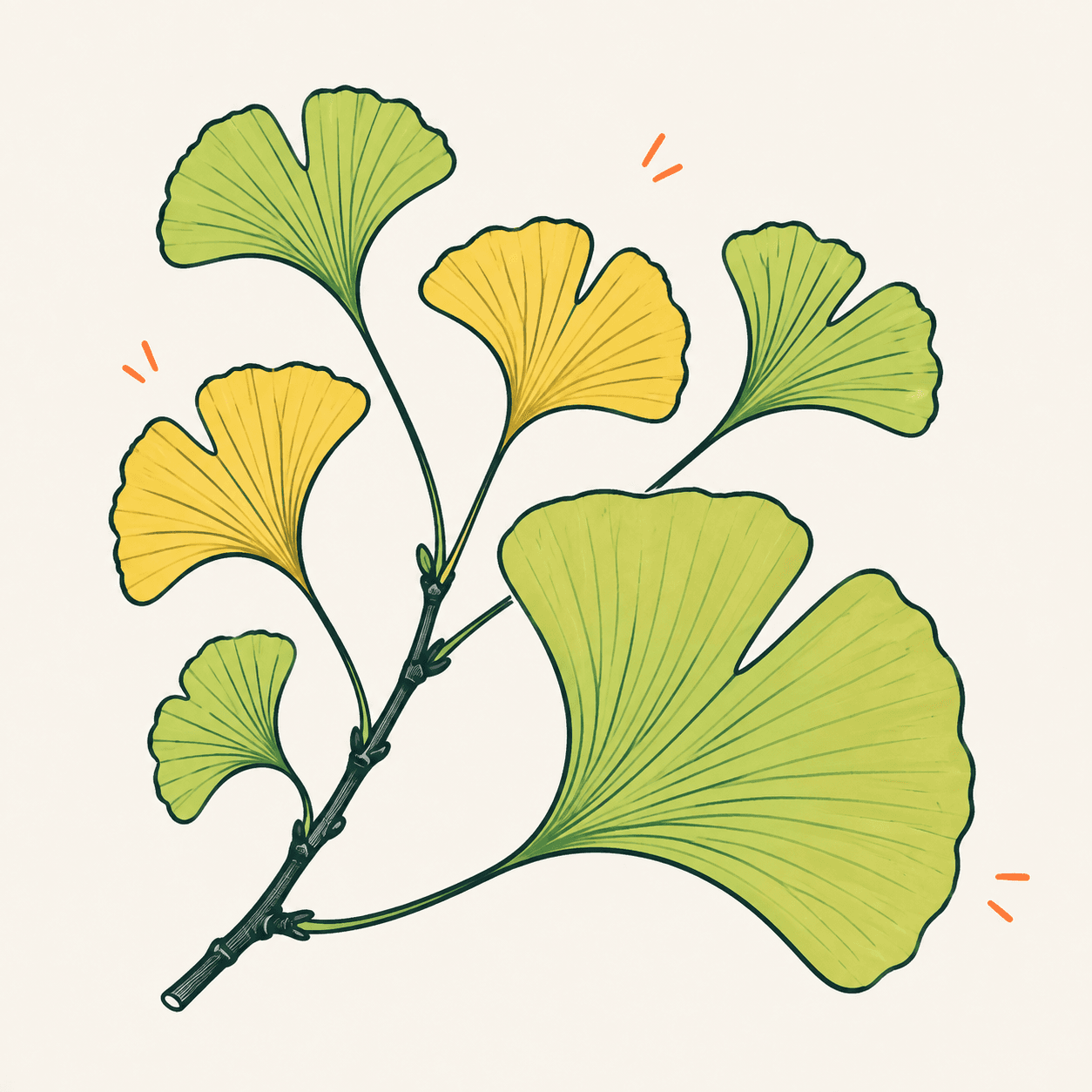
An illustrated Ginkgo biloba branch with green and yellow fan-shaped leaves, central notches and visible veins.
Positive Times · ImageGen · AI-assisted illustration

Ginkgo biloba: a little fan with a long history

Ginkgo biloba has distinctive fan-shaped leaves, often with a notch in the middle. Their veins fork as the leaf widens, and green turns to yellow in autumn. It is the only living species in its genus: a tree with an entire family branch to itself. [1]

Native to China, it is cultivated in many countries but rare in the wild. Female trees produce seeds with a fleshy coating that releases an unpleasant smell as it decays. This is why male specimens are often chosen for ornamental planting. The leaves clearly have the better publicity team. [2]

Take this with youLook closely: notice the leaf’s fan shape and branching veins.

Read the sources (2)
  1. Ginkgo biloba Cambridge University Botanic Garden · accessed 7 Sept 2026
  2. Ginkgo biloba: The tree that outlived the dinosaurs Royal Botanic Gardens, Kew · accessed 7 Sept 2026
Read the discovery
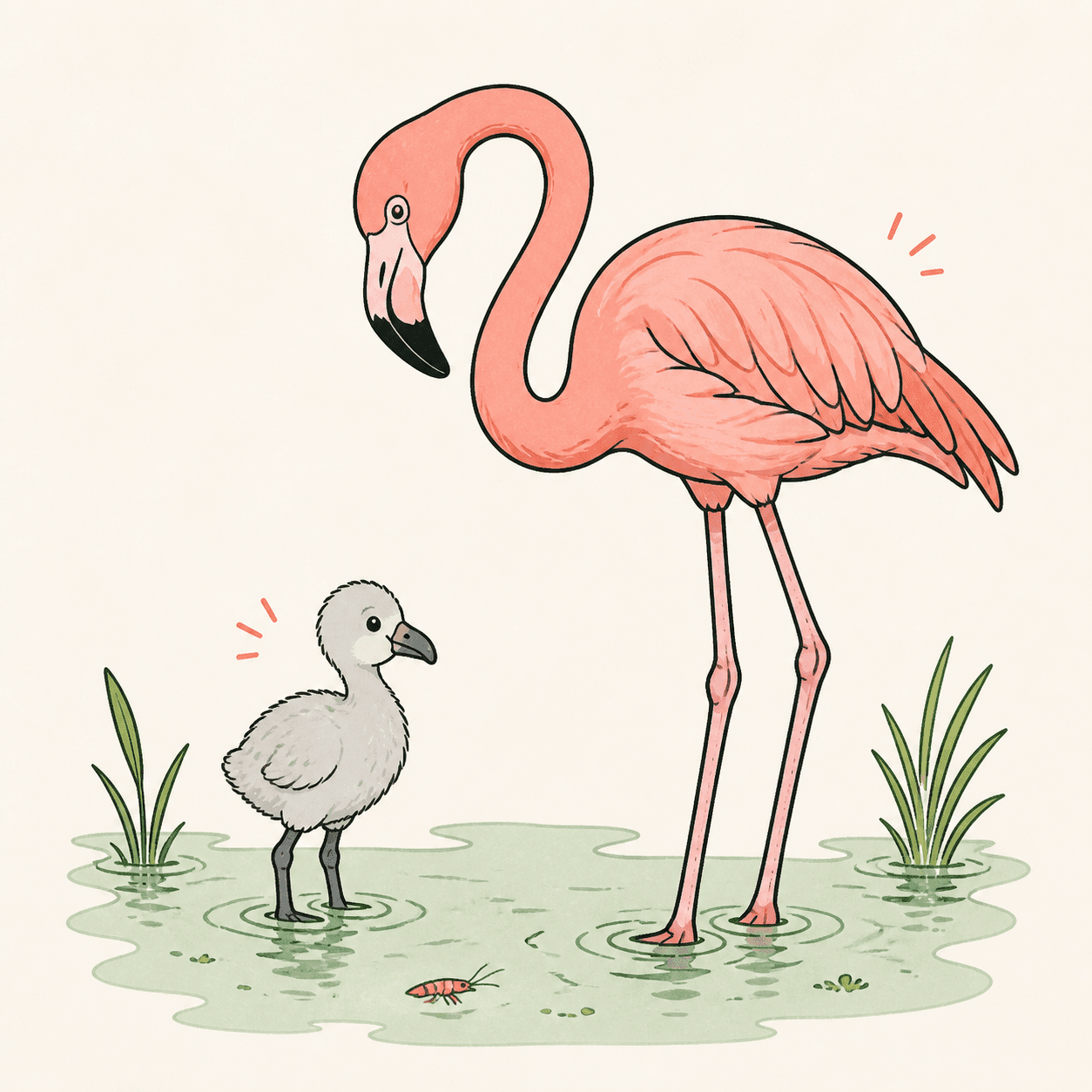
An illustrated pink adult flamingo and a grey chick in shallow water with a small orange crustacean and aquatic plants.
Positive Times · ImageGen · AI-assisted illustration

Flamingos: pink is on the lunch menu

Flamingos do not hatch wearing their famous pink plumage: chicks have white and grey down. The colour comes from carotenoids, pigments found in the algae and small crustaceans they eat. Their bodies process these pigments, giving their feathers their distinctive shades. [1]

To feed, they hold their bills upside down in the water and filter it, trapping food with tiny comb-like structures. The menu varies between species: some collect finer particles, while others eat mainly small invertebrates. An ingenious way to shop for lunch and a wardrobe in one trip. [2]

Take this with youRemember: the pink comes from food. No photo filter required.

Read the sources (2)
  1. Why Are Flamingos Pink? And Other Flamingo Facts Smithsonian’s National Zoo and Conservation Biology Institute · accessed 7 Sept 2026
  2. Flamingo San Diego Zoo Wildlife Alliance · accessed 7 Sept 2026
Read the discovery

Original writing and illustrations made with AI assistance. Each discovery includes its sources. Our editorial method